
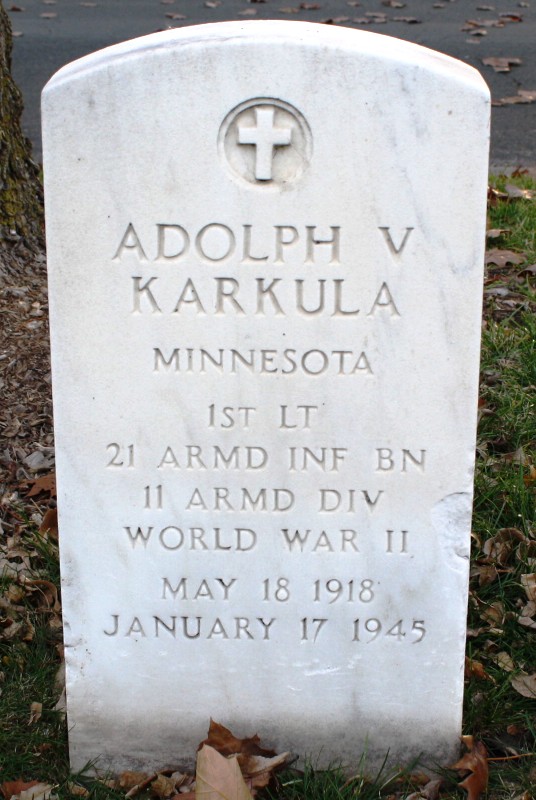
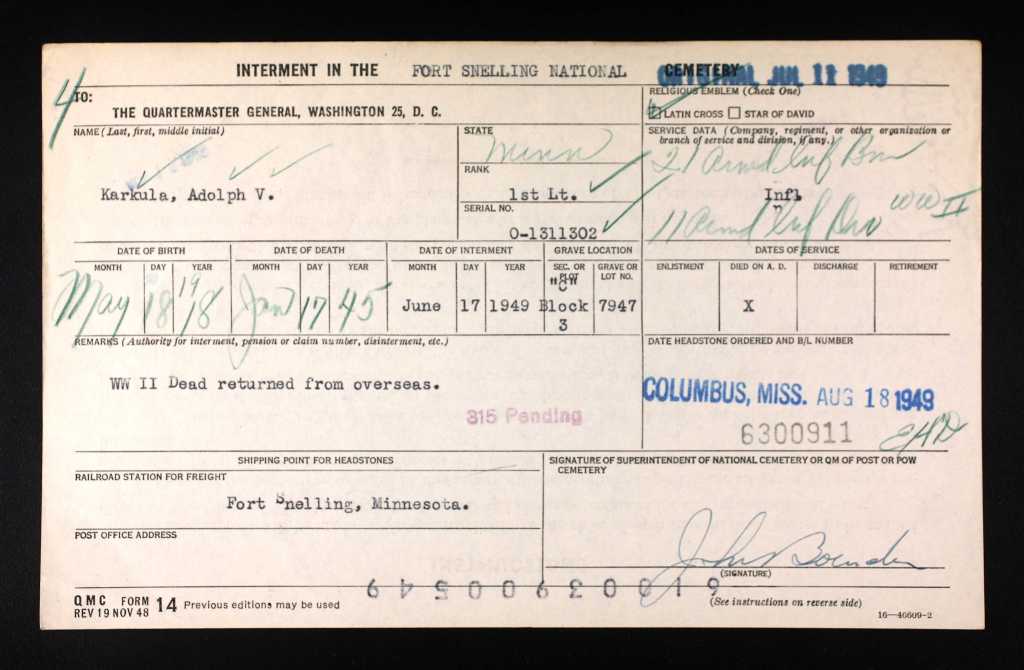
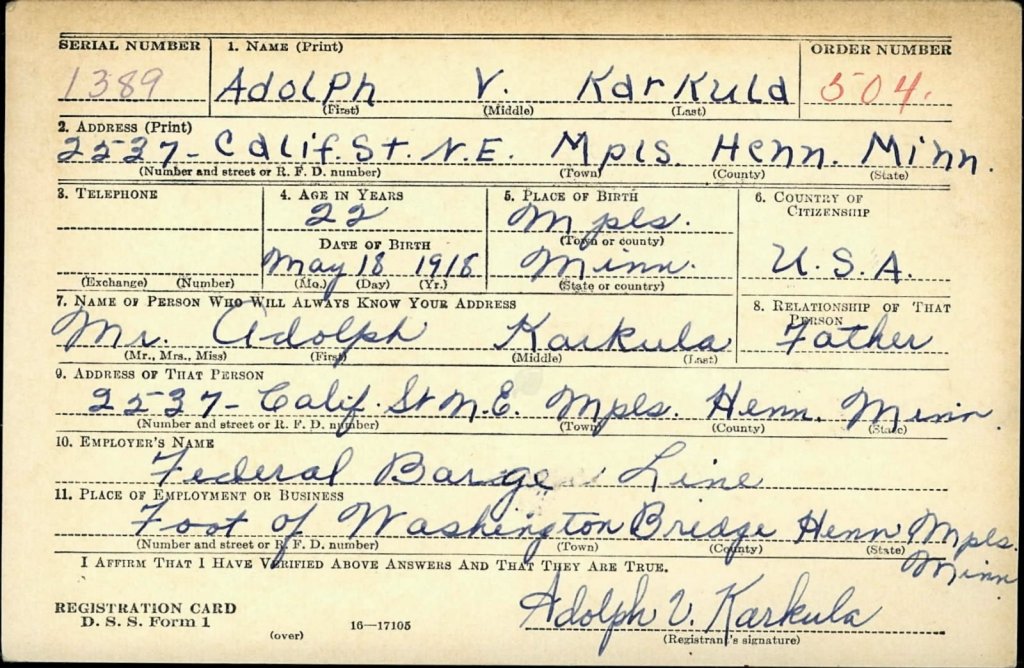
18May1916 – 17Jan1945
Edison Days
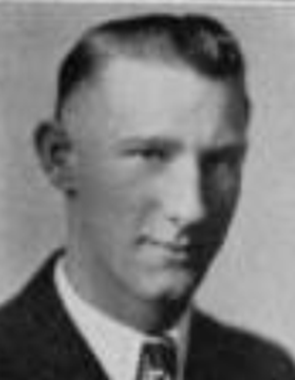
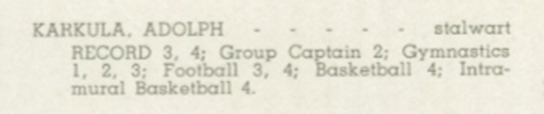
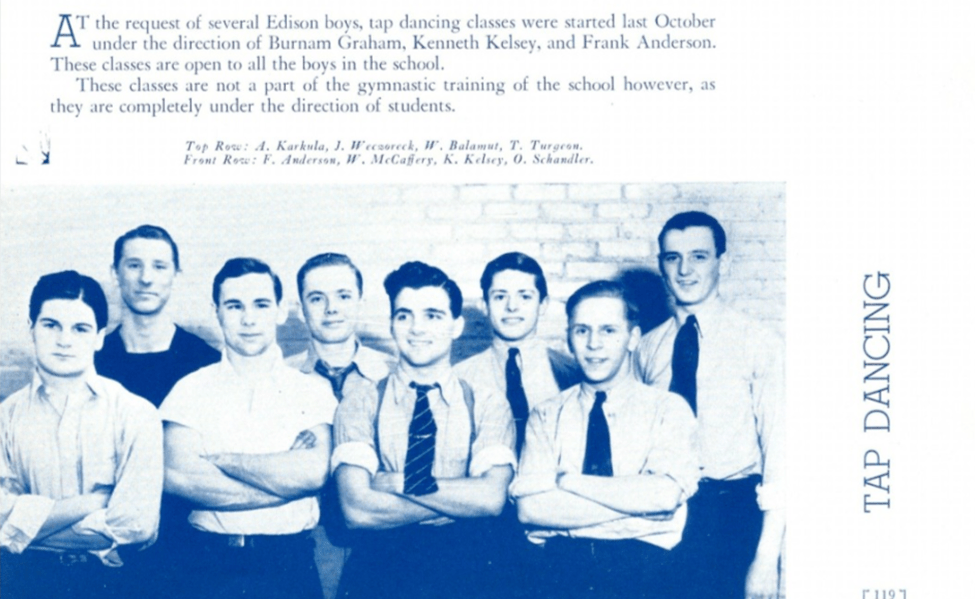
Adolph graduated with the Class of June 1937. He was involved in the school paper, and he was a Group Captain (student aide to Home Room advisor). He was very involved with athletics….including Tap Dancing!
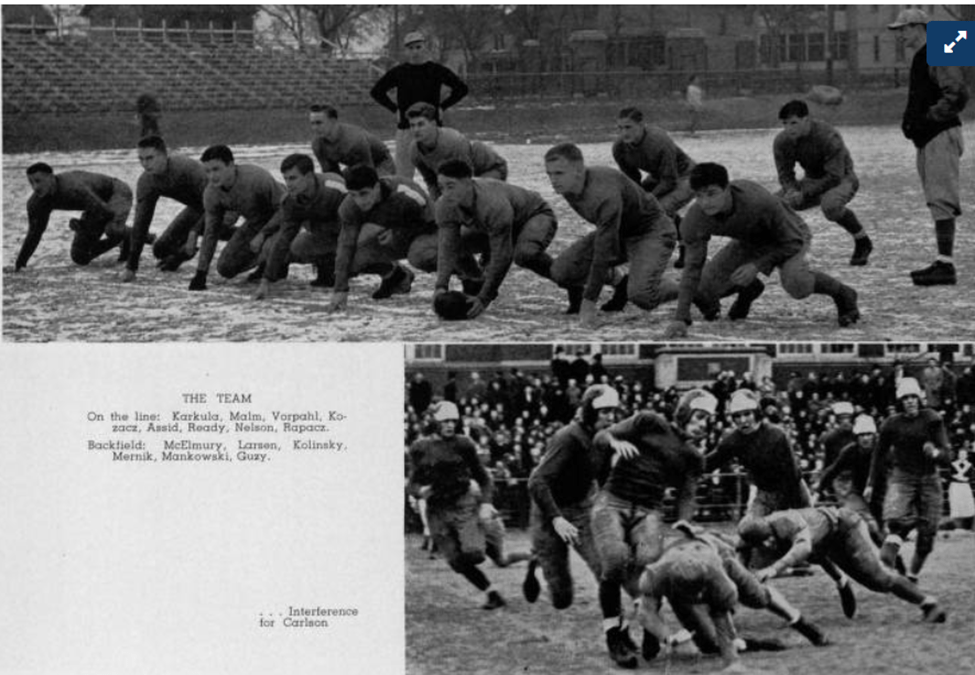
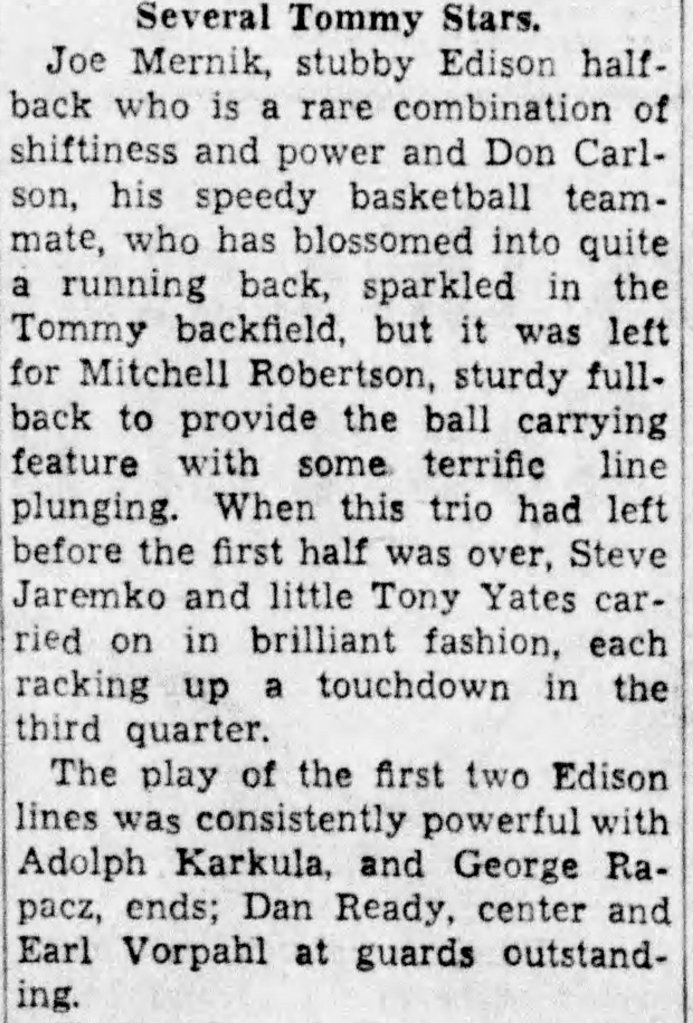
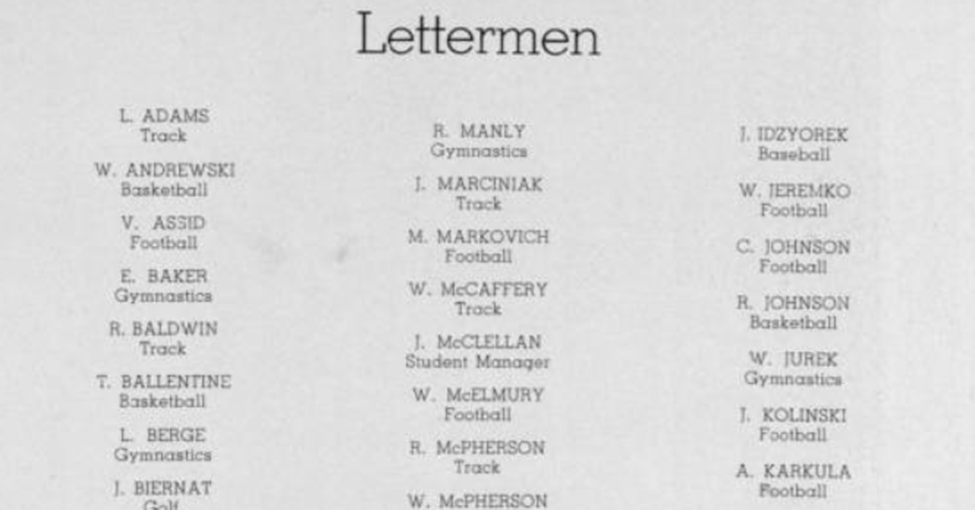
Adolph’s best sport was football. During his Senior year, he was mentioned by name in the Minneapolis newspapers 8 times between September and October. He was in contention for All-City honors, and he was a Letter winner.
Military Service


Rank: 1st Lieutenant
Branch: United States Army
Unit: 21st Armored Infantry Batallion – 11th Armored Division
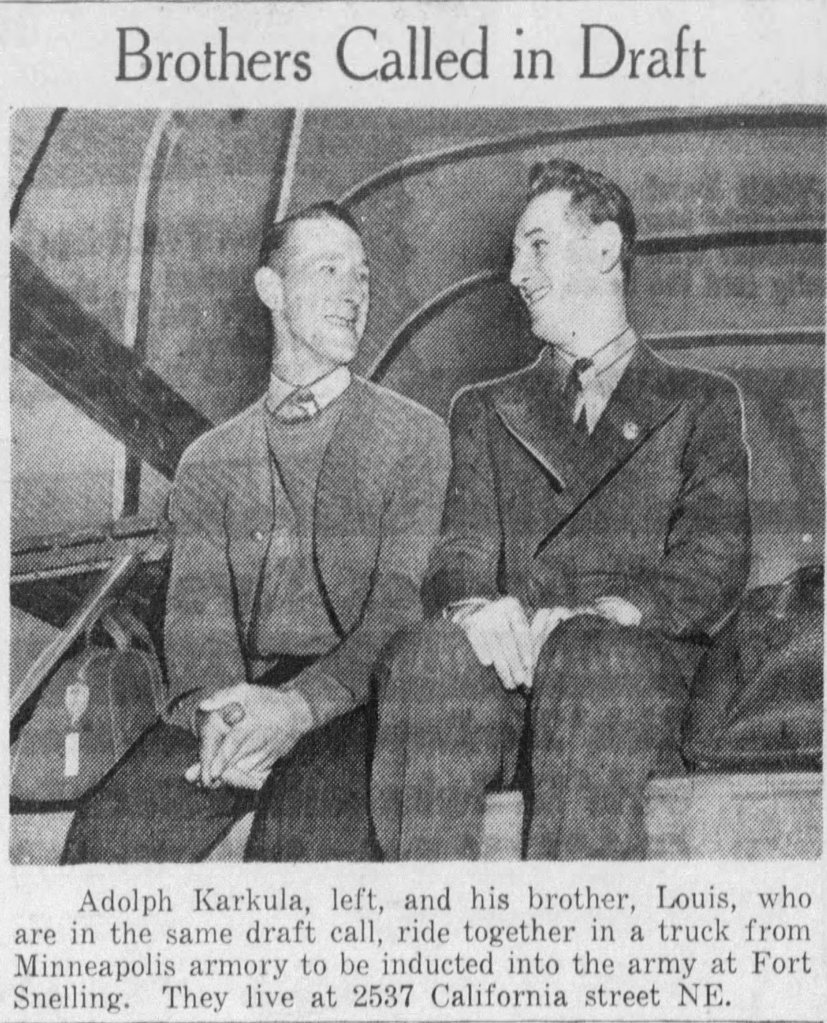
Adolph was drafted into the Army in June 1941.

After basic training Adolph was likely assigned to the 21st Armored Battalion. The following unit history is from The 11th Armored Division Legacy Group (http://www.11tharmoreddivision.com/)
The 21st Armored Infantry Battalion was created from the 2nd Battalion of the 55th Armored Infantry Regiment at Camp Polk, Louisiana in the fall of 1943. Major Milton H. Keach was commanding officer. The men were part of the new 11th Armored Division, which the Army activated at Camp Polk on August 15, 1942. Some of the men were army veterans, others were draftees and volunteers; together they trained hard and sharpened their battle skills in the Third Army’s big Louisiana-Texas maneuvers in 1943. Afterwards the division shipped out to Camp Barkeley, Texas. The toughest training came next in the blistering heat and swirling sands of the Mojave Desert in California. The division moved into tents at Camp Ibis, near Needles, and practiced war amidst desolate dunes, prickly cactus, lizards, and barren mountains.
Nicknamed the “Thunderbolt Division,” the 11th Armored headed farther west to Camp Cooke, California. Soldering was easier; Camp Cooke had barracks that caught the fresh breezes off the Pacific Ocean. But the Army needed the 11th Armored elsewhere. Orders to move out arrived and on September 14, 1944 the battalion boarded a Southern Pacific troop train which chugged eastward.
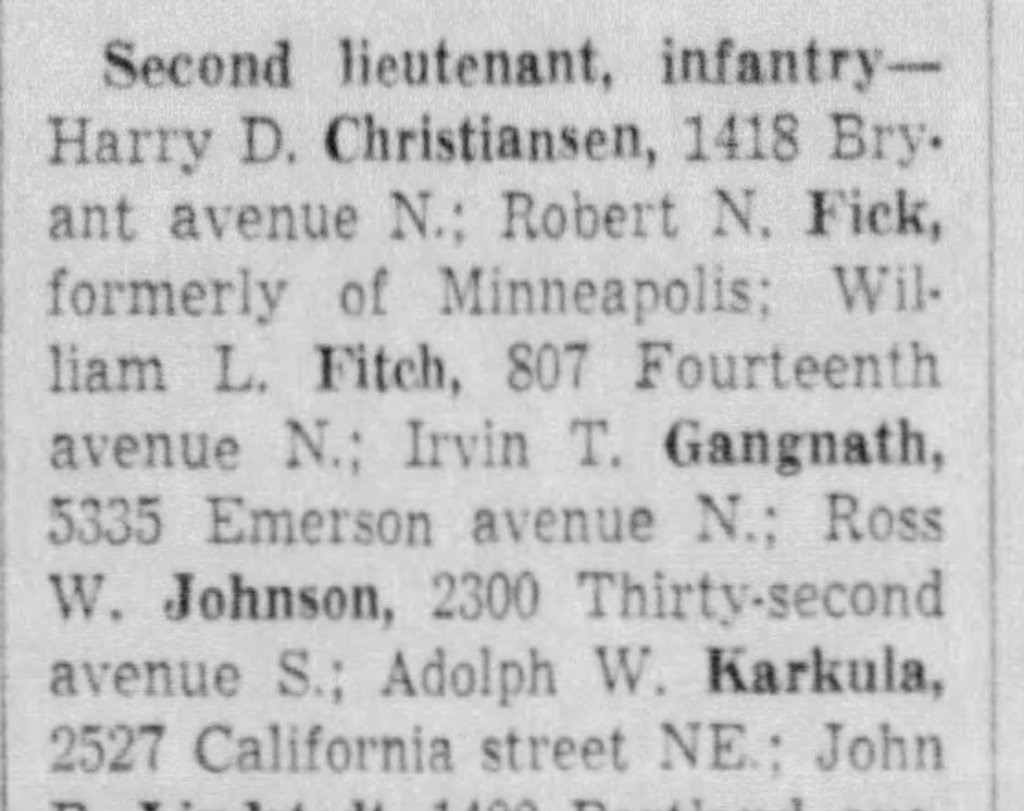
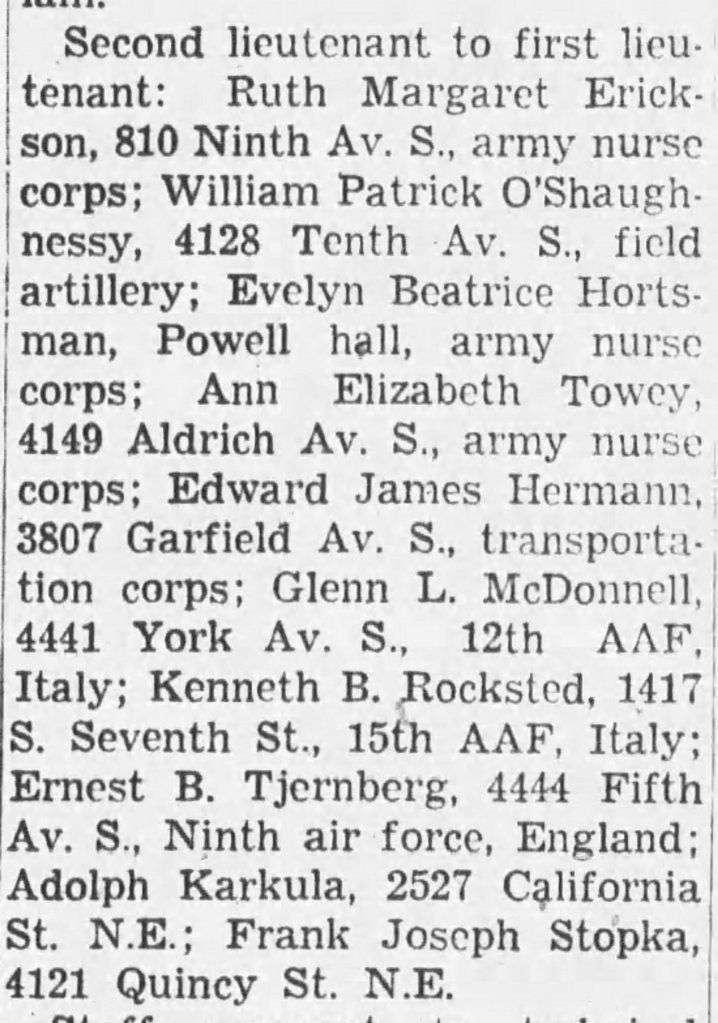
Adolph was promoted to 2nd Lieutenant in early 1943 and he was promoted again to 1st Lieutenant in early 1944.
On September 19th the battalion was in Camp Kilmer, New Jersey. The men figured they were bound for Europe, but when and where only the brass knew. On September 27th, the 21st AIB was on a train again, but this time the ride was short – to Pier 51 in New York harbor. The men climbed aboard the U.S.S. Hermitage, flagship of a convoy bound across the Atlantic. Two days later the convoy sailed east. The Hermitage docked at Southampton, England on October 10th. Another train awaited; this one took the Yanks to Camp Upton Lovell in Wiltshire for final preparations for combat. It was almost winter before the 21st Battalion would move to France.
Orders came for December 13th. First to leave were battalion vehicles, which were driven back to Southampton and loaded onto a Liberty Ship that sailed for France about midnight on December 14, 1944. The ship arrived uneventfully at Cherbourg where the drivers and vehicles awaited the men of the battalion, who were scheduled to leave Southampton on December 15th. On December 16th the battalion and its vehicles were in camp at Barneville, France. Heavy rains turned roads and fields into quagmires. Everybody shivered in the cold and damp.
The battalion was ordered to move south and help clear out a pocket of stubborn German resistance at St. Nazaire. The 21st moved out on December 18th and traveled 120 miles to near Rennes. The men stayed in camp the next day and got ready to move on December 20th. There were rumors that orders would be changed, but nobody seemed to know why or where the 21st AIB was headed.
The “where” was several miles east in the dark Ardennes Forest of Belgium. In deep secret, the Germans massed a huge army and launched a desperate counterattack against thinly held American lines. The German offensive rolled forward on a 5-mile front, pushing the American back in what would be called the Battle of the Bulge.
The 11th Armored was called off St. Nazaire and sent on a 500-mile dash to Belgium. The Meuse River was vulnerable to German attack and the 11th Armored was ordered to hold the Meuse between Sedan and Givet.
Christmas came a day later for the 101st Airborne Division and the other defenders of Bastogne, key to the Battle of the Bulge. On December 26th the 4th Armored Division broke through to relieve the town. The Thunderbolts were ordered forward to help protect Bastogne’s crucial lifeline, the Bastogne-Neufchateau Road.
On the night of December 29th, the battalion was near Molinfaing, where the men were told they would jump off before daylight without any reconnaissance. Some of the doughs laughed; they knew that was impossible.
The battalion was in good shape at the start of the Ardennes operation. There had been the usual problems with vehicles put to hard use, but nothing serious. That was fortunate because the battle would strain men and machinery to the limit.
The 21st Battalion went into combat as part of TF Pat. The objective was the Belgian village of Chenogne. The attack did not go as planned. German troops showed up where they were not supposed to be; communication and coordination between American units was poor. Tanks and halftracks were set ablaze.
On December 31st, TF Pat fought on toward Chenogne. The Americans attacked again after daylight. The Germans fought hard and cleverly; the enemy hid tanks under haystacks. American casualties mounted. The 22nd Tank Battalion lost two Shermans as they entered Chenogne. The enemy destroyed two more Shermans and a light Stuart tank in the town. But Chenogne fell to the Thunderbolts.
Things went more smoothly after Chenogne. The Thunderbolts captured Mande St. Etienne, Foy, and Cobru, then bypassed Noville to capture the woods east of the town. One company of armored infantry rode on tanks while the other two companies followed in halftracks.
On January 17, 1945 the 21st AIB was relieved by the 101st Airborne Division. For the Thunderbolts, the heaviest fighting in the Bulge was over.
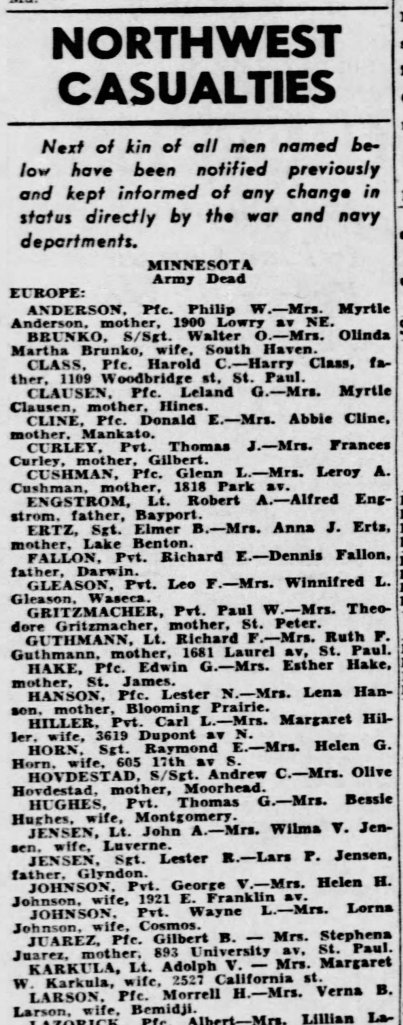
Adolph was killed in action on the very day his unit was relieved. The circumstances of his death are not known at this time.
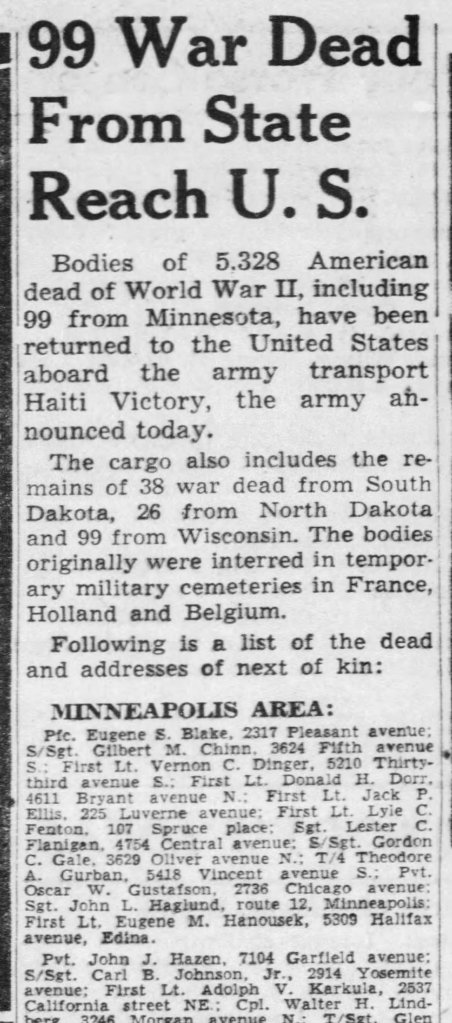
Adolph’s remains were returned to Minnesota for reburial in 1949. He is buried at Fort Snelling National Cemetery in Minneapolis, MN
 Edison Heroes