
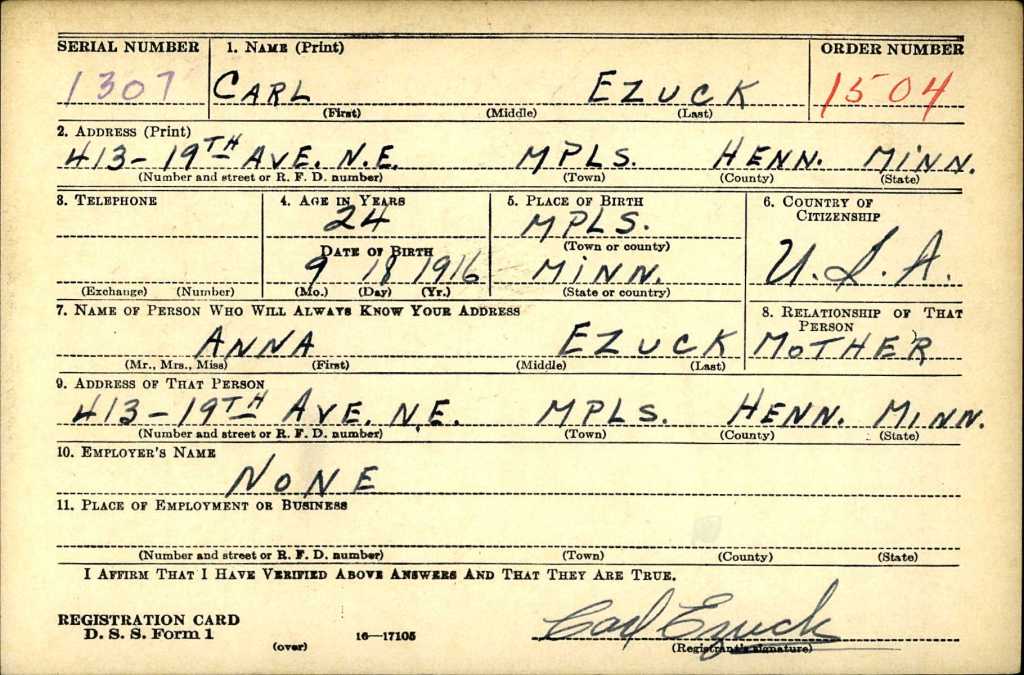
18sep1916 – 21Jul1944
Edison Days
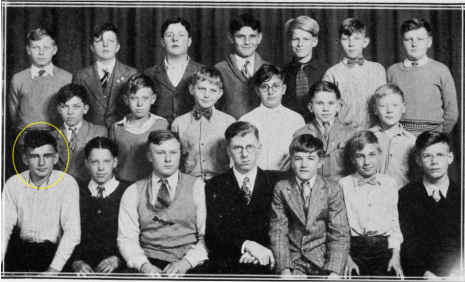
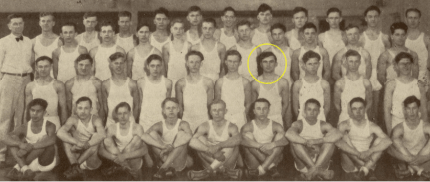
Carl attended Edison in 1931, 1932, and 1933. Records indicate that he withdrew from school without graduating.
Military Service
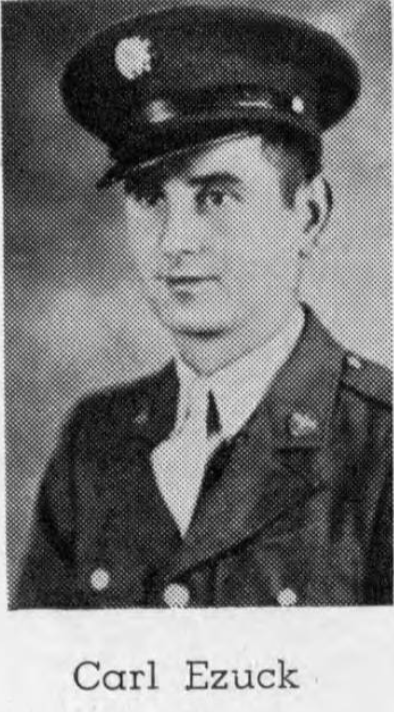

Rank: Staff Sergeant
Branch: United States Army Air Force
Unit: 746th Bombardment Squadron -456th Bomber Group (Heavy)
Carl joined the Army in August 1942. It is unknown where he attended basic training, or advanced training. It is likely that he was assigned to the 746th Bombardment Squadron immediately after advanced training.
The 746th was constituted on 14May943, and activated on 1Jun1943, at Wendover Field, Utah. It received its initial cadre there as part of the newly formed 456th Bombardment Group. Training with B-24 Liberators followed at several U.S. bases, including Gowen Field, Idaho, Bruning Army Air Field, Nebraska; Kearns, Utah; and Muroc Army Air Base, California.
The unit completed training by December 1943 and prepared for overseas deployment. The squadron (as part of the group) moved to the Mediterranean Theater in December 1943–January 1944. It arrived at Cerignola Airfield, Italy, on 11Jan1944, and settled into its primary combat base at Stornara Airfield, Italy (near Cerignola), by late January 1944. It began combat operations with the Fifteenth Air Force in February 1944, flying its first mission on February 10.
Early in their time in Italy, Carl made a positive impact on his fellow soldiers.
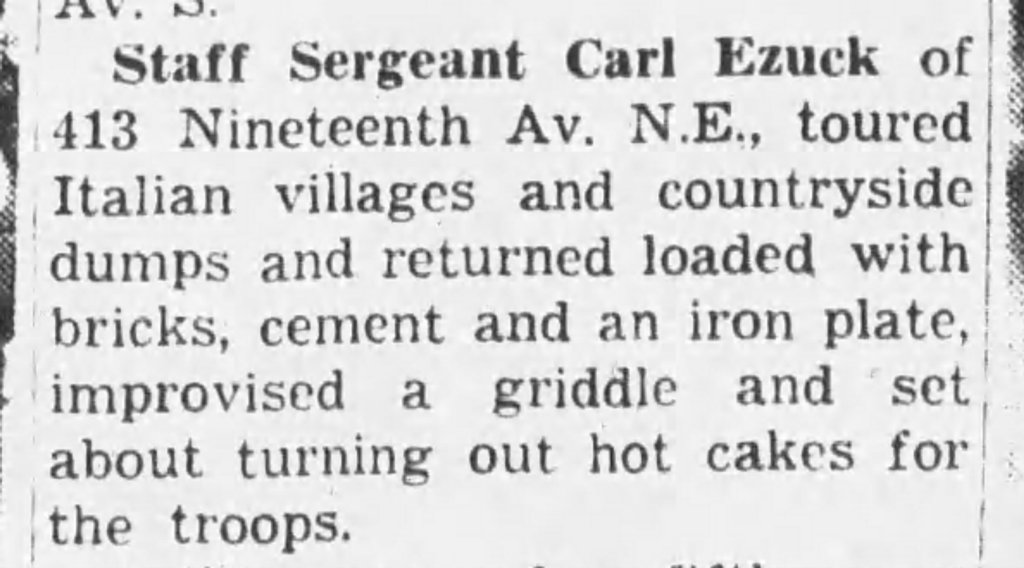
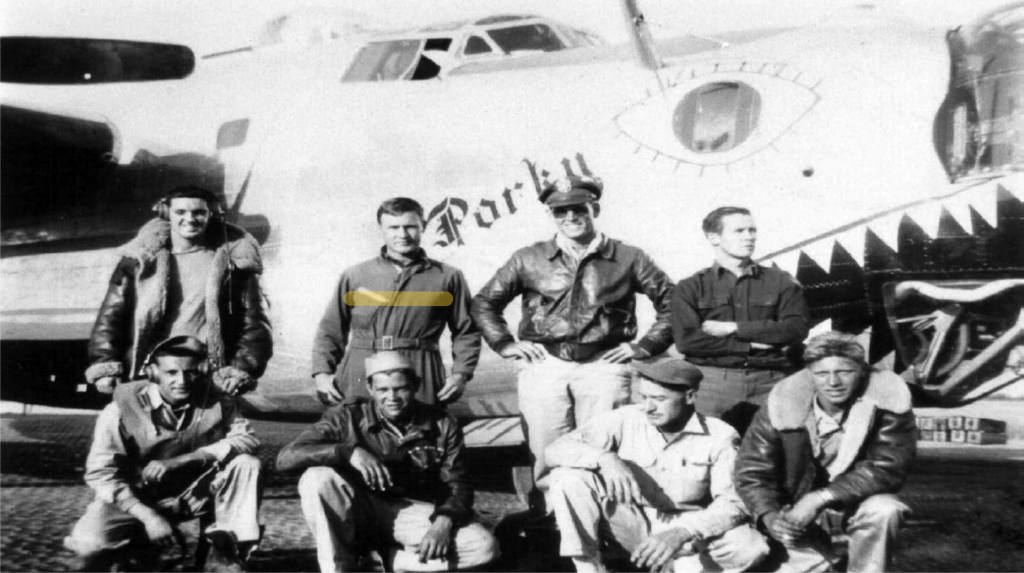
As a Gunner on the crew of the “Porky”, tt did not take long before Carl was awarded his first Air Medal. The Air Medal was typically awarded for completing 5 to 6 successful missions.
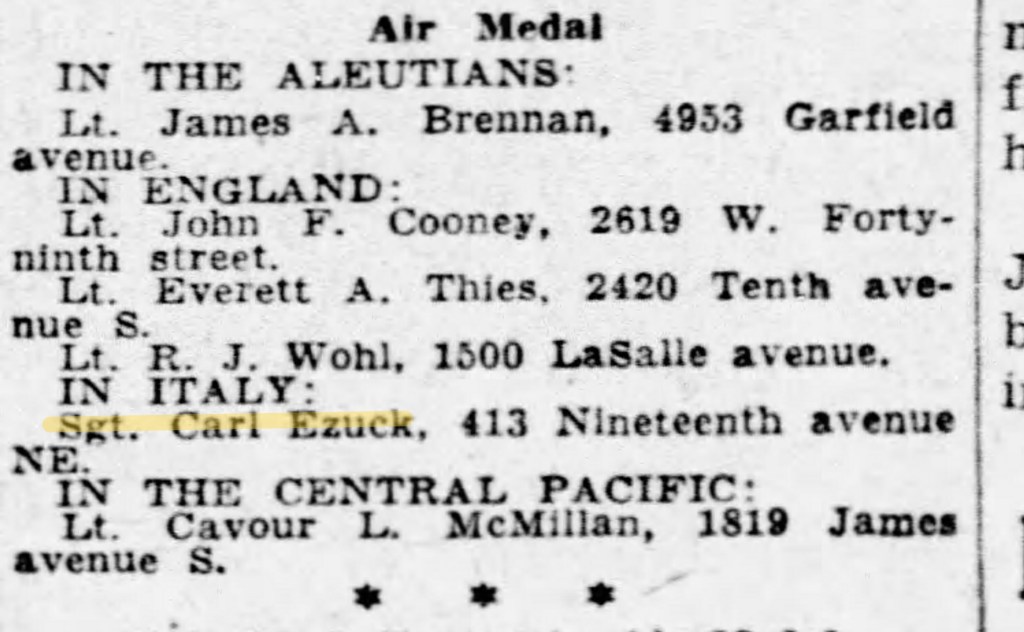
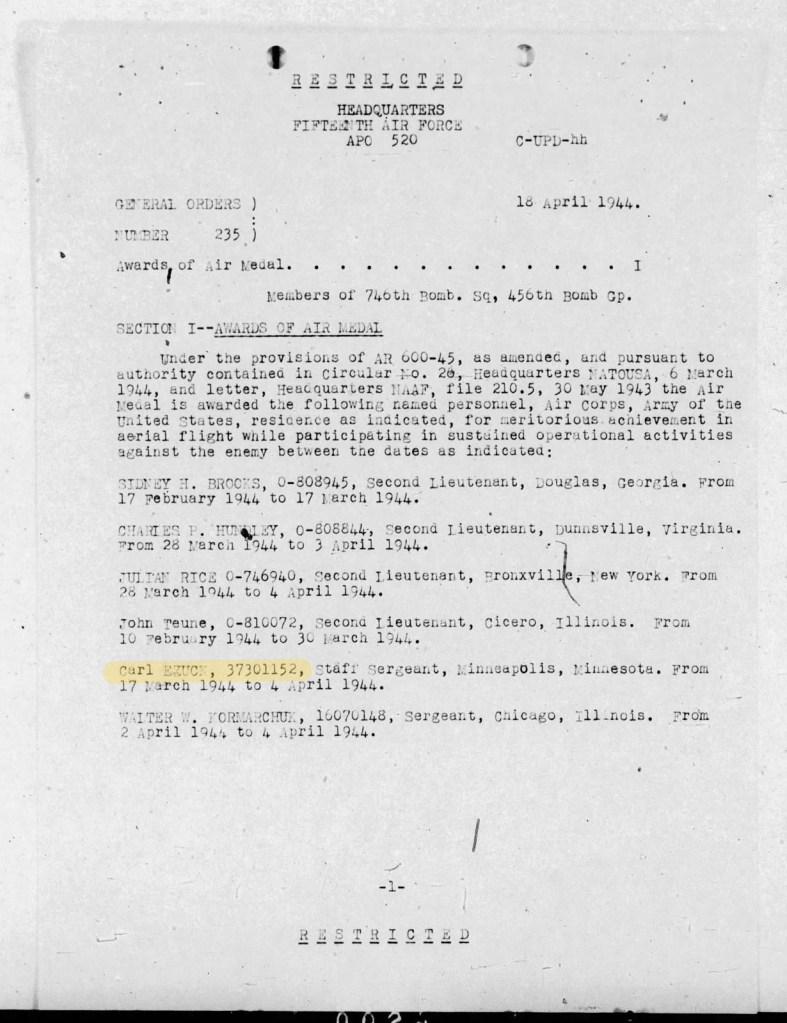
Not long after, Carl was awarded his second Air Medal. In lieu of an actual second medal, the recipient would receive a small pin of an “Oak Leaf Cluster” that would be affixed the ribbon of their original Air Medal.
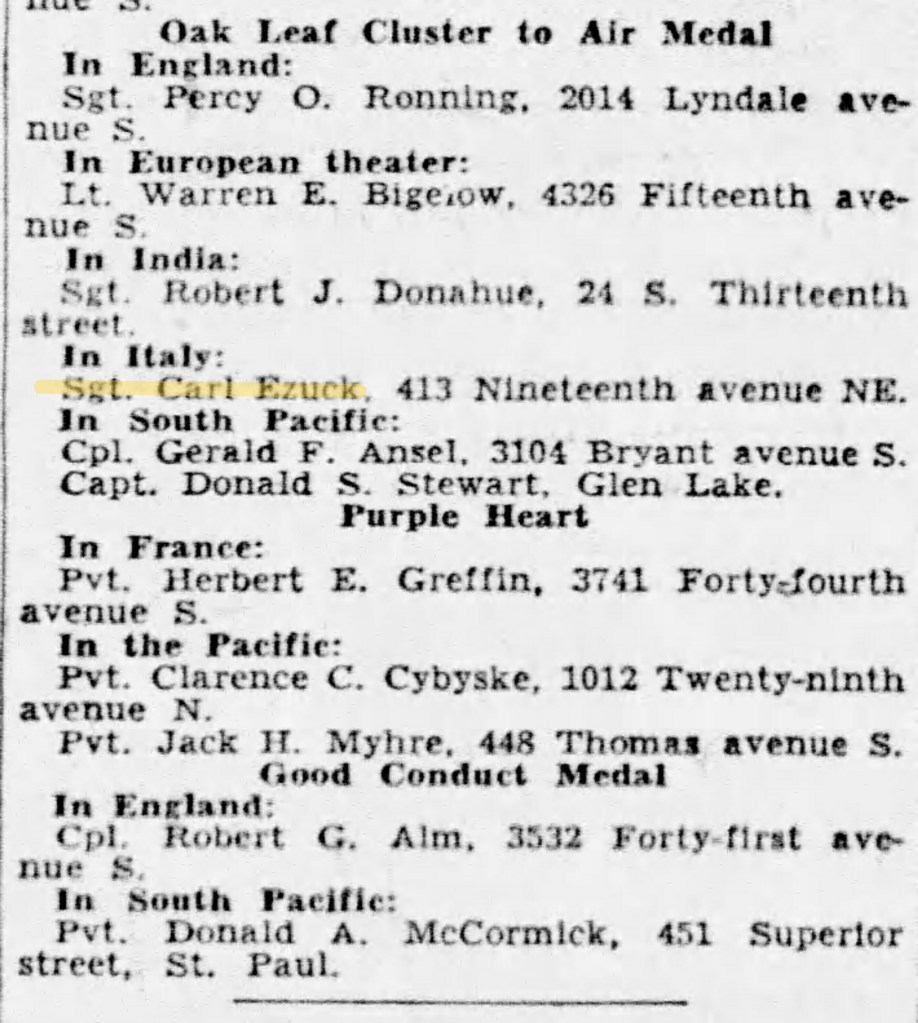
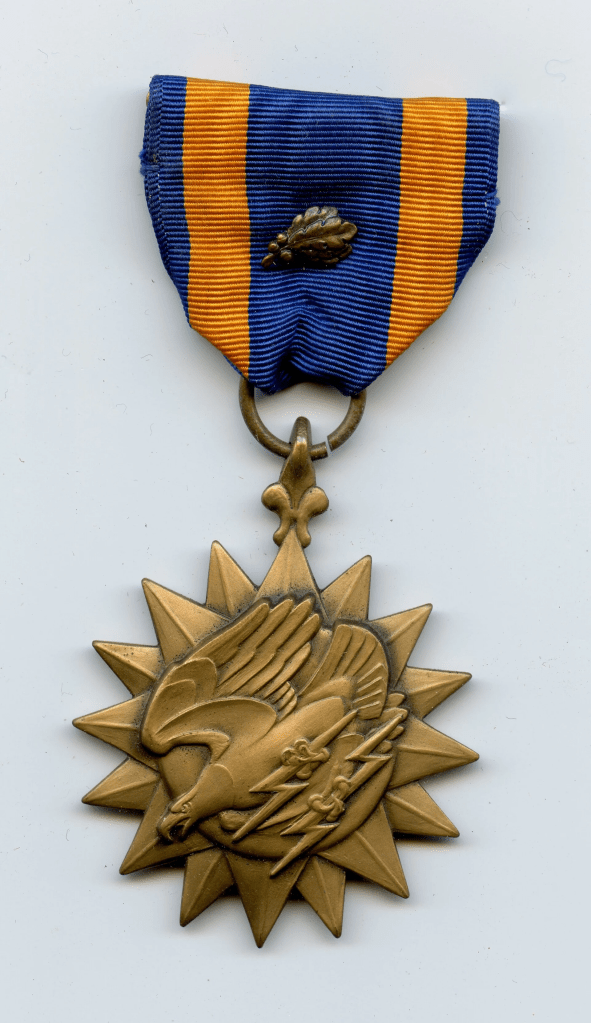
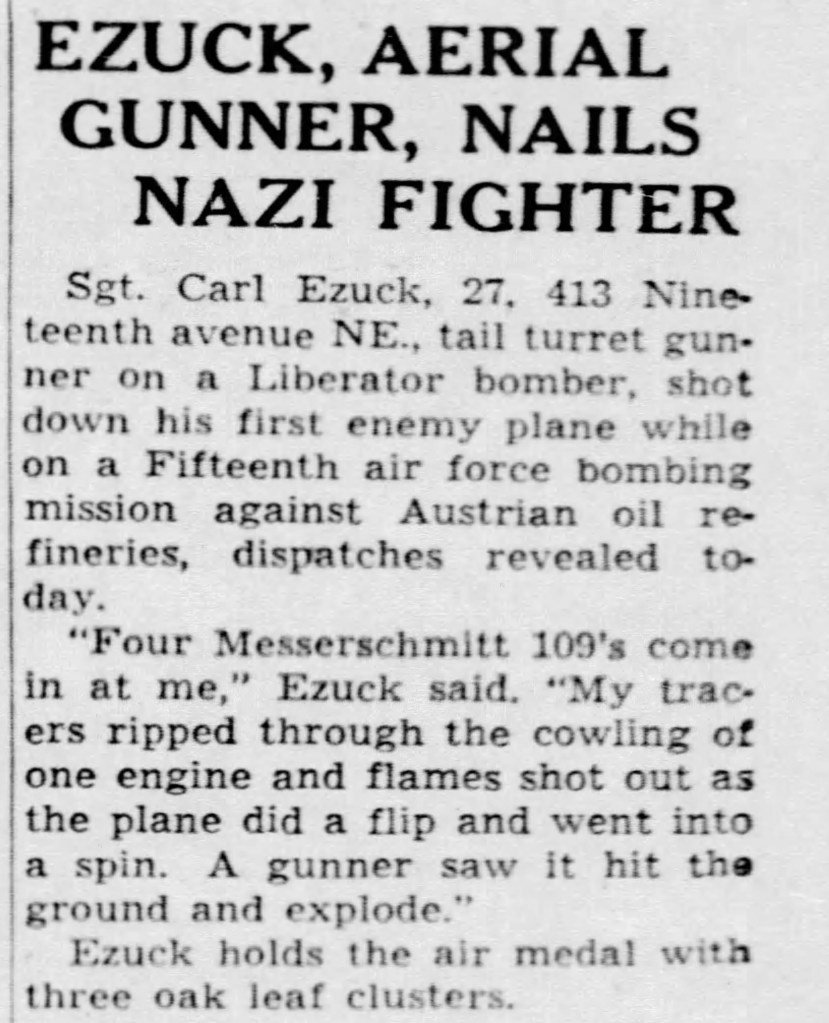
On a later mission, Carl was credited with shooting down a German fighter plane.
On 21July1945 Carl and Porky were part of a large force sent to bomb a German synthetic oil plant near Brux, Czechoslovakia. It would be Carl’s 49th mission.
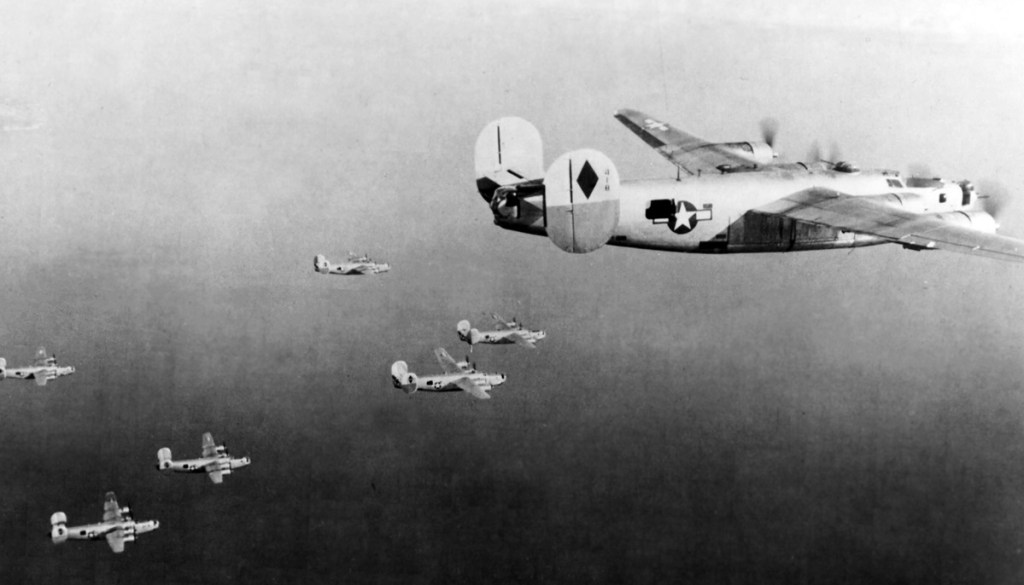
The German anti-aircraft fire over the target was heavy and accurate. Soon after releasing their bombs, Porky was hit.
The following information is used with permission from Pavel Krejci who maintains the website http://www.leteckabadatelna.cz/.
“Porky”, who was flying in the “Baker” box, was hit by flak at approximately 12:09 p.m., at a time when the box was spinning after dropping bombs to the right. Pilot Lt. Sidney Brooks struggled to control the machine, but the difficult-to-control aircraft fell backwards through the slope and descended sharply. This put him on the trajectory of the “Charlie” box. Here one of the disadvantages of the tight formations in which the American units flew became apparent. The formation was very effective in defending against German fighters, with concentrated fire from dozens of gunners providing solid protection for the group. However, the disadvantage was the difficult possibility of operative maneuvering of the entire formation, e.g. when avoiding areas with a strong concentration of flak, but also the lack of space for maneuvering individual machines. It happened that “Porky” lost speed and crashed into the bomber “Judy Ann” on the descent. The collision occurred over the southeastern edge of Teplice. Both planes broke apart in the air (according to some sources, one of the planes landed whole) and their wreckage fell in a wide area along the meadows of Písečný vrch, from today’s botanical garden towards the city district of Šanov and to the western foot of Doubravská hora. According to eyewitness testimonies, most of the machine landed on one of the villas in Doubravská Street. After the impact, the fuselages of both machines exploded.
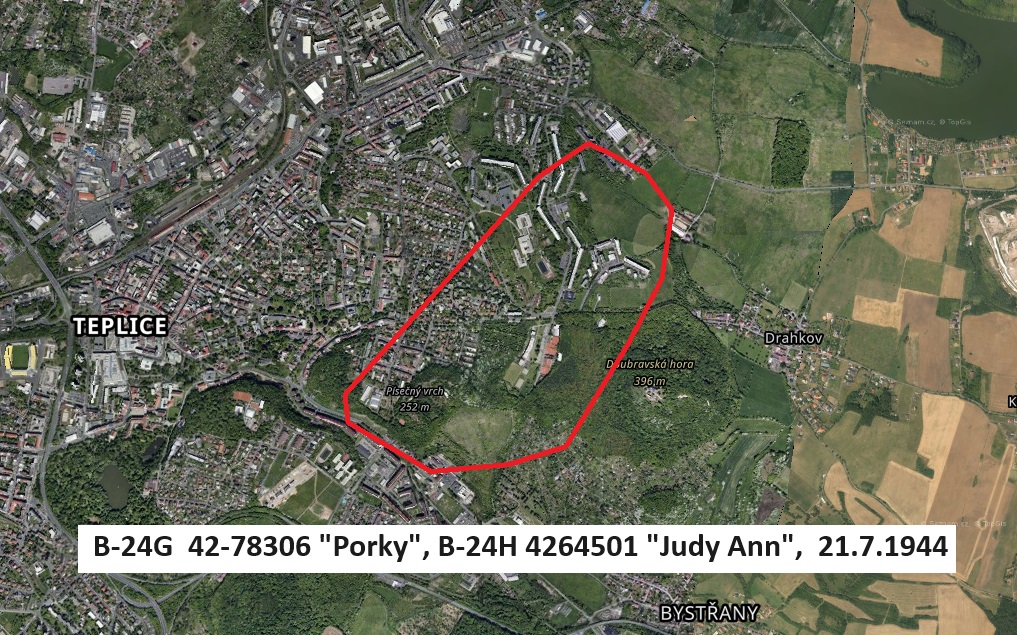
Most of the crewmen managed to leave the machines falling from a height of six kilometers (3.72 miles) on parachutes. However, what happened next is one of the very sad episodes of the air war on our territory. It is impossible to reconstruct the fates of individual crewmen, but later investigations and testimonies made at the Extraordinary People’s Court in Most, the post-war press and the memories of witnesses at least outline what followed after the crewmen from both bombers parachuted to the ground. While still in the air, several members of the Zeiss Werke factory militia were shooting at them, some of the airmen were shot on the ground. Fanatical Germans working in the fields lynched several airmen, one was allegedly stabbed to death on a rope behind a moving car. A few of them surrendered to the Wehrmacht members who appeared on the scene, but when the escort escorted them to the city, they were shot anyway… Of the eighteen crewmen on board both machines, fourteen did not live to see the evening of that day.
This report indicates that Carl was one of the crewmen who survived the midair collision only to be killed by civilians upon landing.
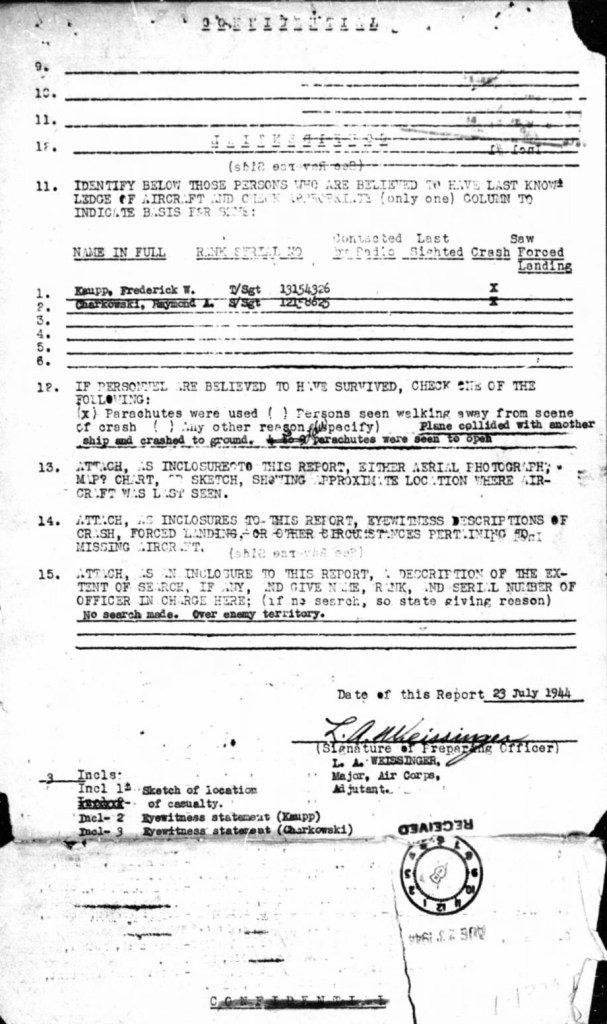
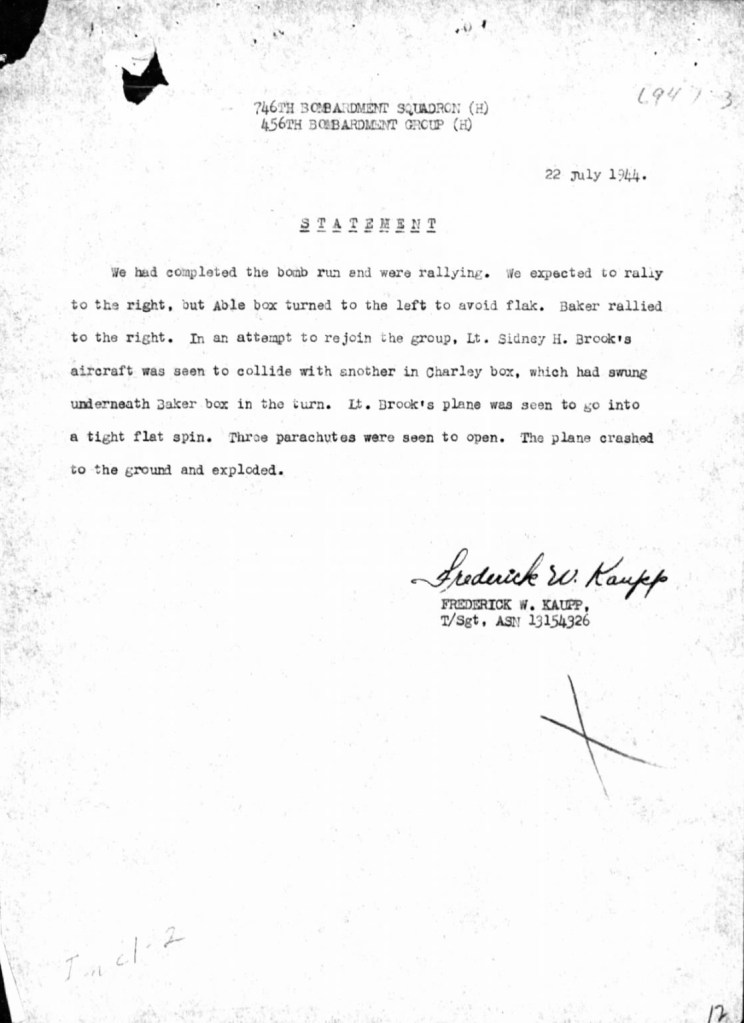
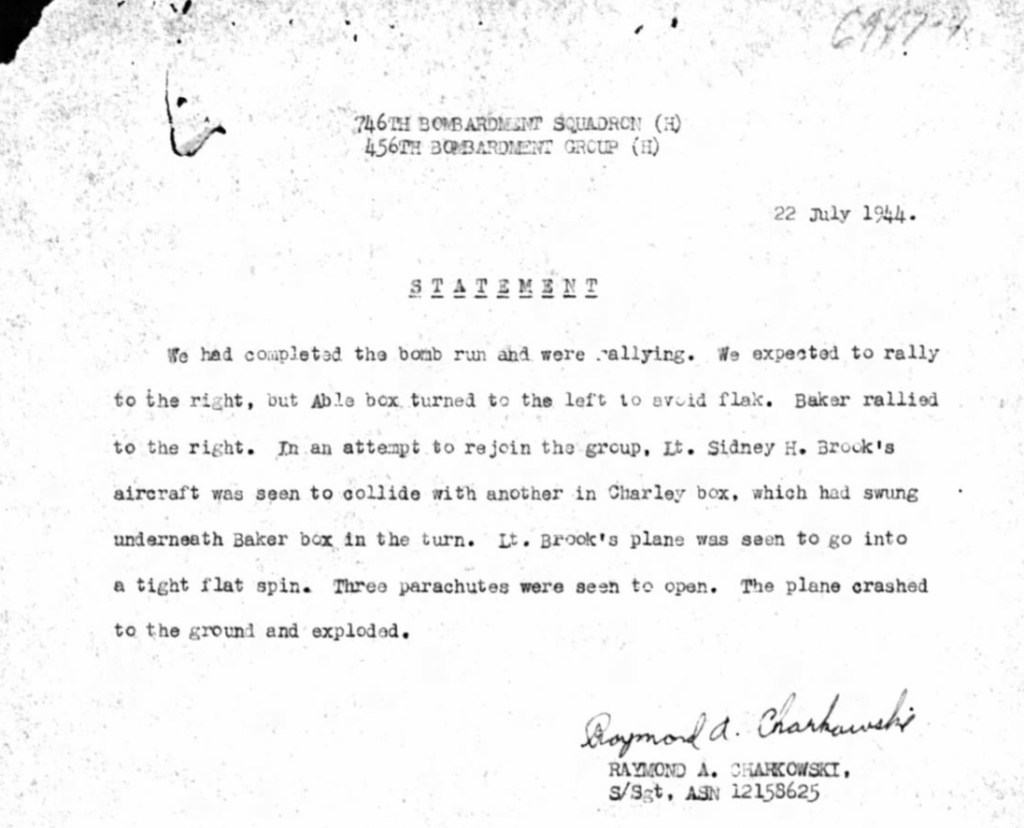
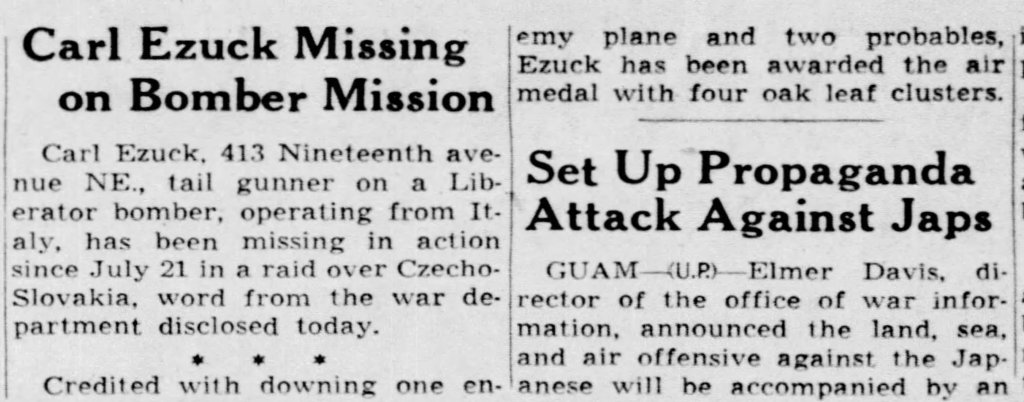
The 746th Bombardment Group did not know of Carl’s fate, and he was originally declared missing in action.
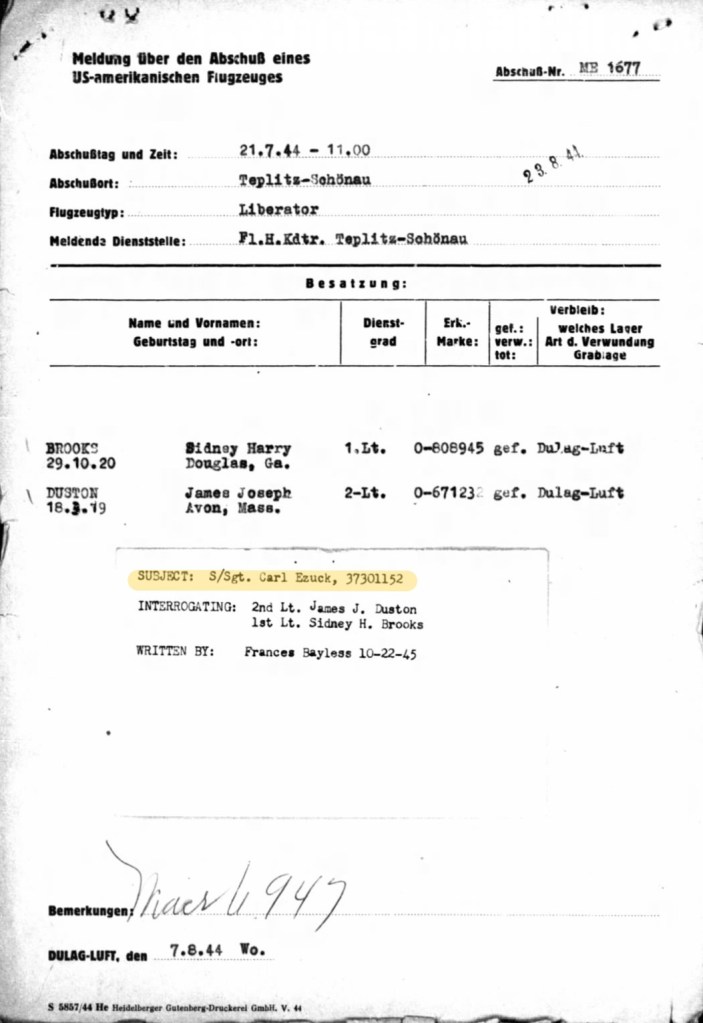
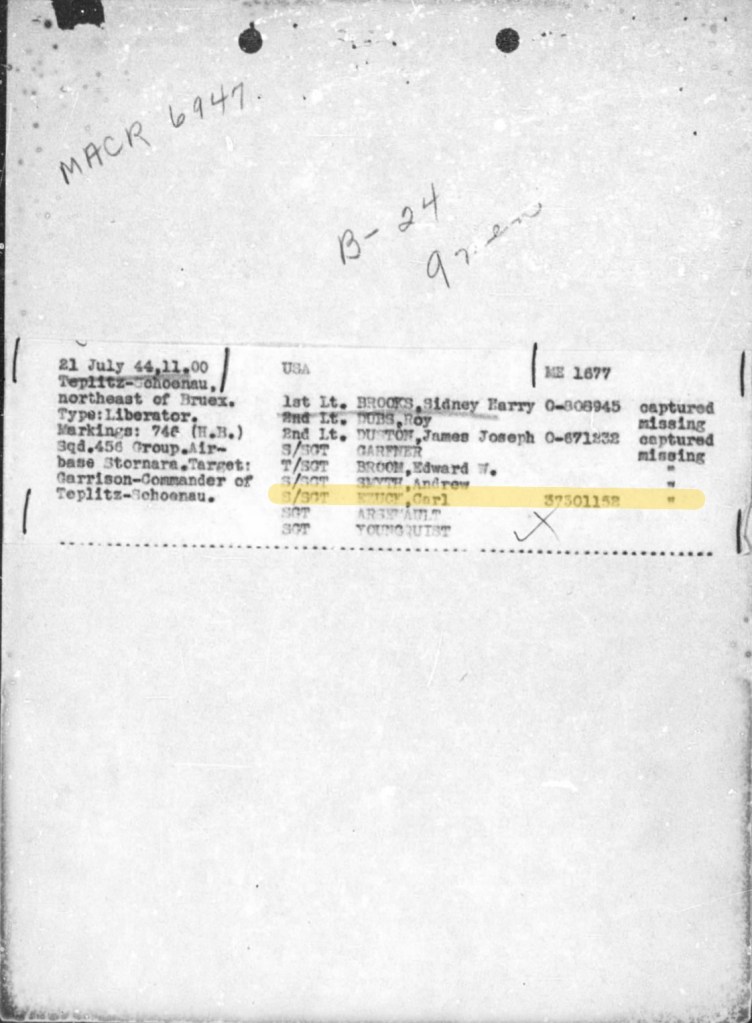
German authorities would soon confirm that Carl had been killed in action.
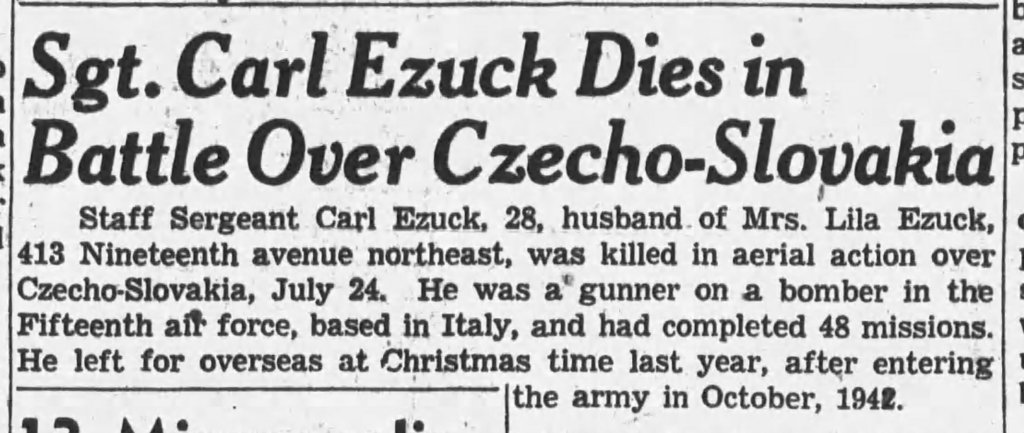
on 21Oct1944 a memorial mass was held in Carl’s honor.
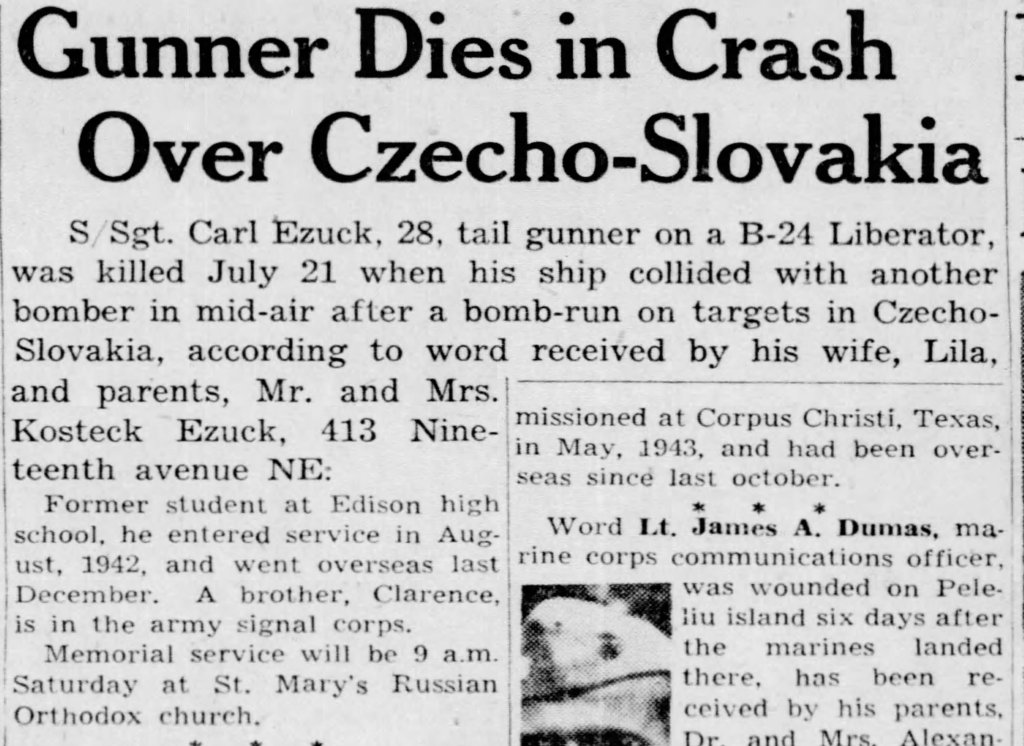
In 1951 Carl’s remains were returned to Minnesota for Reburial.
Carl is buried at Fort Snelling National Cemetery in Minneapolis, Minnesota.
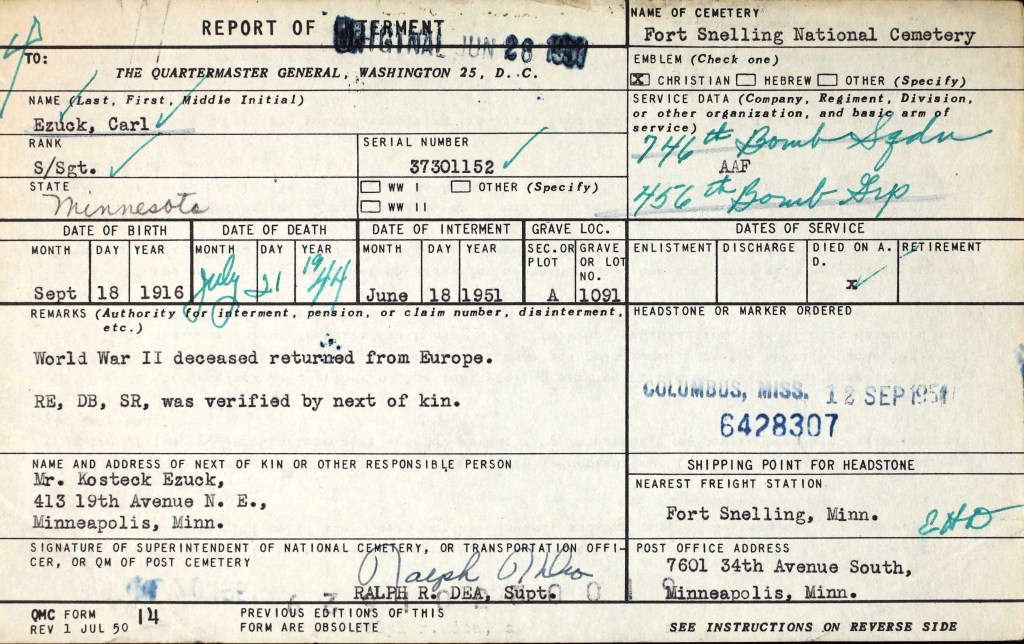
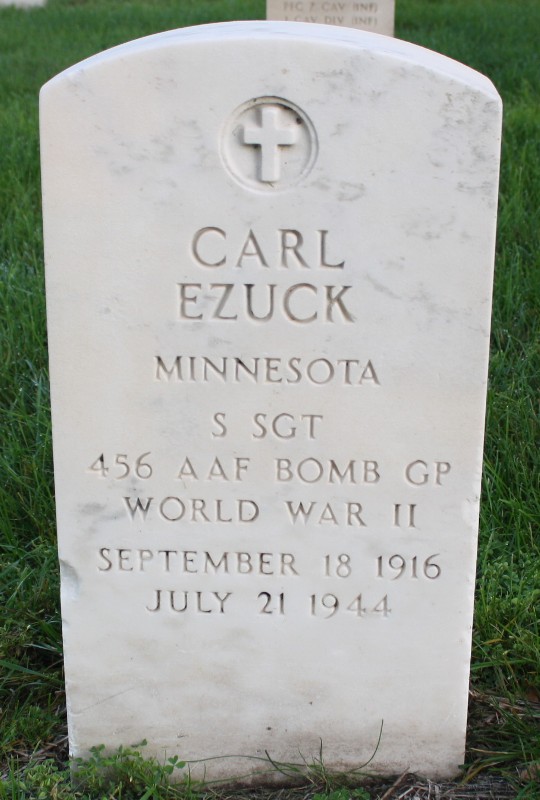
Carl’s is 1 of 6 names of Edison Heroes engraved on a monument at St. Mary’s Orthodox Cemetery in St. Anthony, Minnesota.
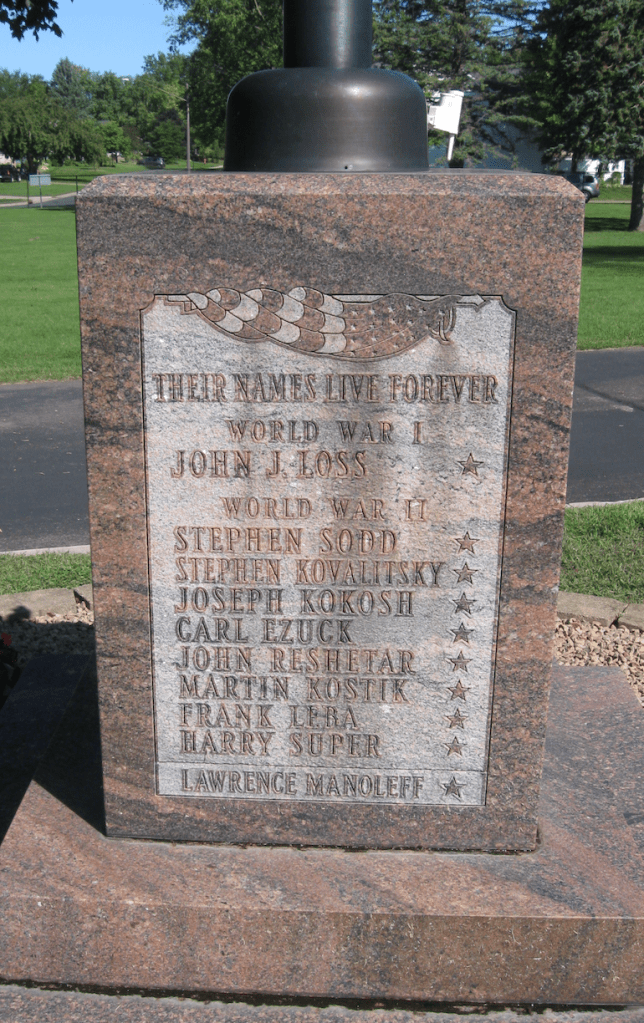
 Edison Heroes