
16Nov1913 – 13Nov1942
Edison Days
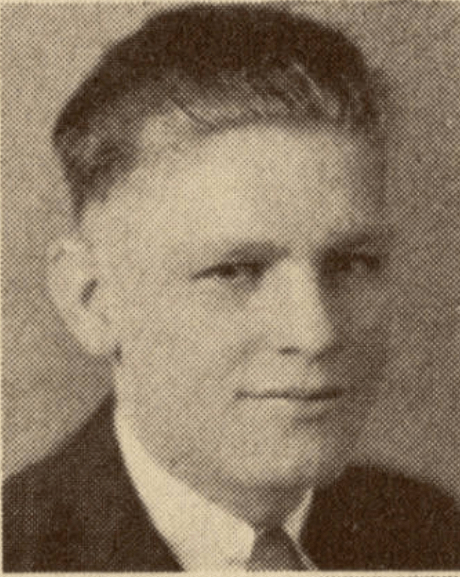
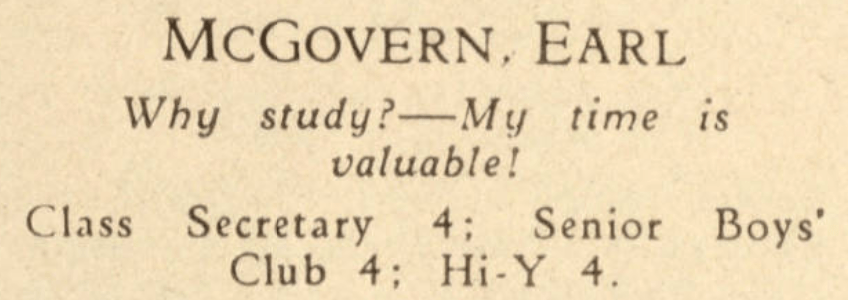
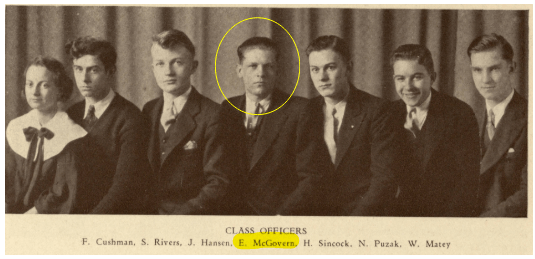
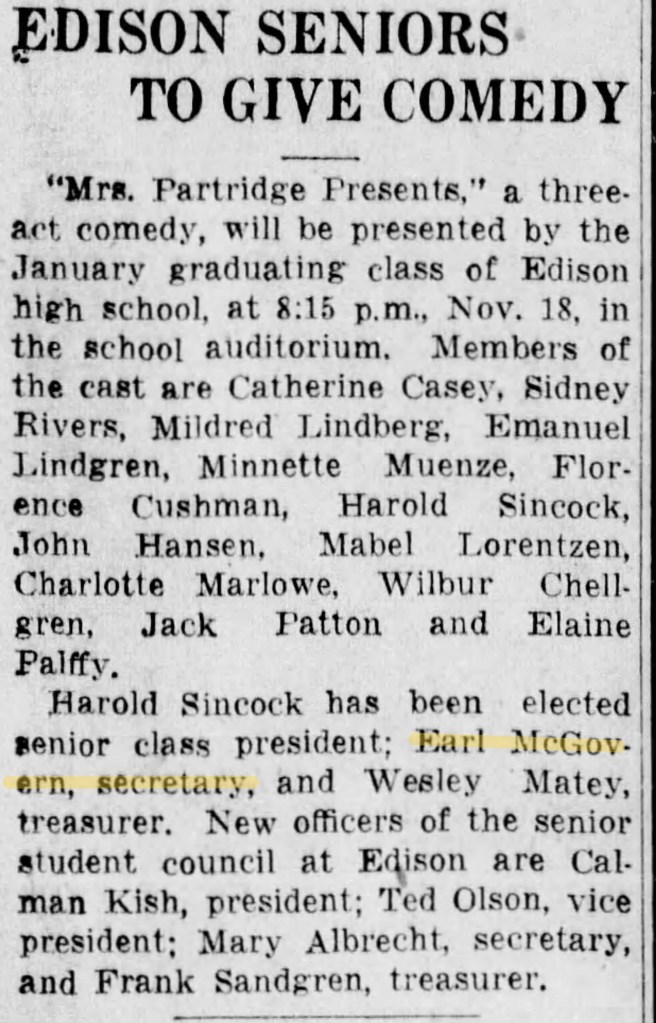
Earl graduated with the Class of January 1933. He was participated in student government, Senior Boys Club, and Hi-Y.

Military Service


Rate: Machinist’s Mate 2nd Class
Branch: United States Navy
Ship: USS Barton (DD-599)
Earl enlisted in the Navy on 4May1938. It is unknown where he took his basic training.
In 1940 he was a crewmember of the USS Sicard in the seas around Hawaii.

On 1Oct1041 Earl was prompted from Fireman 1st Class to Machinist’s Mate 2nd Class.
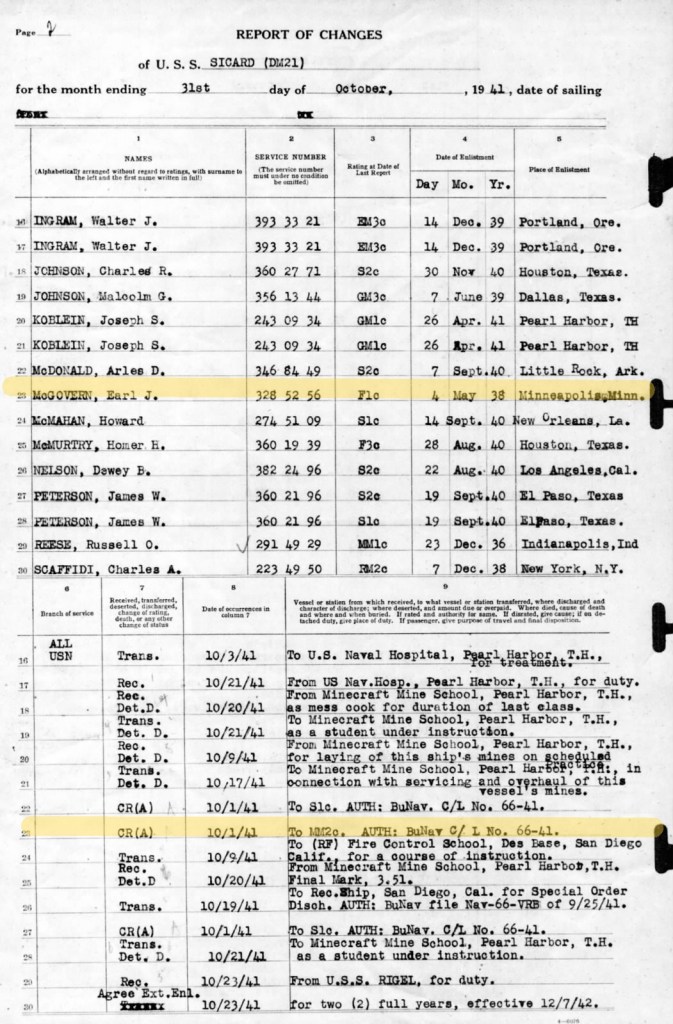
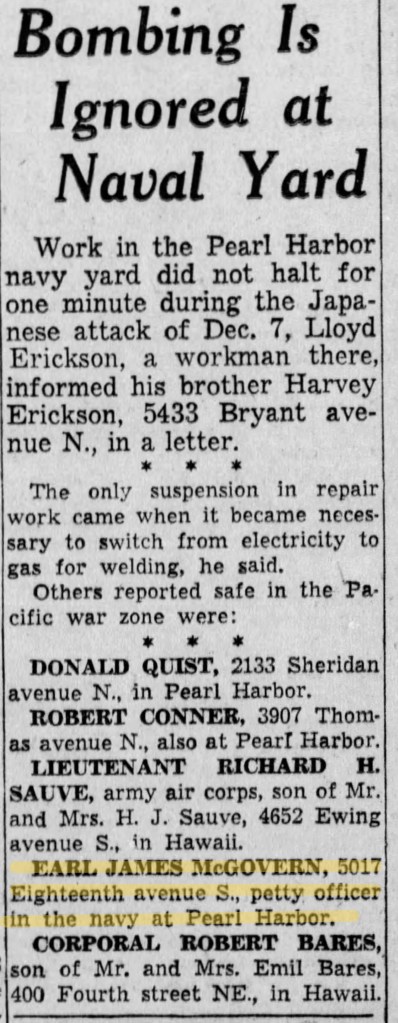
Sicard entered the Pearl Harbor Navy Yard on 21Nov1941 for an overhaul. On 7Dec1941 Earl Survived the Japanese attack on Pearl Harbor. Sicard had ammunition only for her .30-caliber machine guns but aided in the defense of the base by sending men to help operate the guns of the heavy cruiser USS New Orleans (CA-32) and the destroyer USS Cummings (DD-365).
On 29May1942 Earl was a crewmember of the USS Barton when it was commissioned.
Barton departed the east coast 23Aug1942 and steamed to the Pacific, arriving at Tongatapu, Tonga Islands, 14Sep1942. During October she participated in the Buin-Faisi-Tonolai raid (5 October) and the Battle of Santa Cruz (26 October) where she claimed shooting down seven Japanese planes. On 29 October she successfully rescued 17 survivors of two downed air transports near Fabre Island.
Arriving off Guadalcanal on 12Nov1942 having safely escorted a supply convoy to the island, Barton was ordered to join up with Rear Admiral Daniel J. Callaghan’s force of five cruisers and seven other destroyers to repel a force of Japanese warships reported by recon aircraft to be heading down the body of water known as ‘The Slot’ towards Guadalcanal. Assuming her position in the eleventh spot of the US force just before sundown, Barton’s crew settled into their battle stations to wait out the Japanese, expected to arrive around midnight.
As darkness overspread the body of water known as Ironbottom Sound, several tropical rain storms and squalls began to cross the area, limiting visibility for both the Americans and the Japanese as they steamed towards each other, however several American ships were equipped with long range radar systems which began to detect the approaching Japanese ships at approximately 12:30 am. Consisting of two battleships, one cruiser and eleven destroyers, the Japanese fleet rounded the northwestern coast of Savo Island and entered Ironbottom Sound at approximately 1:10 am) and shaped their course for Henderson Field; the American airbase they were sent to destroy. Steaming through a heavy rain squall, the Japanese ships were totally unaware of the presence of the American force directly ahead of them, and the heavy rain prevented the US fleet from sighting the Japanese ships for over an hour after the first radar contact.
At approximately 1:30 am, both sides finally made visual contact with each other as the first Japanese ships emerged from the squall line only 3,000 yards away from the entire US formation. Despite the Americans having steamed directly into the middle of the Japanese force, neither side opened fire for almost ten minutes as they passed by each other, with the Japanese ships enveloping the American battle column as they emerged from the darkness in three separate groups. In the second position of the rear, US Destroyer van USS Barton began to train her deck guns and torpedo tubes on several Japanese ships in her immediate area and awaited the order to open fire from the flagship. At 1:48 am the order to open fire was precluded when Akatsuki lit its searchlights onto the cruiser Atlanta, causing both sides to immediately open fire on each other and starting the First Naval Battle of Guadalcanal.
Now fully enveloped by Japanese battle lines, Barton and Monssen steaming astern, broke to the northwest into the main group of Japanese ships while firing at point blank range on nearby Japanese destroyers and making violent maneuvers to avoid collisions with both friendly and enemy ships in the melee. Barton had just fired a full spread of torpedoes at the battleship Hiei when the light cruiser USS Helena appeared suddenly out of the darkness and cut directly across the bow of Barton. Making an emergency stop to avoid colliding with Helena, Barton found herself at a dead stop as her engineering crew tried to get her engines back into gear to get her moving again. However, before she could get underway two ‘Long Lance’ torpedoes fired by the Amatsukaze slammed into the midsection of Barton; one in her boiler room and one in her engine room. The massive explosions broke the Barton in two, and both sections sank only minutes after the first torpedo struck, carrying with her 164 men: 13 officers and 151 of her crew. Earl went down with the ship.
Only 68 crewmen survived, forty-two survivors were rescued by USS Portland, and twenty-six by Higgins boats from Guadalcanal.
Earl’s family was originally informed that he was missing in action.
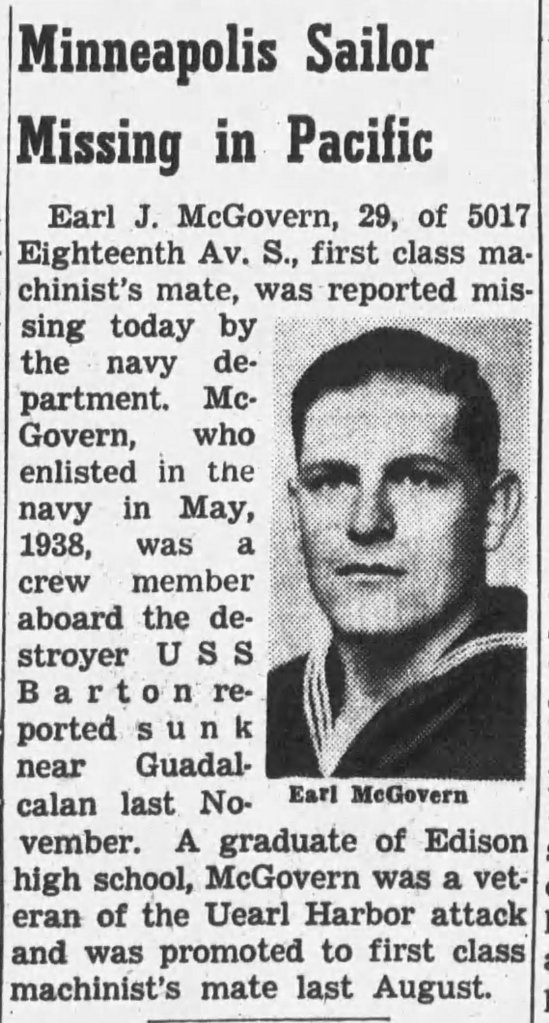
After 1 year, the Navy declared that Earl was killed in action. In June of 1944 his parents were awarded with the Purple Heart award that Earl earned.

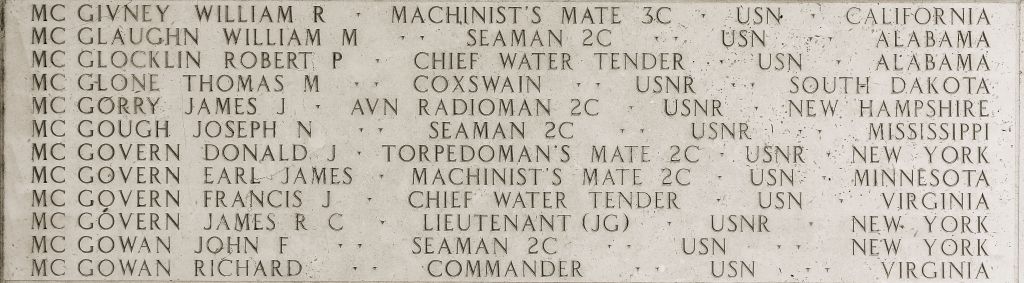
Earl’s body was never recovered. His name is 1 of 36,286 names of US service members inscribed on the Tablets of the Missing at the Manila American Cemetery and Memorial in Manila, The Philippines.
 Edison Heroes