
14Sep1919 – 26Apr1945
Edison Days
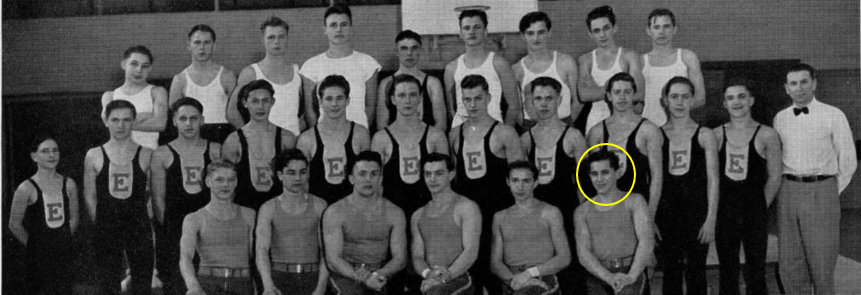
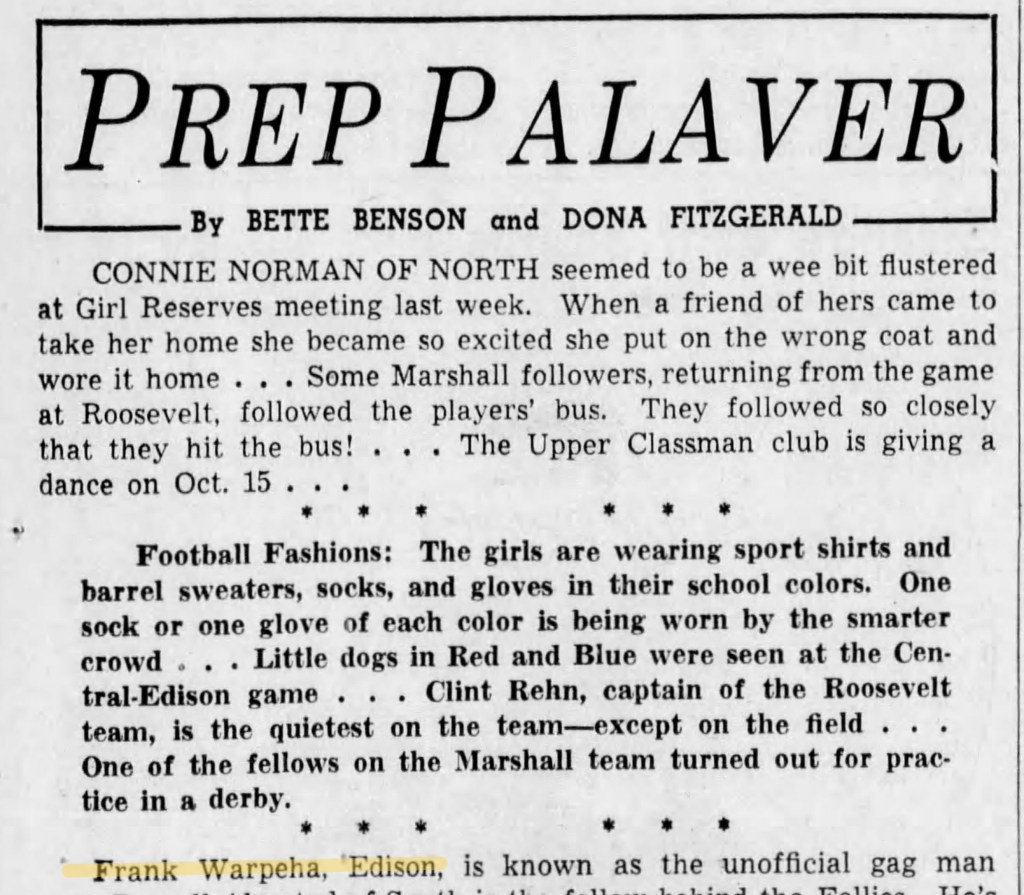
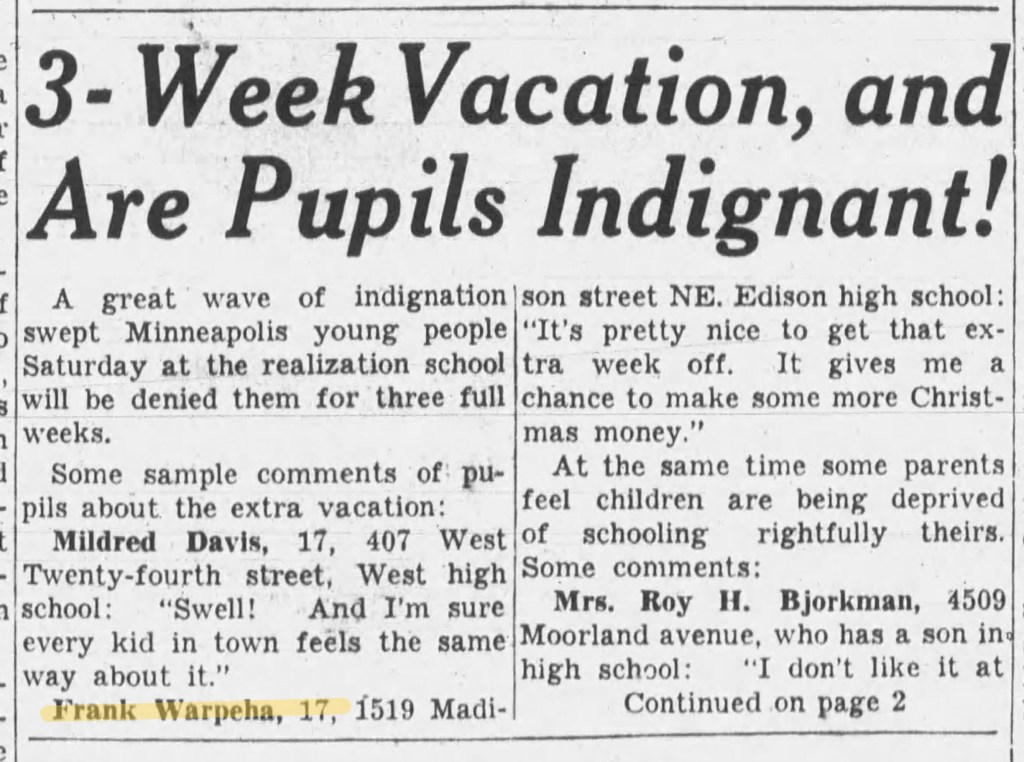
Frank attended Edison in 1937 and 1938. It is unclear if he left school prior to graduating. He participated in Gymnastics both years and was awarded a Varsity letter in 1937.
After high school Frank attended the University of Minnesota where he also participated in Men’s Gymnastics.
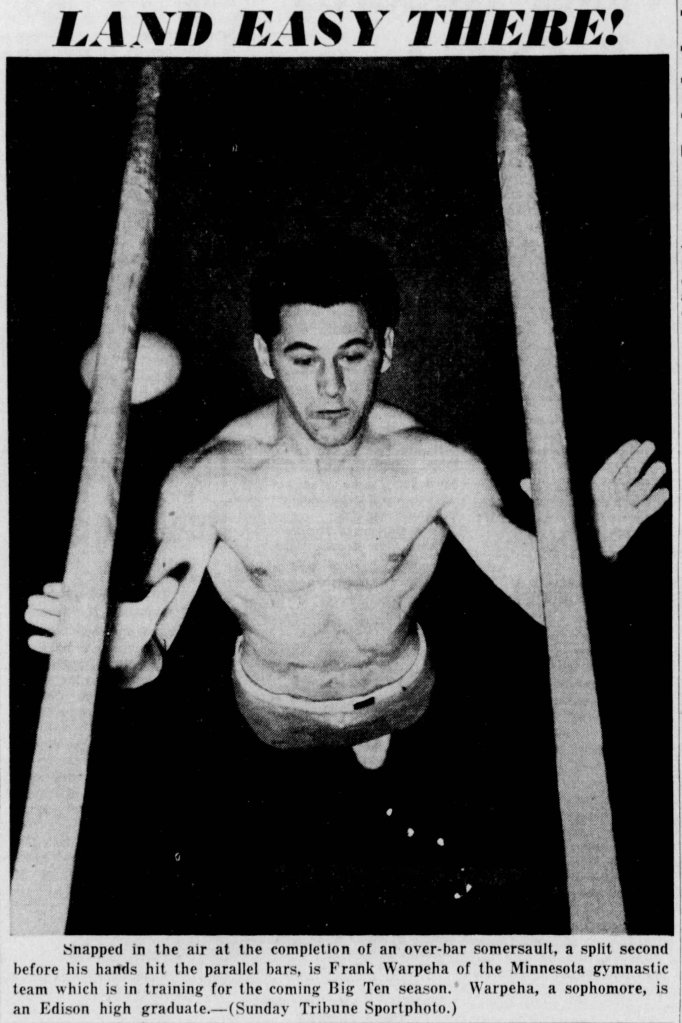
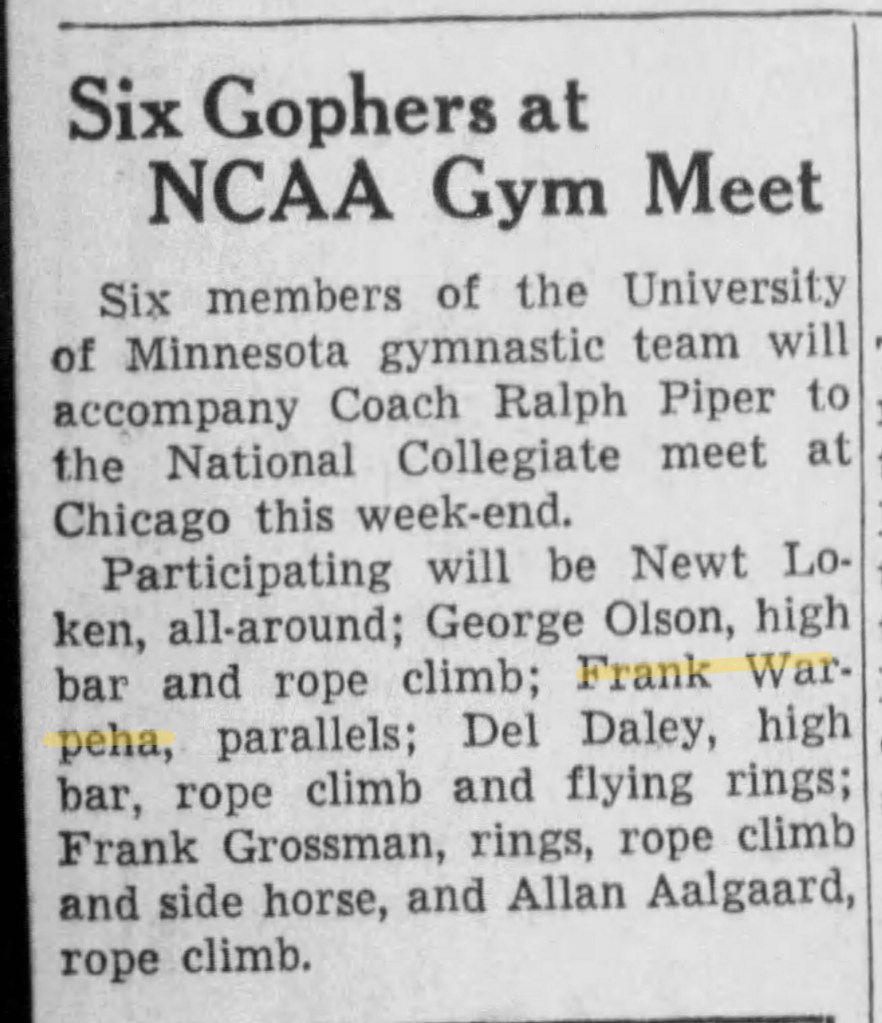
He participated in the National Championship Meet in 1941 and 1942.
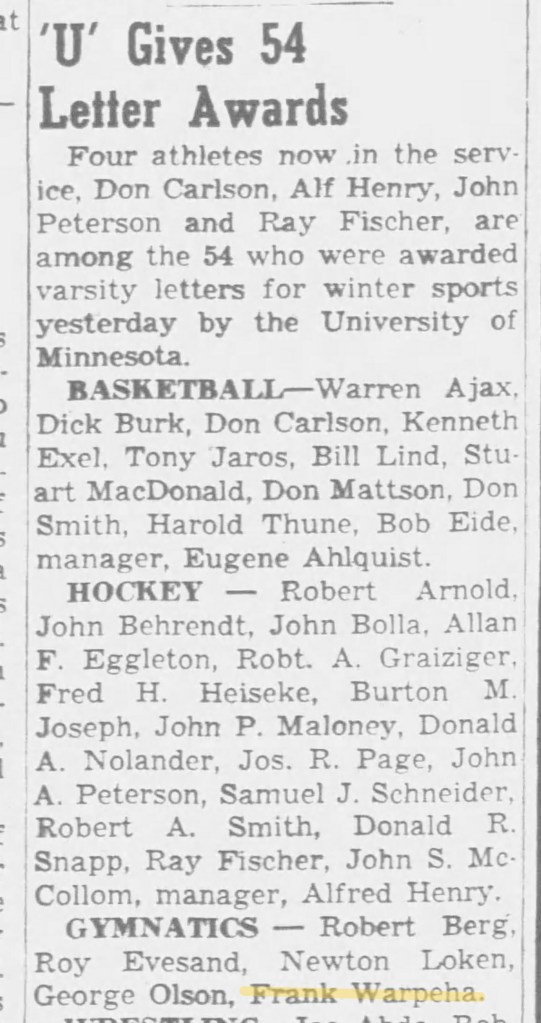
He was a letter winner for the Gophers in 1942.
Military Service
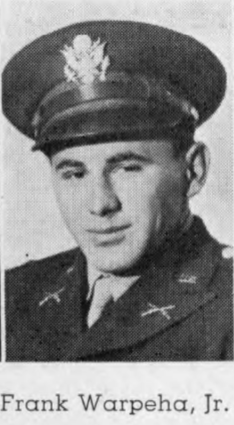

Rank: 1st Lieutenant
Branch: United States Army
Unit: Company D – 1st Battalion -333rd Infantry Regiment – 84th Infantry Division
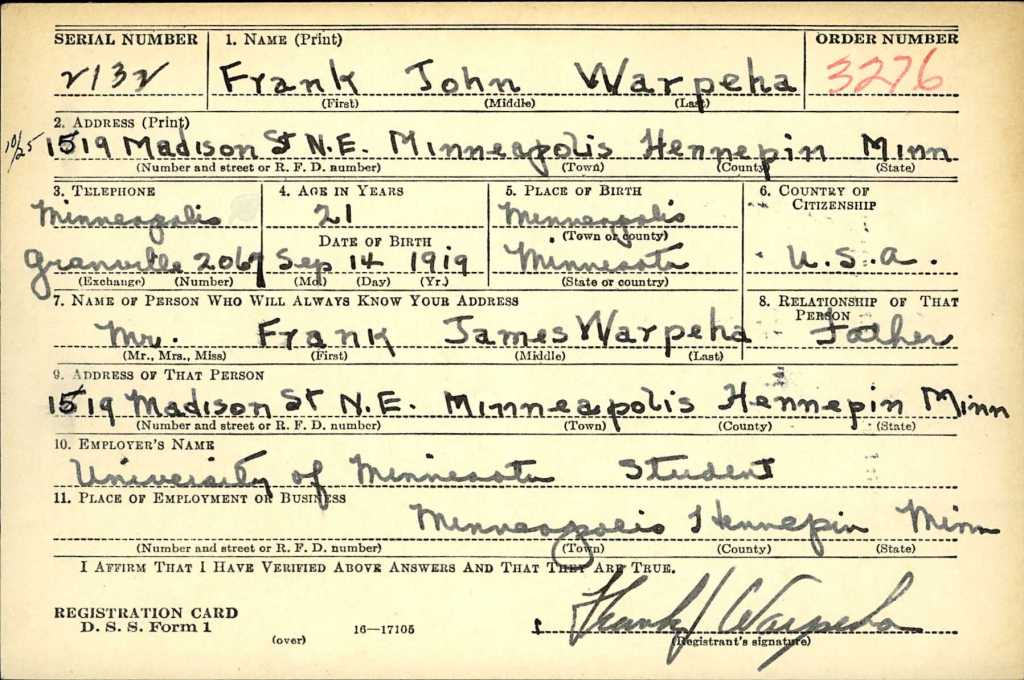
Frank enlisted in the Army in March 1942 just after the 1942 NCAA Men’s Gymnastics meet. It is unknown where he attended Army basic training.
By July 1942 Frank had been promoted to Sergent and was stationed at Camp Barkeley, Texas.
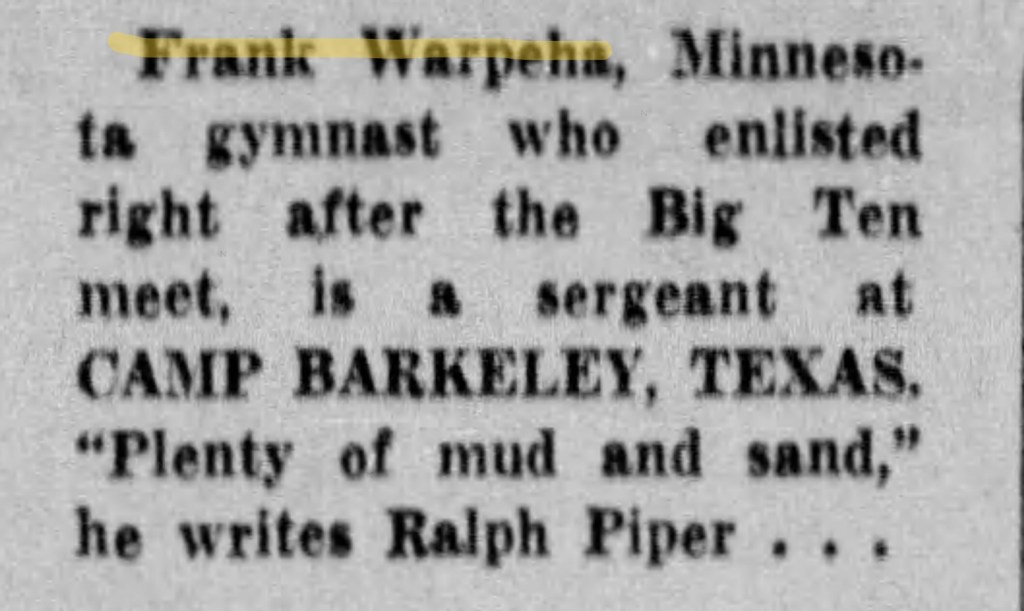
Just 2 months later he was sent to Officer training at Fort Benning, Georgia.
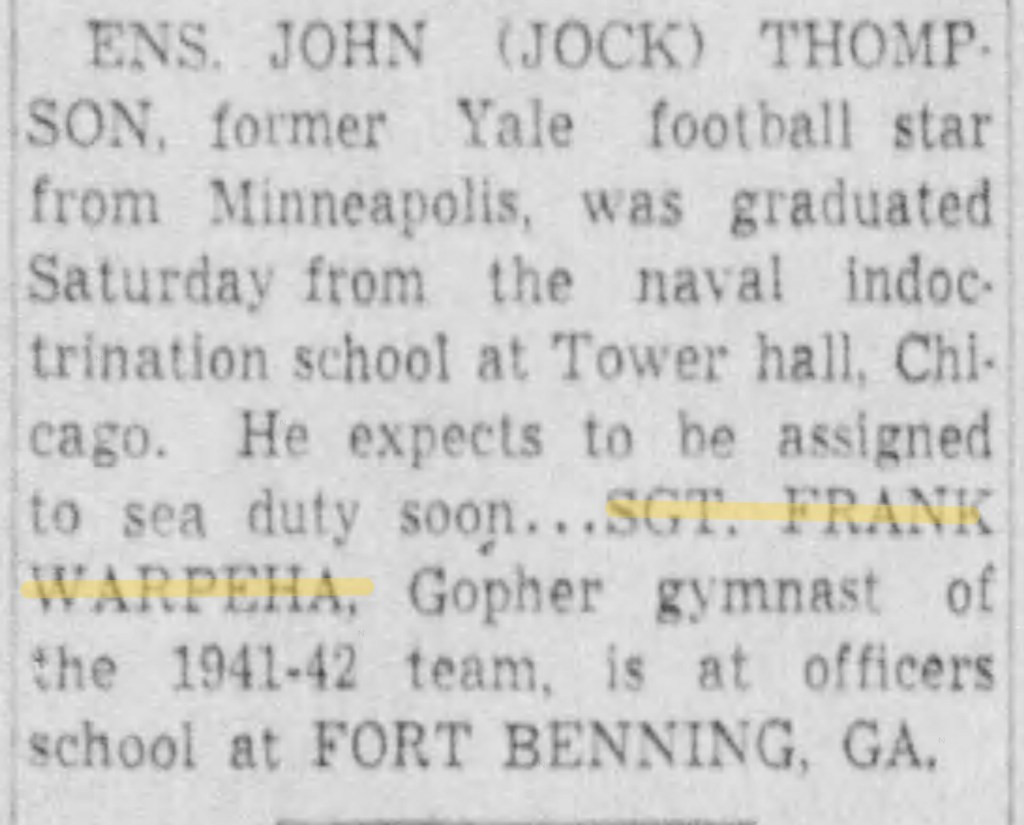
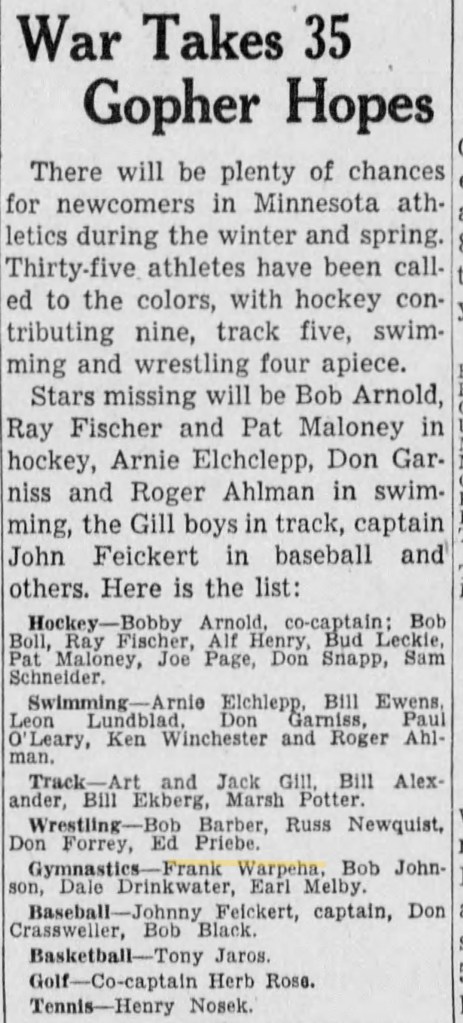
Frank must have made his mark as a Gopher Gymnast, as the sports page of the local newspapers mentioned him frequently.
He was commissioned as a 2nd Lieutenant in December 1943.
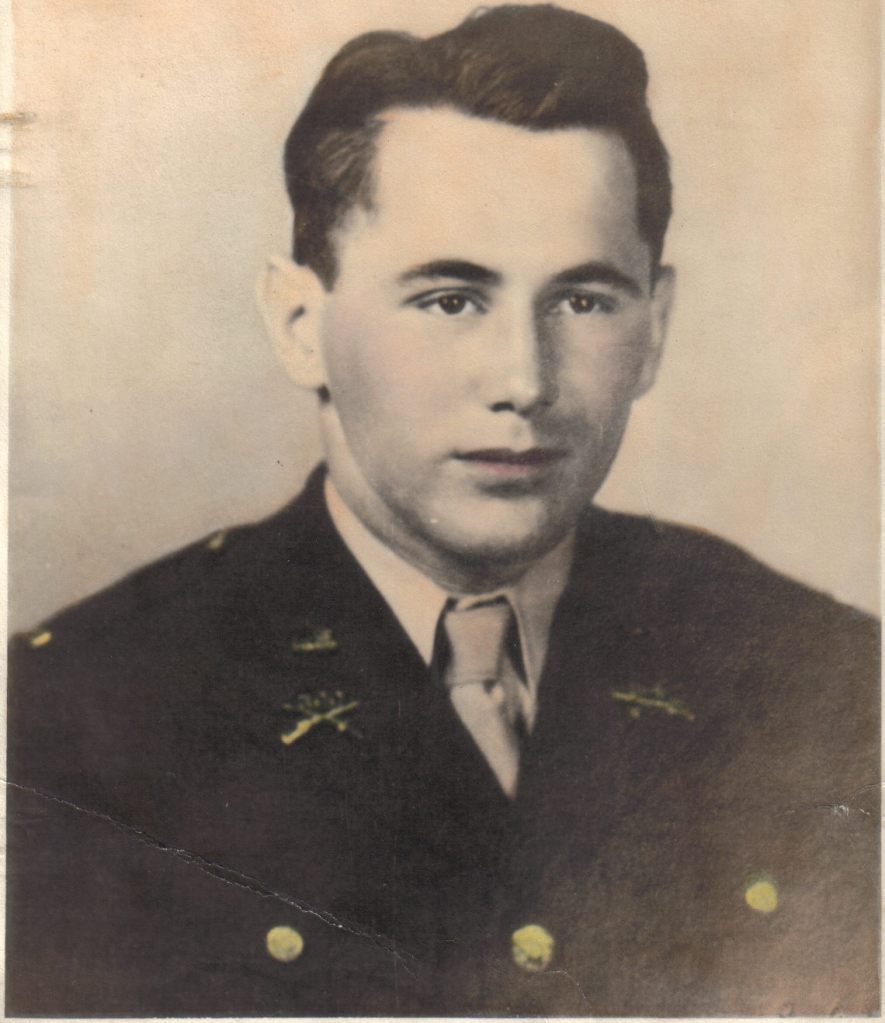
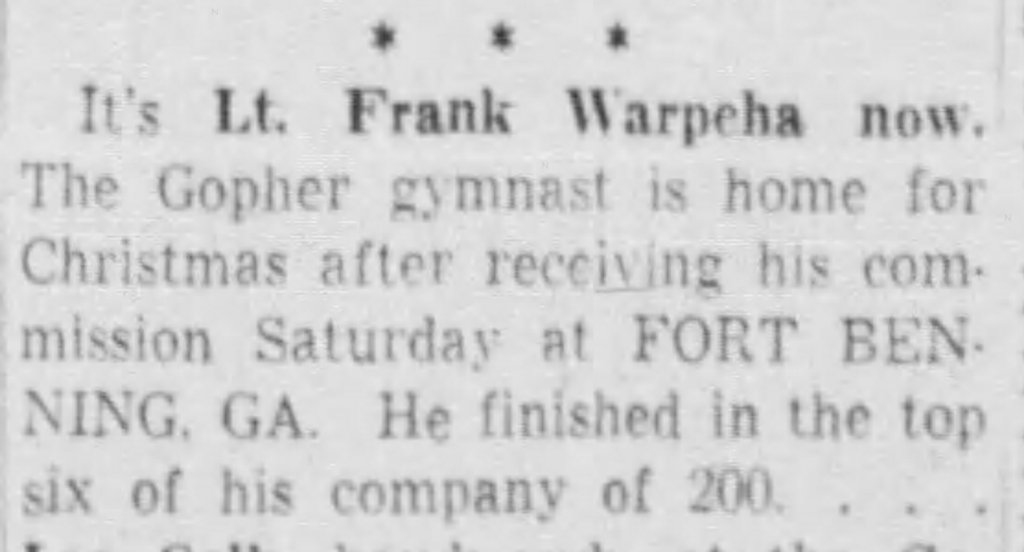
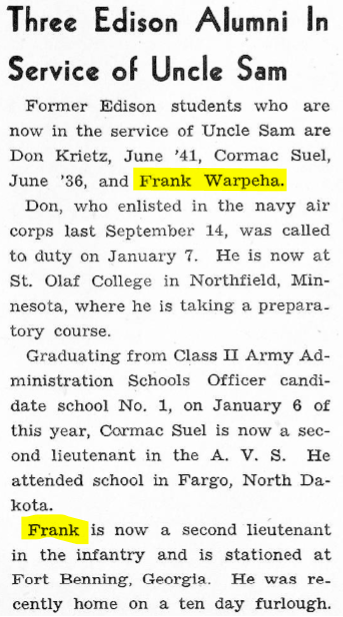
While the records are not definitive, it is likely that Frank was assigned to the 333rd Infantry Regiment after earning his commission.
Just over 7 months later, in July 1944, he was promoted to 1st Lieutenant.
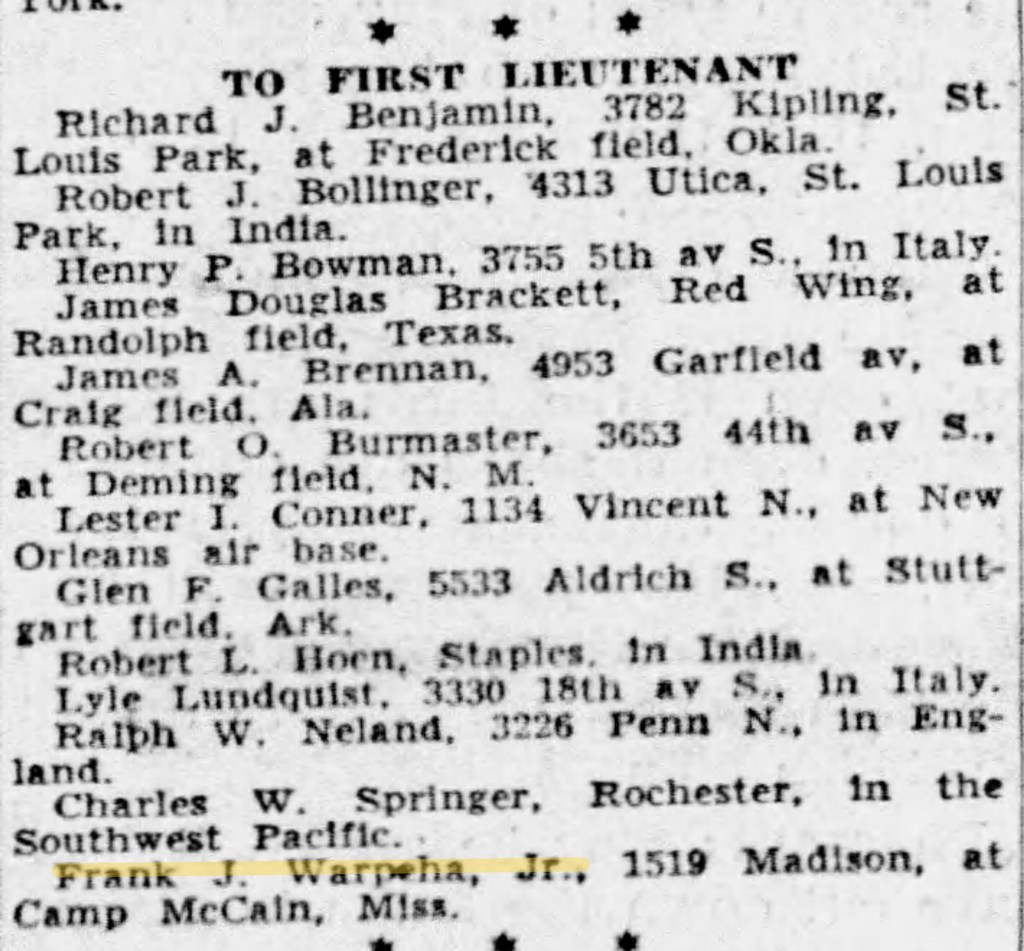
Frank and the 333rd Infantry Regiment sailed for England in September 1944 and arrived on October 1st. After a month of training, the 333rd along with the rest of the 84th Division sailed for France. Landing at Omaha Beach, it took 4 days to move the division.
2 weeks later, the 333rd entered combat. As part of Operation Clipper, the 84th Infantry Division’s attack began on 18Nov1944. That day the 334th Infantry Regiment led the assault on Prummern. The 333rd Infantry jumped off the next morning at about 0700 hours. Its mission was to clear the Wurm valley southwest of Geilenkirchen, take the town itself, and push on toward Sueggerath, Muellendorf, and Wurm. The 1st Battalion led the attack into Geilenkirchen supported by British tanks of the Sherwood Rangers Yeomanry. Geilenkirchen fell that day, though fighting continued in the surrounding area amid mud, mines, and pillboxes. It took until December 18th for the German resistance to be eliminated.
The start of the Battle of the Bulge on 16Dec1944 caused Frank and the 84th Division to be sent to Belgium to organize a perimeter defense around Marche and Hotton. They were ordered to hold the road network “at all costs” against elements of German panzer forces including the 116th Panzer Division in snow, sleet, freezing conditions, and often with exposed flanks.
German forces pierced the lines at Verdenne on December 24. The town was recovered the next day, and the pocket between Verdenne and Bourdon was cleared by December 27.
The division threw back multiple attacks, then went on the offensive. After they recaptured Verdenne , they took Beffe, Devantave, and then seized La Roche on 11Jan1945.
Working with the 2nd Armored Division, it advanced toward Houffalize, helping reduce the salient. By mid-January the Bulge had been closed in its sector.
After a short rest and training, the division assumed responsibility for a sector of the Roer River line (between Linnich and Himmerich) and prepared for the crossing. On 23Feb1945 they crossed the Roer near Linnich, Germany. The advance was rapid once the bridgehead was secured.
They took Boisheim and Dülken, crossed the Niers Canal, captured Krefeld, and reached the Rhine by March 5. An advance of roughly 50 miles in about 10 days. The division then held and trained on the west bank of the Rhine through March.
The 84th crossed the Rhine around 1 April and drove eastward in conjunction with armored forces. They advanced from the Lembeck area toward Bielefeld, crossed the Weser, and seized an intact bridge over the Leine at Gümmer.
Hannover, Germany was captured on April 10 after street fighting. The division also uncovered the Hannover-Ahlem satellite camp of Neuengamme concentration camp that day.
They reached the Elbe River around April 14 and relieved armored units that were already there. Salzwedel concentration camp was liberated on April 14.
The 84th is officially recognized as a liberating unit by the U.S. Army Center of Military History and the U.S. Holocaust Memorial Museum. By this late stage of the war, German resistance was sporadic. The following excerpt is from a unit history of the 84th Division.
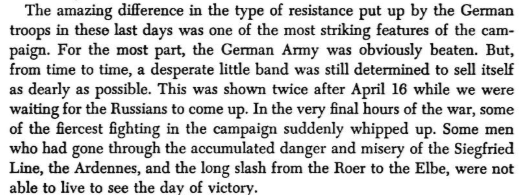
23Apr1945 was the last day that the 84th Division was in combat against the Germans.
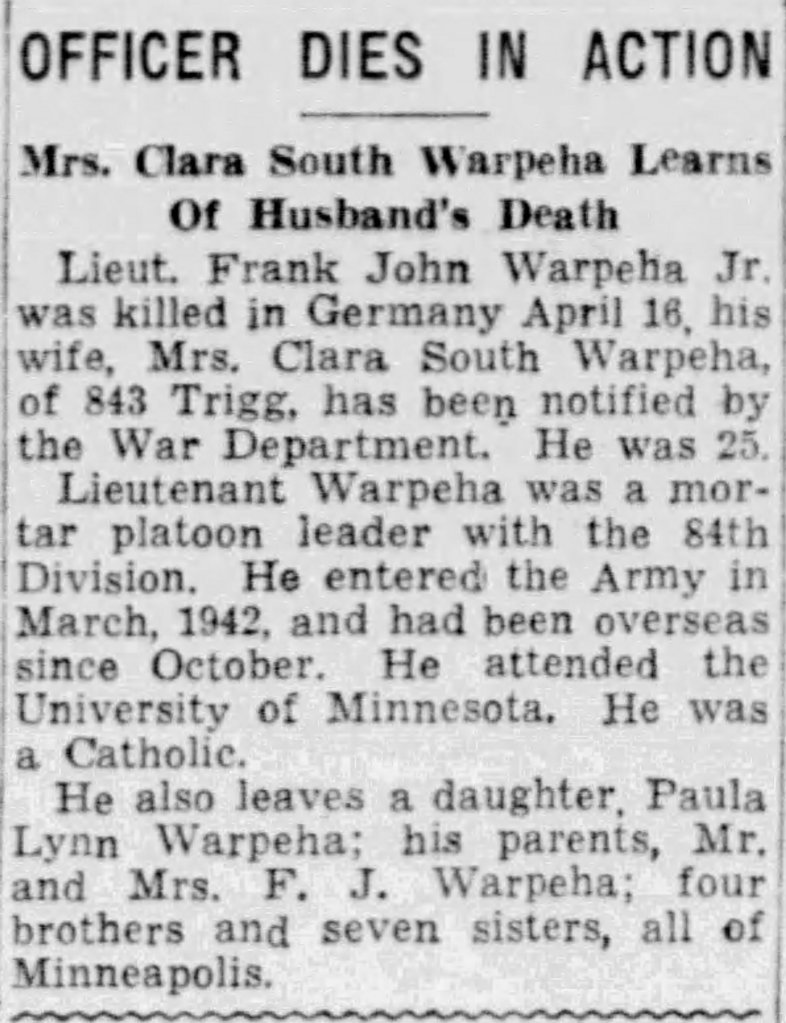
On 26Apr1945 Frank died of wounds. No detailed records have been found regarding the nature of Frank’s wounds, or the date and location when he was wounded.
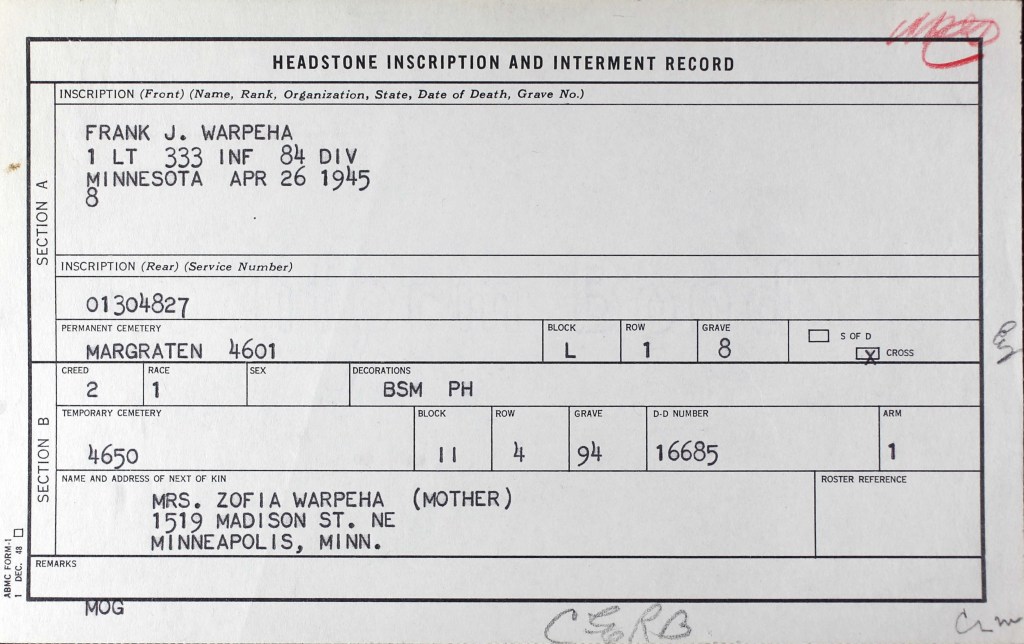
Frank was originally buried in a temporary cemetery near Margraten, the Netherlands.
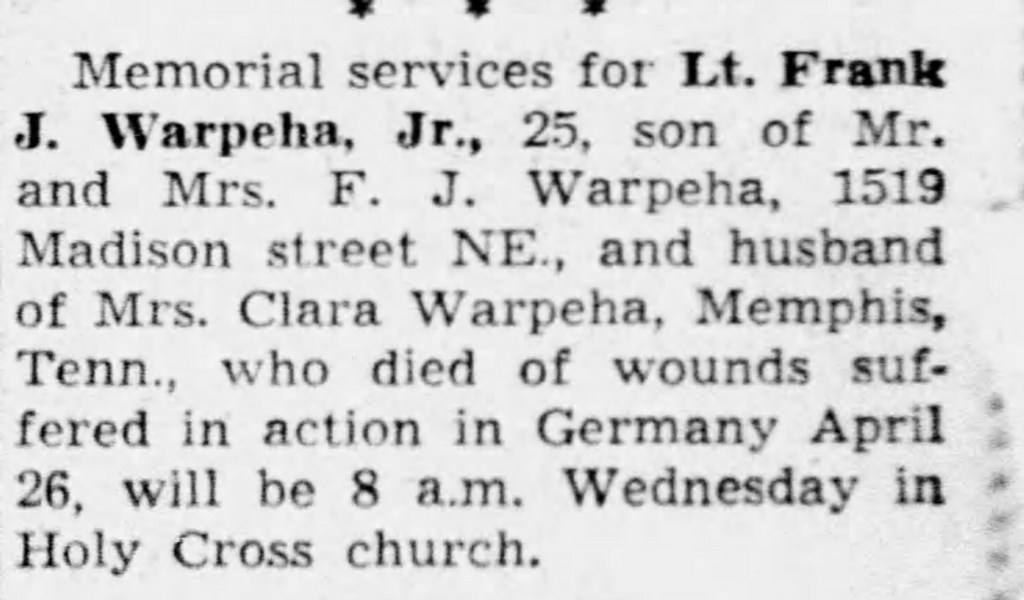
A memorial service for Frank was held on 23May1945.
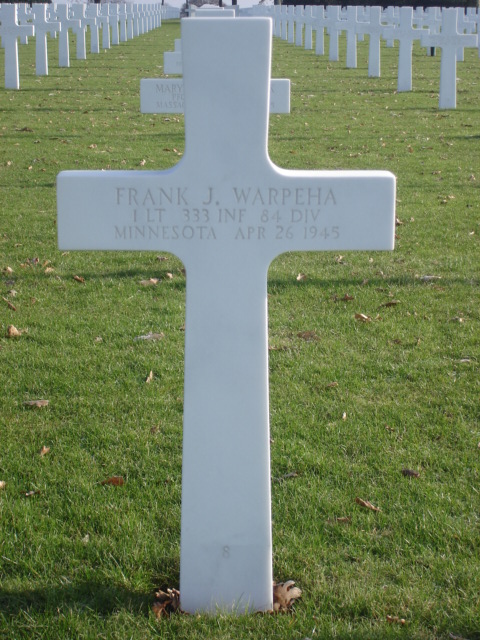
After the war, Frank’s family chose to leave his remains in Europe. Frank is 1 of 8,301 American soldiers buried at the Netherlands American Cemetery and Memorial located near Margraten, the Netherlands.
Postscript
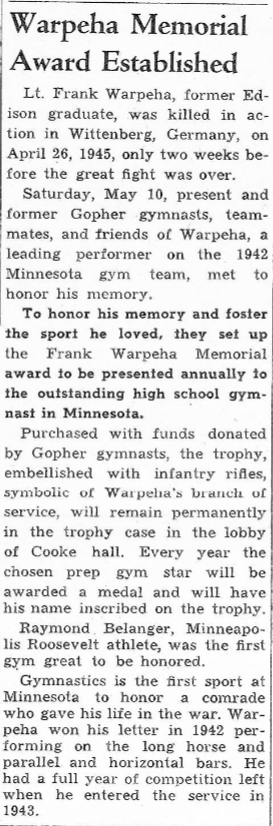
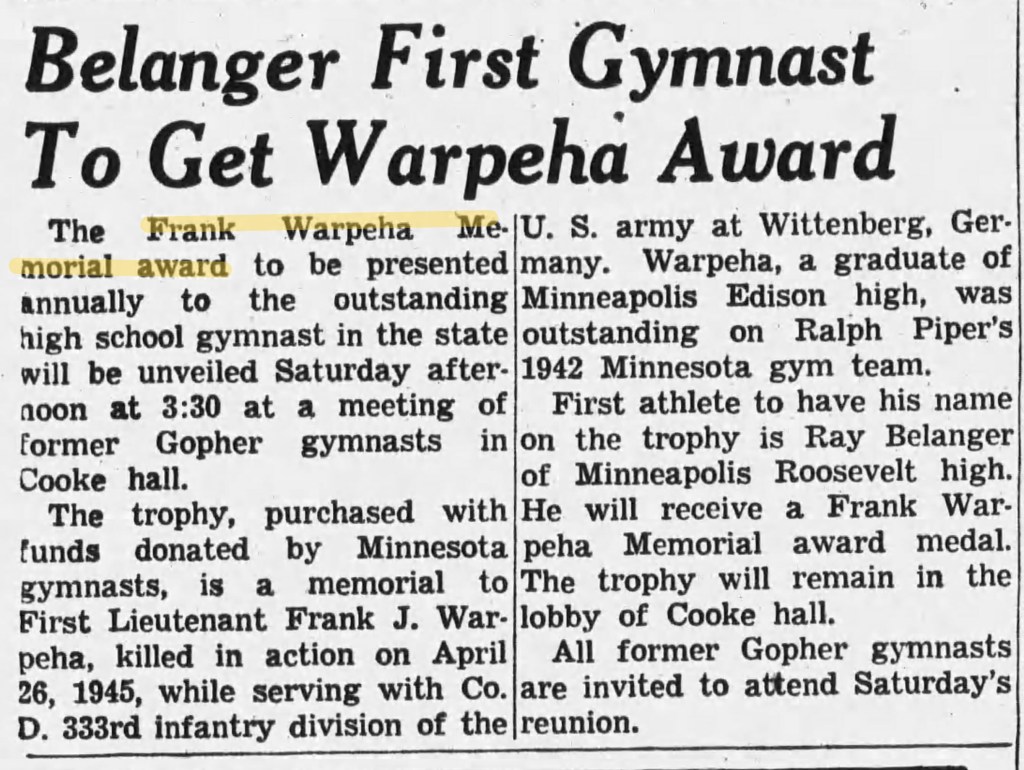
In 1947, Minnesota Gopher gymnasts established the Frank Warpeha Memorial Award to be given to the top high school gymnast in Minnesota.
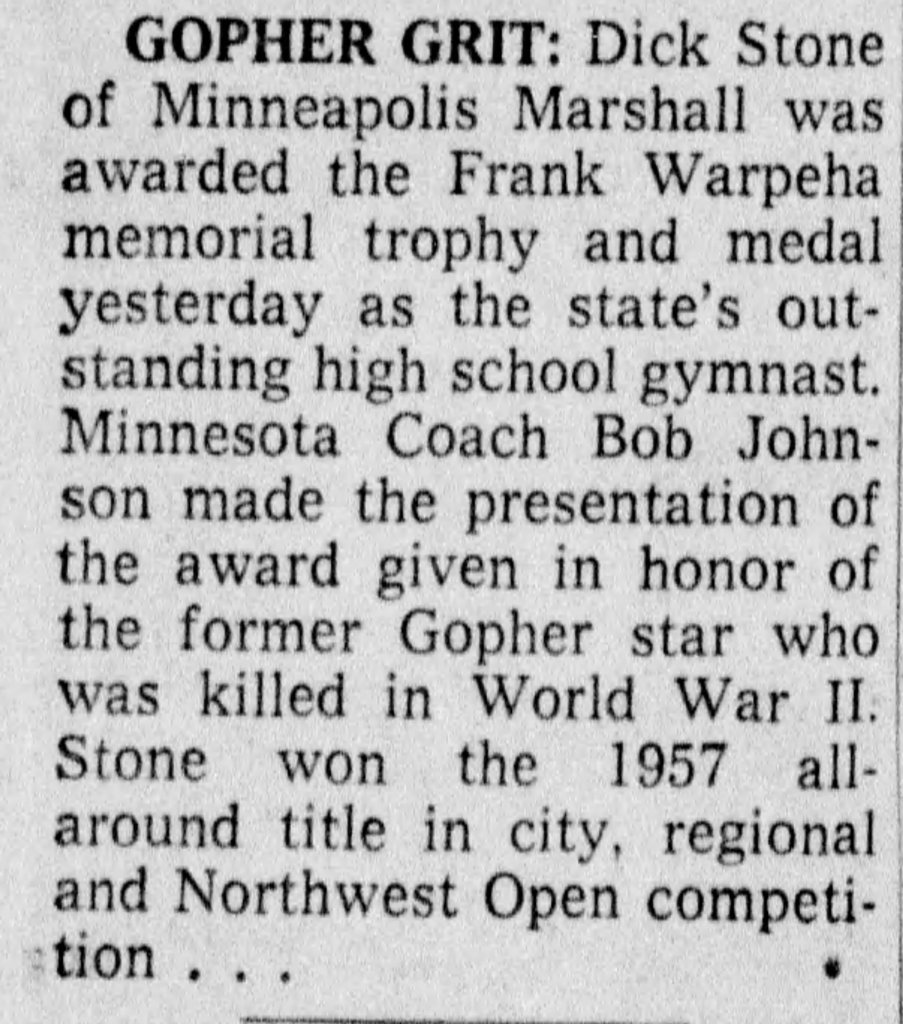
It appears that 1957 was the last year that the award was given out.
Post Postscript
The Dutch people still remember and honor the sacrifices made by men like Frank who died liberating Europe. One way is via the Grave Adoption Program.
The Grave Adoption Program at the Netherlands American Cemetery in Margraten is a one-of-a-kind initiative where local Dutch families, individuals, schools, and organizations have adopted the graves of American soldiers and airmen, and those whose names are listed on the Walls of the Missing. This unique program reflects the deep gratitude and respect the Dutch people hold for the American service members who fought and died to liberate a portion of the Netherlands during World War II.
At the end of World War II, Dutch leaders of the grave adoption program made an urgent appeal to American families with a loved one buried at Margraten: “Leave your boys with us; we will watch over them like our own, forever.“ However, next-of-kin information was not available for 80 percent of those buried which prevented that vital step of Dutch adopters connecting with American family members. Over the decades, the Foundation for Adopting Graves and its adopters have located additional family members bringing the number to about 25 percent, far short of the 100 percent goal the program’s founders envisioned. Even today, very few Americans know about the Dutch grave adoption program. Some next of kin are not even aware that a family member is buried at the Netherlands American Cemetery and that the grave of their loved one has been watched over by someone in the Netherlands for decades. In 2017, the program was designated under UNESCO guidelines as a part of the Dutch National Inventory of Immaterial Cultural Inheritance, to be safeguarded in the same way as historic buildings and cultural sites.
Click on the following link to learn more.
HOME | Forever Promise Project | Connecting US Families with the Dutch Adopters of Their Loved Ones

