
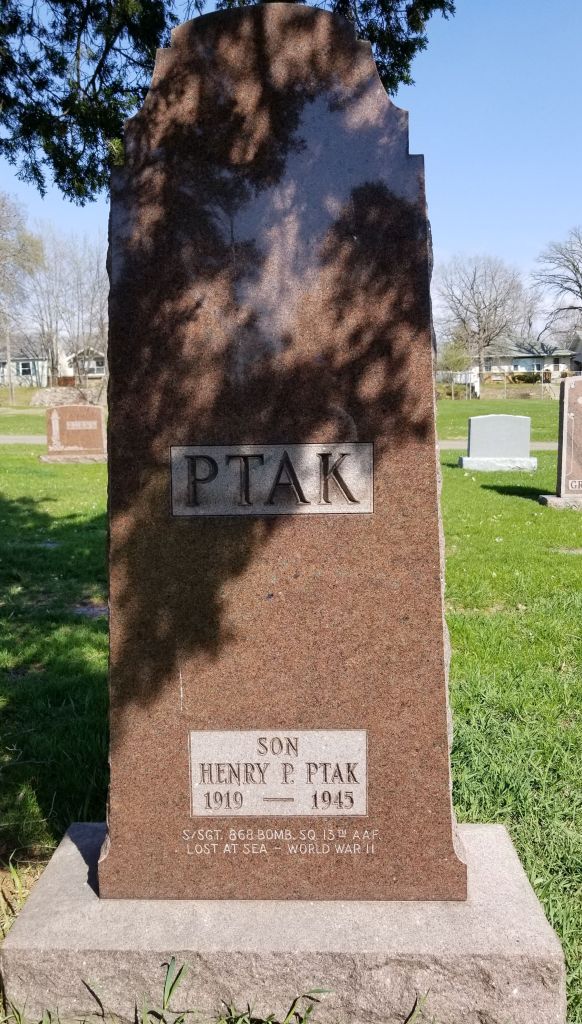
18May1919 – 21Apr1945

Edison Days
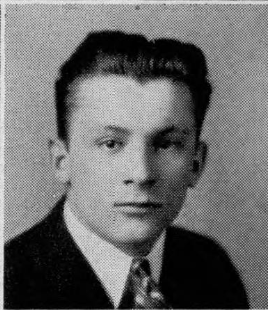
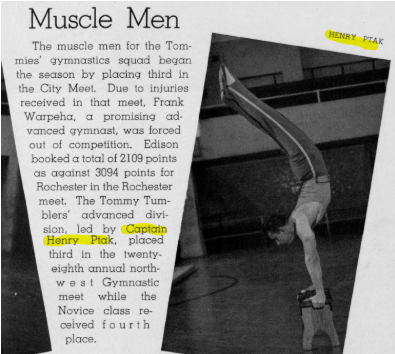
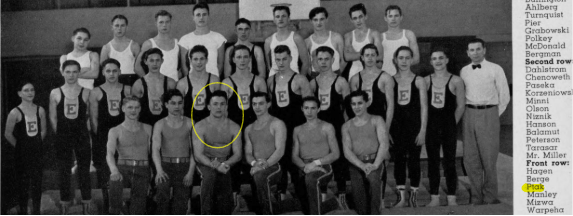
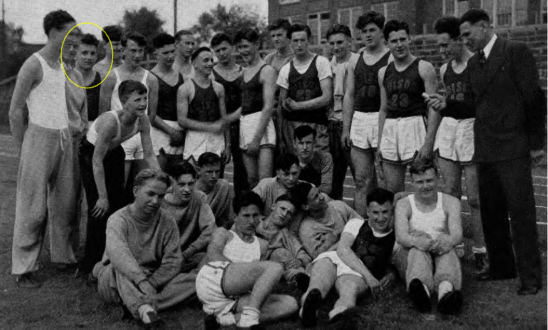
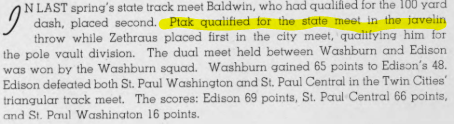
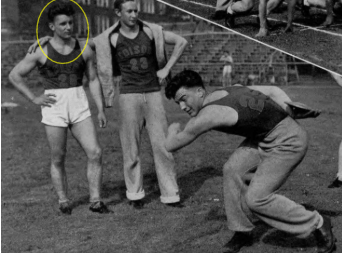
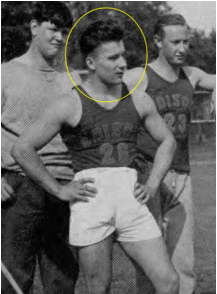
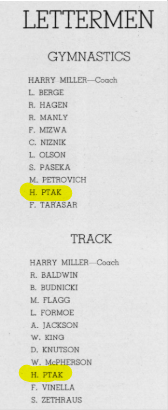
Henry graduated with the Class of June 1938. He was an accomplished athlete.
Military Service
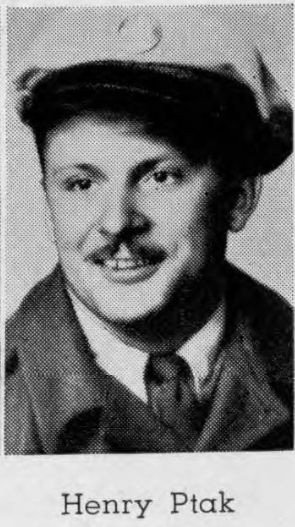

Rank: Staff Sergeant
Branch: United States Army Air Corps
Unit: 868th Bombardment Squadron (Heavy) – 13th Air Force
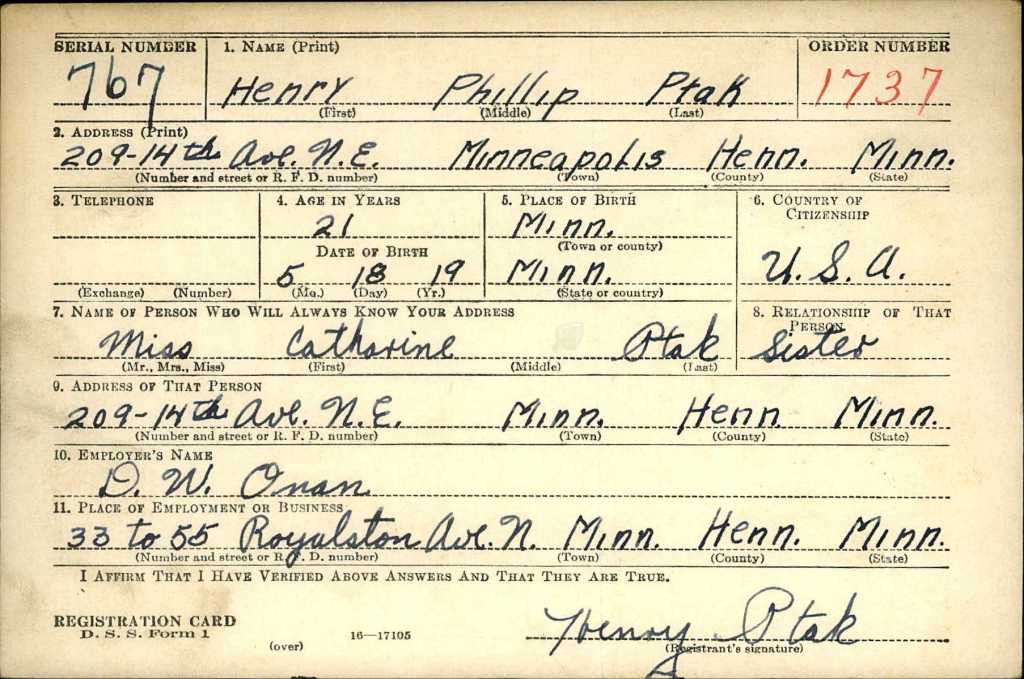
Henry joined the military in March 1943. It is unknown where he attended basic training, advanced training, or his path to the 868th Bombardment Squadron
The 868th Bombardment Squadron (also known as the “Snooper Squadron”/”Nightstalkers”) was a specialized, independent unit in the U.S. Army Air Forces during World War II, primarily operating in the Southwest Pacific Theater as part of the 13th Air Force
The squadron originated from the highly classified Wright Project, which began in 1942–1943. It started as an experimental anti-submarine effort (initially tied to the 1st Sea-Search Attack Group) aimed at countering German U-boats off the U.S. East Coast using early airborne radar technology developed in cooperation with MIT’s Radiation Laboratory.
It was officially constituted on 30Nov1943, as the 868th Bombardment Squadron (Heavy) and activated in January 1944. The unit was equipped with specially modified Consolidated B-24 Liberator bombers. These featured advanced (for the time) microwave air-to-surface vessel (ASV) radar systems. This allowed the planes to detect and attack ships or ground targets at night or through overcast/cloud cover when visual bombing was impossible.
The squadron operated largely independently, often flying solo night missions or acting as pathfinders to lead other bomber formations.
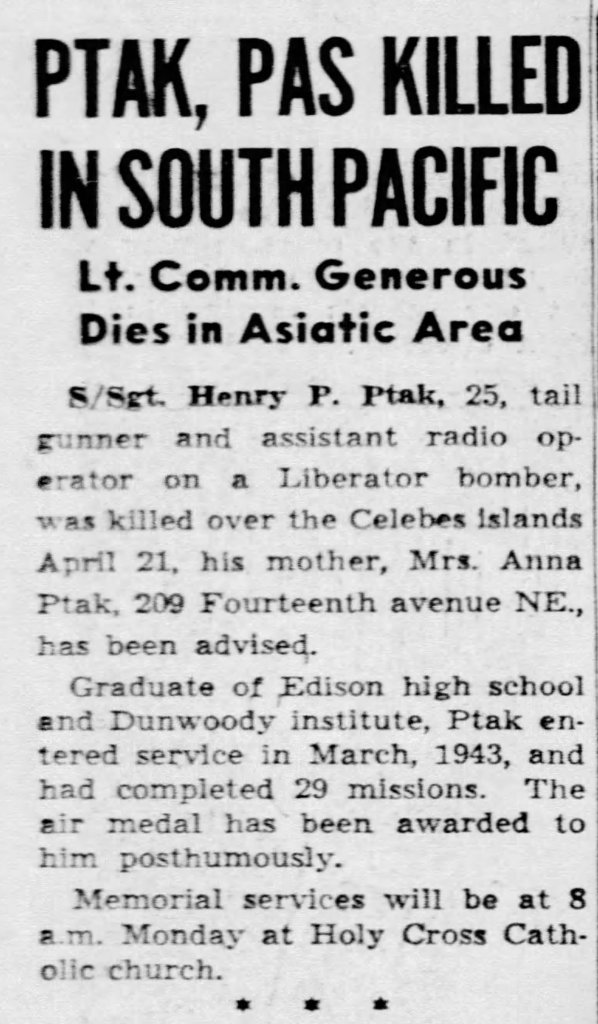
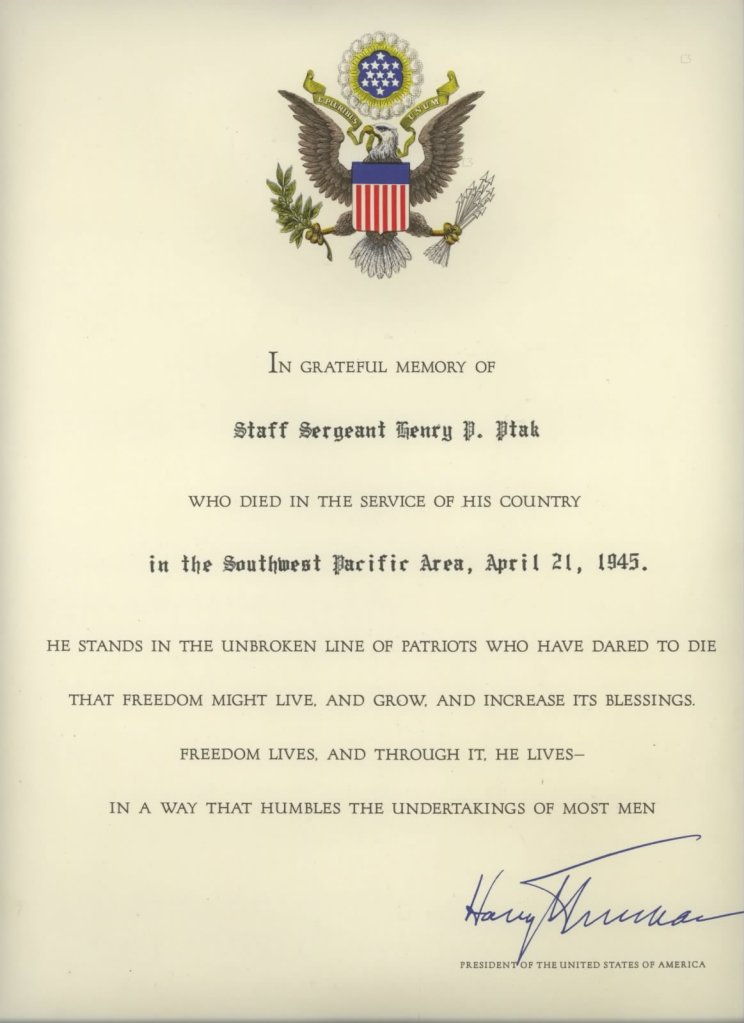
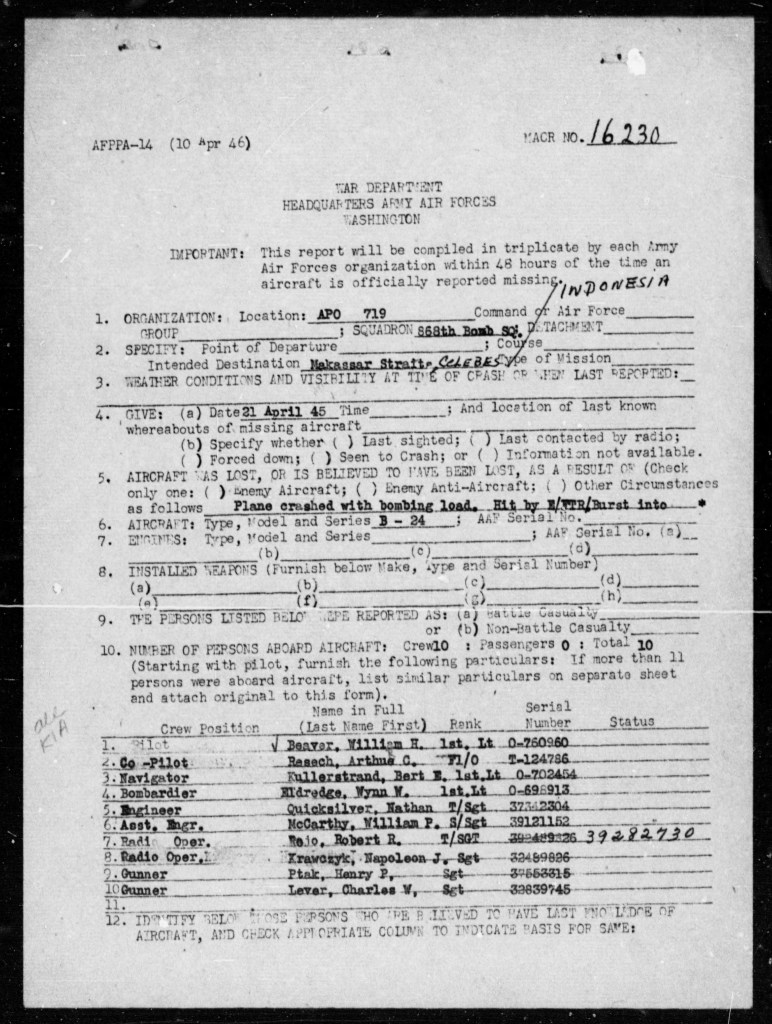
On 21Apr1945, Henry’s plane took off from Morotai Island with a crew of nine as part of a two-aircraft attack against Japanese forces around Makassar Strait in the Netherlands East Indies (now Indonesia). Roughly six miles from the target, three Japanese fighter planes attacked the American aircraft, making five passes before one fighter turned to make a direct attack on the B-24. The pilot dropped the plane’s nose toward the enemy fighter and witnesses reported that both aircraft were firing at each other and neither altered course. The B-24 and the enemy fighter collided, igniting the B-24’s gas tanks and causing an immediate explosion. The bomber then fell into a flat spin and crashed into the sea. One burning parachute was seen exiting the aircraft but witnesses believed it was the enemy pilot.
Neither Henry nor any of the other crewmembers were located following the crash.
Henry’s family was informed of his death within a month of the crash.
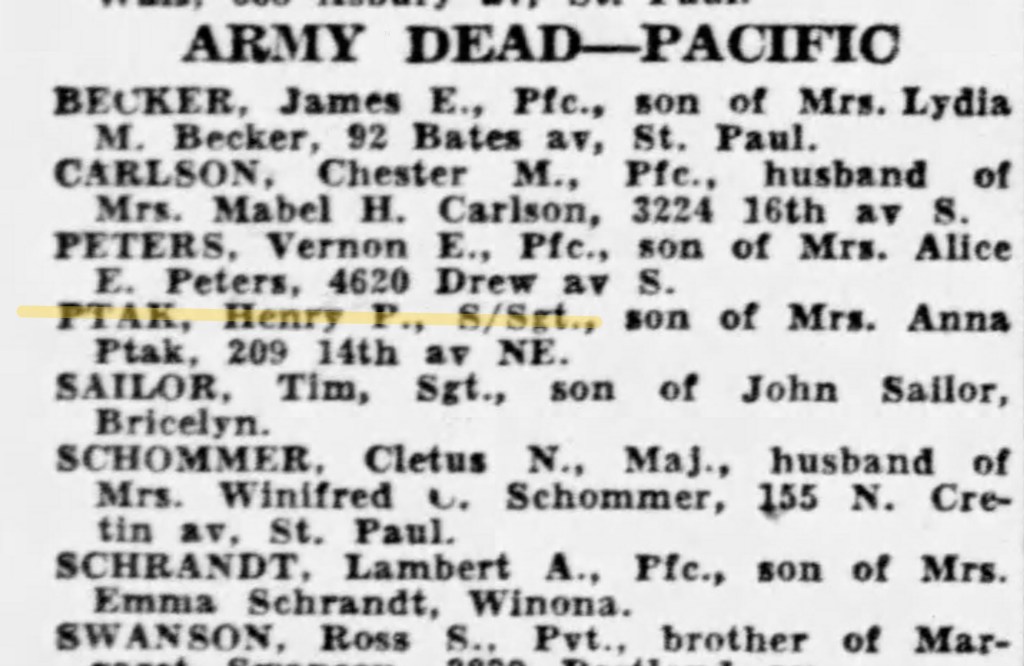
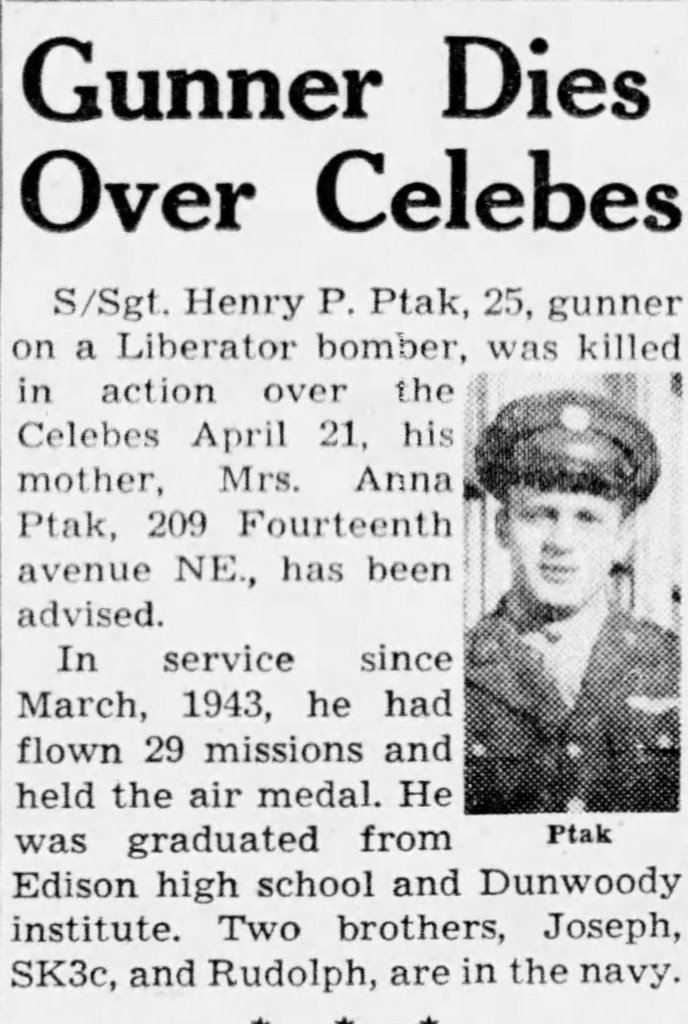
A memorial service was held in his memory on 28May1945.
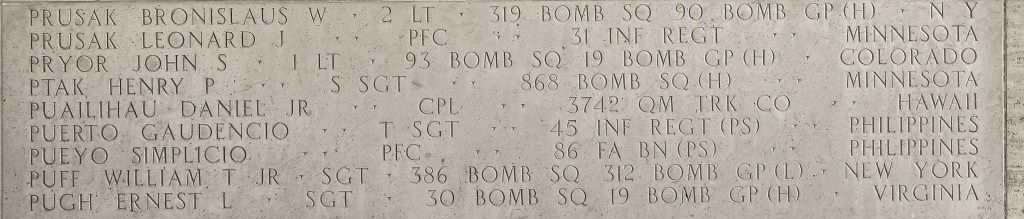
Henry’s name is 1 of 36,286 names inscribed on the Tablets of the Missing at the Manila American Cemetery in Manila, Philippines.
His name is also engraved on the Ptak family monument in Saint Mary’s Catholic Cemetery in Minneapolis, Minnesota.
 Edison Heroes