
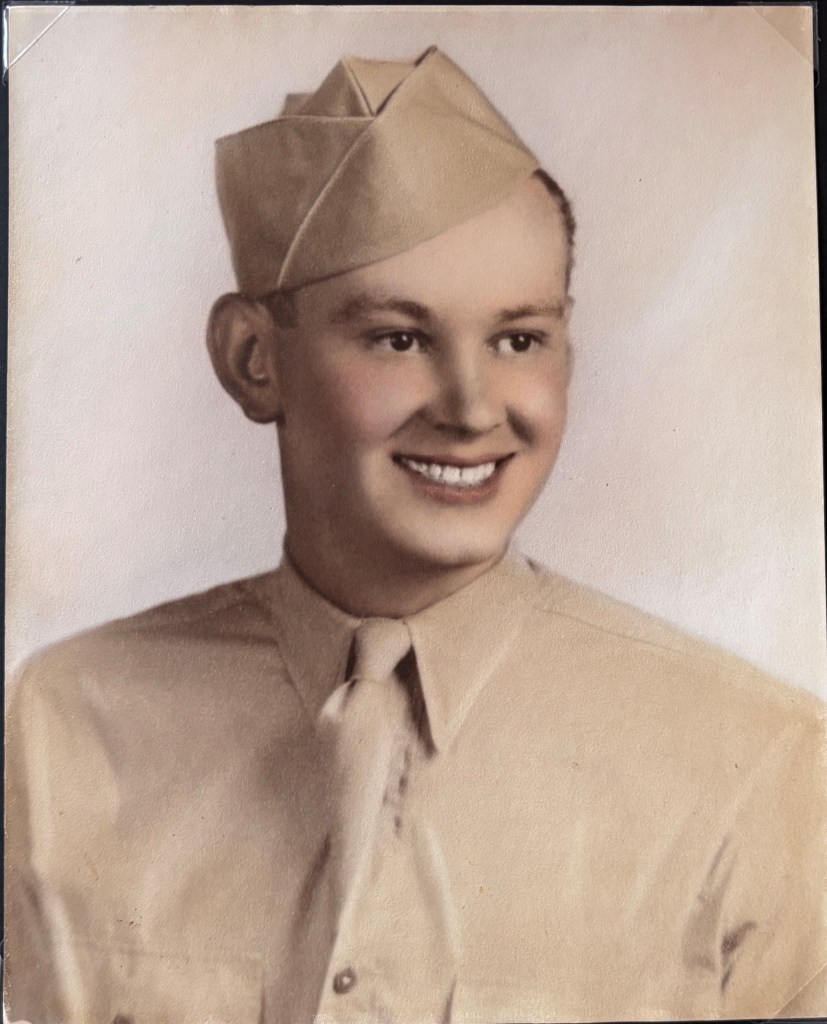
1Nov1921 – 21Nov1944
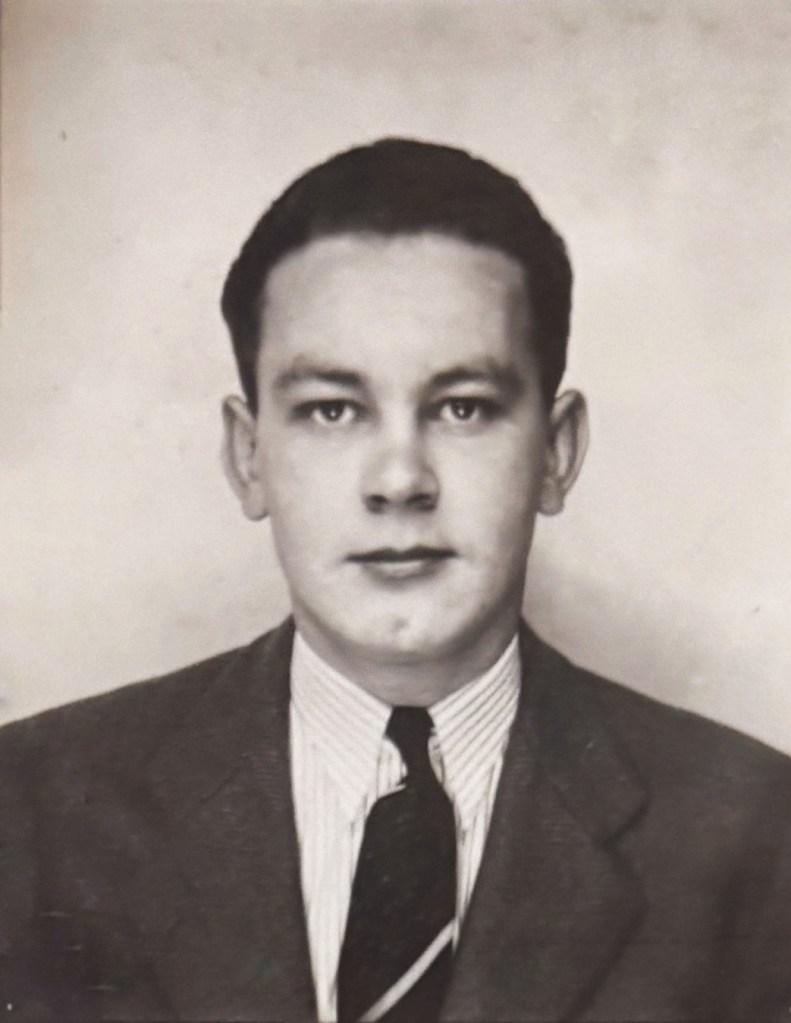

Thank you to the family of Martin Kostik for sharing family photographs, mementos, and personal recollections of his life.
Martin was born in Czechoslovakia. He immigrated to America with his mother in 1927 to join his father who was already here.

Edison Days
Martin graduated with the Class of June 1939. He was an excellent student, and he was involved in 4 intramural sports. Martin’s sister recalled that their mother would scold Martin for still being awake and studying at 4 a.m.!
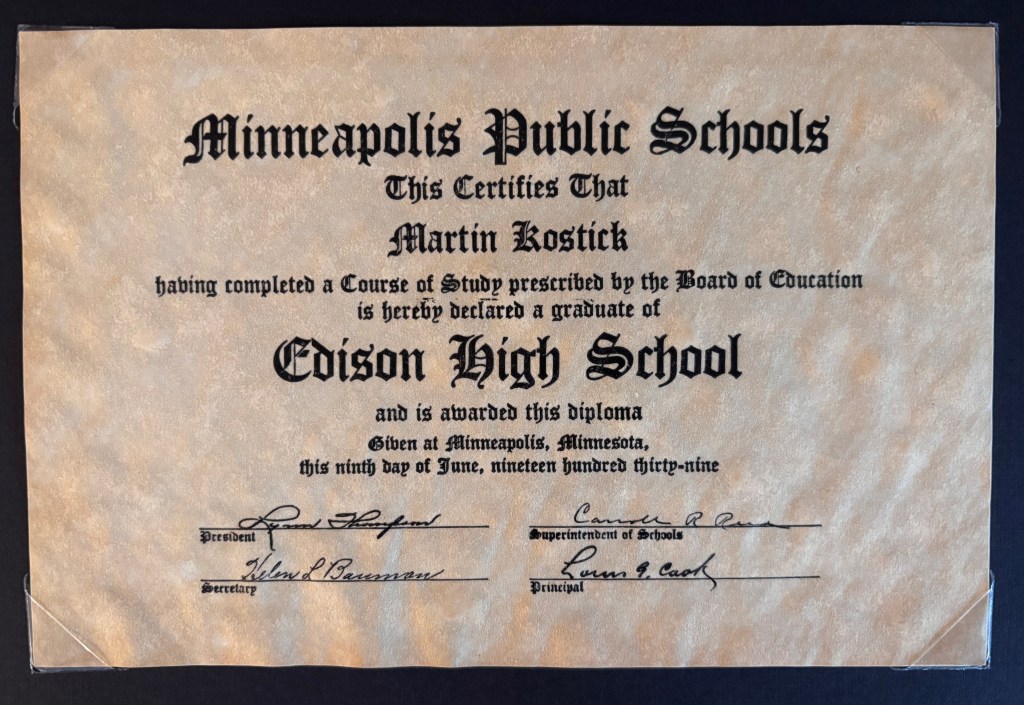
After graduation Martin attended the University of Minnesota. He was close to graduating when he was drafted into the Army. He had intended to enter Law School.
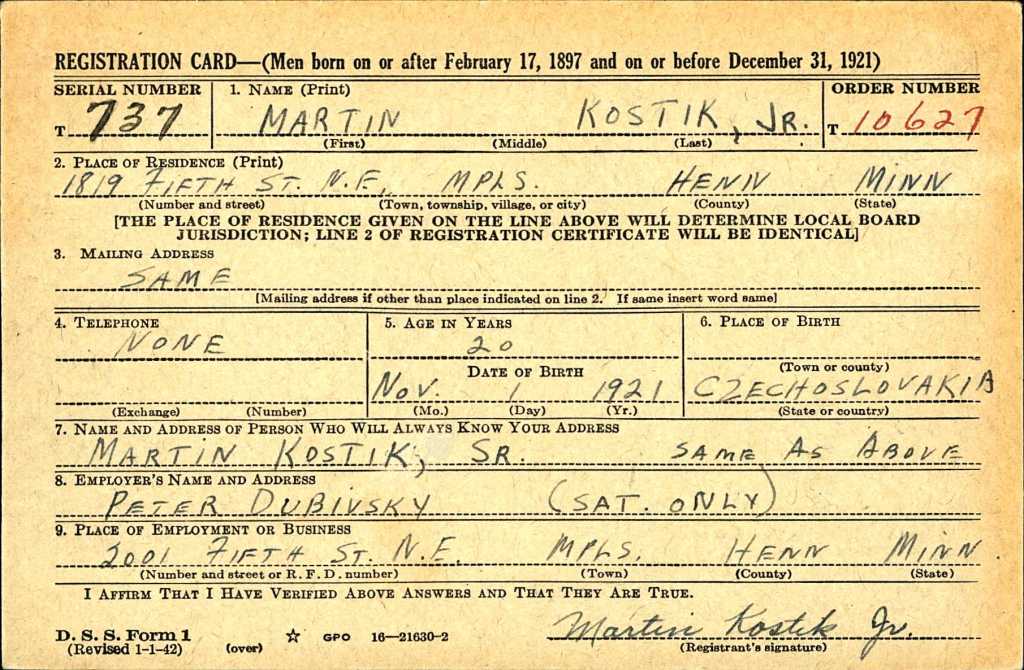
Military Service
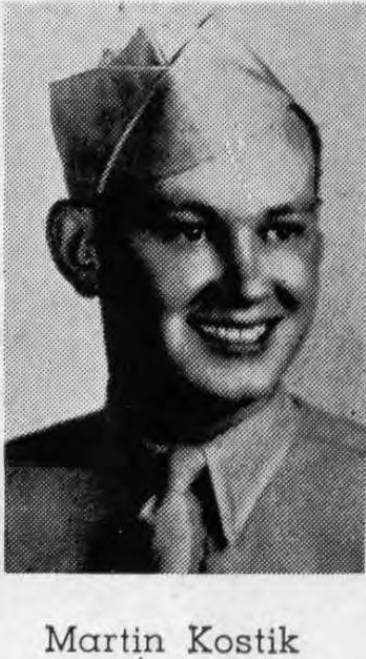

Rank: Private First Class
Branch: United States Army
Unit: 334th Infantry Regiment – 84th Infantry Division
Like many men, Martin wanted to enlist in the Navy after the attack on Pearl Harbor on 7Dec1941. His mother persuaded him to stay in college. Eventually the war effort needed more men, and Martin was drafted into the Army.
After basic training, Martin was sent to Lafayette College in Easton, PA as part of the Army Specialized Training Program (ASTP). ASTP was a military training program instituted by the Army during World War II to meet wartime demands for both junior officers and soldiers with technical skills. Conducted at 227 American universities, it offered training in such fields as engineering, foreign languages, and medicine.
The ASTP goal was to produce technically trained personnel. There was an opportunity for the recruits to become officers upon completion. The program was approved in September 1942, implemented in December of that year.
The ASTP program was controversial as some of the top leaders in the Army felt like it took too many young men with leadership potential away from combat positions where they were most needed. The program was drastically curtailed in February 1944 and by April most of the men had been dispersed to Army ground or service forces.
Martin likely ended up with the 334th Infantry Regiment – 84th Infantry Division at Camp Claiborne, Louisiana around that time.
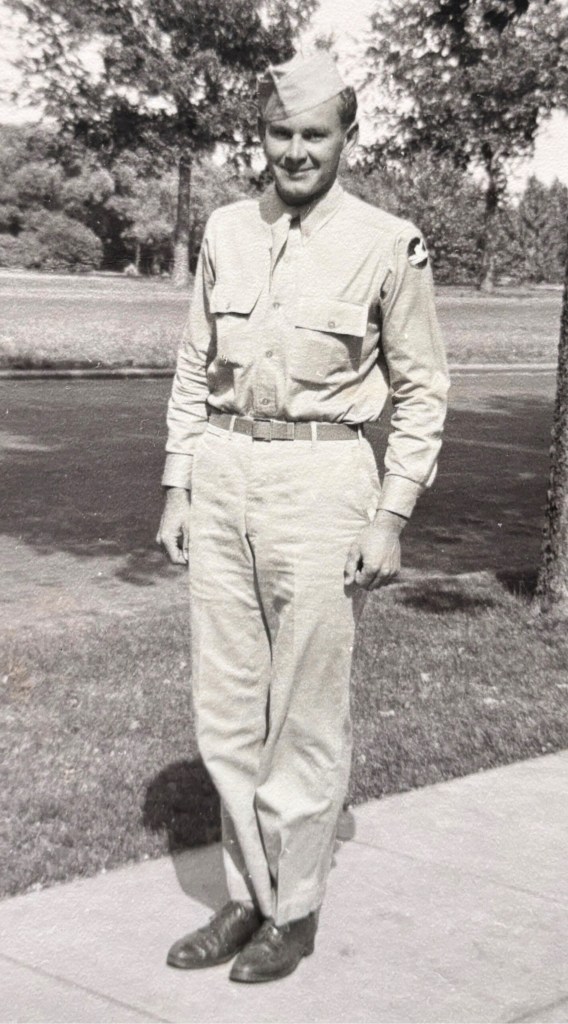
Assigned to K Company of the 3rd Battalion, Martin became a BAR man in his Company. The Browning Automatic Rifle (BAR) was an automatic weapon (machine gun) that offered additional firepower over the standard M-1 semi-automatic rifles carried by most men. In a full-strength company, only about 9 of 111 soldiers carried the BAR.
The 84th division trained in Louisiana throughout Summer 1944. On 6Sep1944 they moved to Camp Kilmer, New Jersey to prepare for deployment to Europe. On 20Sep1944 Martin and the rest of the regiment embarked from the Brooklyn Navy Yard. Originally scheduled to sail to Cherbourg, France, the harbor was full, and they were diverted to Southampton, England. From October 10 to October 31, they stayed in an assembly area near Winchester, England.
Embarking from England, the 334th landed at Omaha Beach on 1Nov1944. A much quieter Omaha Beach than it had been 5 months prior. Over the course of a week, Martin and the 334th marched and trucked northeast across France. Passing through Paris, they saw the Champs-Élysées and the Eiffel Tower.
On 8Nov1944 they arrived in Wittem, Holland. They could hear the sounds of battle in the distance. They were 10 days from entering combat.
From the unit history of the 334th Infantry Regiment.
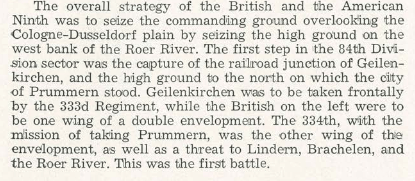
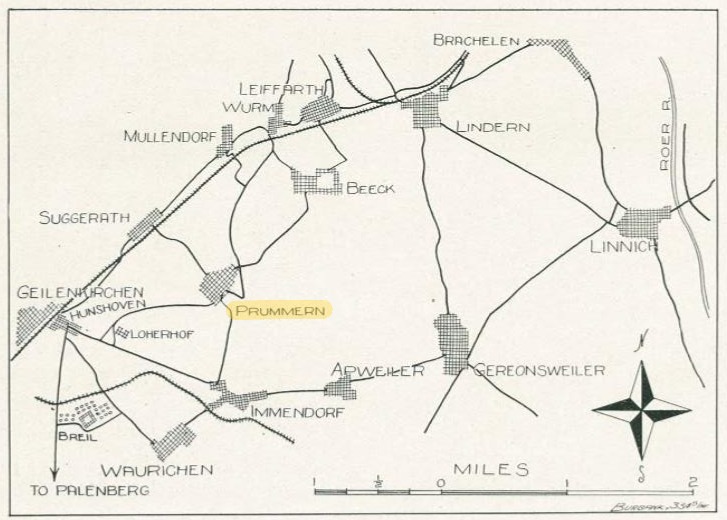
The attack was launched at 7am on 18Nov1944. Initially, Martin’s 3rd Battalion was held in reserve.
Each attacking battalion had attached one platoon of anti-tank guns, one-half a mine platoon, and a squadron of British tanks, the Sherwood Rangers. The mine fields were cleared a few hours before the attack and two gaps were marked with tape, one for each attacking battalion. An intensive artillery preparation was fired. We were to move through the gaps, deploy on the other side in the high ground between the front lines and Prummern, and moved forward in assault. The ground was soggy, the weather was cold, and the attack, scheduled for sunrise, pushed off under cloudy skies that gave only a grey hint of morning. The first difficulty was that the tanks could not get through the left gap. The sluggish mud was causing them to belly down. The infantry was ordered though the gaps without tank support, and the tanks were ordered to catch up when possible. The lead companies, A and E, went through the gaps without difficulty, the second companies, B and F, met some fire, but the reserve companies, C and G, met intensive 88, mortar and small arms fire when they attempted to follow the lead companies. B and G Companies. started a slow infiltration through the gaps by creeping and crawling. In the meantime, the first two companies of each battalion were deploying into their first objectives, the high ground before Prummern. A Company ran into six pillboxes during this deployment. The assault company of the Second Battalion also ran into the expected heavy resistance. As planned, the leading letter companies of each battalion were left as battalion reserve while C and G Companies which had infiltrated by 1000, took their places in the assault. The advance continued. F Company knocked out six machine guns. on the west flank of Geilenkirchen. The First Battalion moved on Prummern; the Second Battalion moved toward the high ground west of the town, high ground which would command both Prummern and Geilenkirchen.
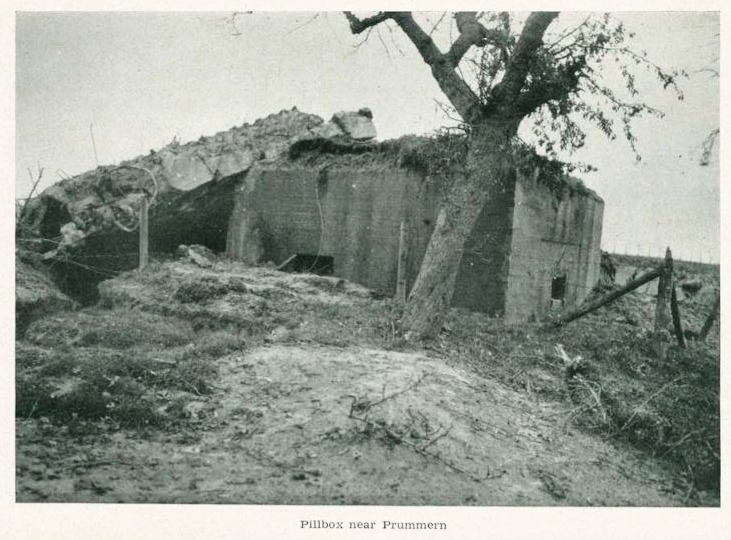
The Germans could see us coming. They were strongly emplaced, well armed, and were only slightly surprised by the attack. It was later revealed that they had been expecting a push in this sector and had fortified it with two new divisions. The strongest part of these division were being held up at Linnlch by our air support which was keeping the roads reasonably free of German vehicles.
By noon, the German prisoners had been started back in a steady stream. A Company had found 200 in a trench beside the railroad between Breil and Prummern. Interrogation revealed we were meeting the 9th Panzer Division, the 15th Panzergrenadier Division, and the 343d Regiment of the 183d Volksgrenadier Division. ‘They had been forewarned of our attack and had made preparations for it. The day before the 334ith jumped off, the American 102d Division and 2d Armored Division had attacked on our right. The intensity of the attacks made the Germans apprehensive in all sectors. “We had been told that we were to be attacked by green troops,” said one officer at the 343d, “and we thought it would be easy. I have fought in Africa and Russia, and have never seen soldiers attack with the ferocity of your division.”
The Regiment pushed forward aggressively. The Second Battalion :forced itself onto the objective, the high ground southwest of Prummern, guaranteeing the 333d’s attack on Geilenkirchen. At 1510 this ground was secure. On the right, the First Battalion moved into Prummern frontally. B and C Companies were the first to enter the town. The sky was darkening, and our air cover was less useful.
At 1600 higher headquarters issued an order for a continuation of the attack. The First Battalion was to take the ground directly north of Prummern, the Second Battalion was to continue north of its present position.
We knew little of the strength and positions of the Germans in the new objective. We had made plans for a continuation of the attack as far as the Roer, but past Prummern the method of action was more sketchy and not as detailed. As the new plans were being put into effect the First Battalion reported heavier resistance inside Prummern. The ruined buildings were excellent hideaways for German snipers who were making the streets untenable. Enemy artillery was shelling the town. The German reserves, previously hindered by our air support, were moving up to counterattack. The First Battalion moved to an area in the southwest corner of Prummern, an orchard, and dug in for the night. An oversight was the failure to notify the Chaplain, the First Battalion Medics, and the attached platoon of anti-tank guns of the move. This weak force constituted the only Americans in Prummern that night. The AT guns engaged six German tanks moving into Prummern in a column. The third of the six was knocked out, blocking the road. The lead tank ran over one gun, but was knocked out by another, and the second tank broke through the defense, but was wrecked by a mine field on the west edge of town.
The Second Battalion was attempting to reach its, new area, but was halted by intense mortar and artillery fire. A concerted effort was made at 2400, and the Battalion advanced perhaps one hundred yards, but it made no sizeable dent in the German defense. It was time to use our reserves. The Third Battalion was in an assembly area near Breil. Orders were issued sending it to Prummern in a column of companies. The Third was to deploy on the near side of the town, and pass around the right flank of the city. The First Battalion was to move through Prummern, and with the help of the Third Battalion take the ground between Beeck and Prummern. The attack was to move forward at 1200, 19 November. We had hit the enemy a strong body blow the day before, we were trying for a knockout on the 19th. “Move forward if possible” was also apart of the orders passed down to Regiment, which meant that if we took the low ground between Prummern and Beeck, we were to continue to the hill beyond Beeck.
At 1145 the Third Battalion executed its flanking movement and closed with the enemy. The First Battalion had started its move through the town, and in the face of heavy machine gun fire moved through Prummern and into the fields beyond. The Germans were on ground above them watching their movements. When they were approximately 200 yards north of the town, the Germans threw in tremendous concentrations and forced the Battalion to dig in. The Third Battalion carried the attack, alone. At 1550 the British XXX Corps Artillery shelled the area and rolled the barrage toward Beeck. Following closely behind the artillery, the Third Battalion moved into the assigned area between Prummern and Beeck. The First Battalion continued to consolidate the ground it had taken the day before.
To comply with the order “move forward, if possible,” and to exploit the potency of the barrage, I and K Companies tried to move from the low ground. They moved only a short distance, but were under perfect German observation, and were halted. L Company was committed from battalion reserve and swung around the right of the battalion. The move helped very little. The German positions on the high ground were so strong that continuation was impossible. “We were looking into their throats” said Pfc. Paul Leger of K Company, “and their tonsils were on fire.” The Third Battalion moved into defilade and dug in for the night.
We attacked again on 21, 22, 23 November, but the story was a carbon copy. We would kill, capture and wound many Germans, take a few pillboxes, and meet the same frustrating fire from above.
Martin was killed in action near Prummern, Germany on November 21.

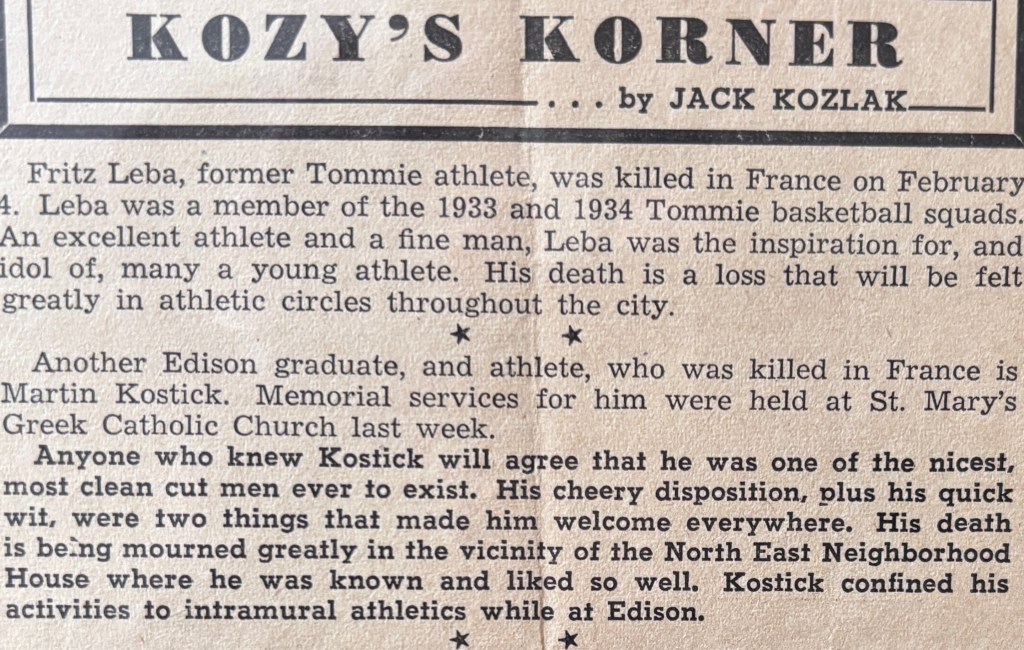
Martin’s death was noted in a warm tribute by writer Jack Kozlak in the Edison Record student newspaper.
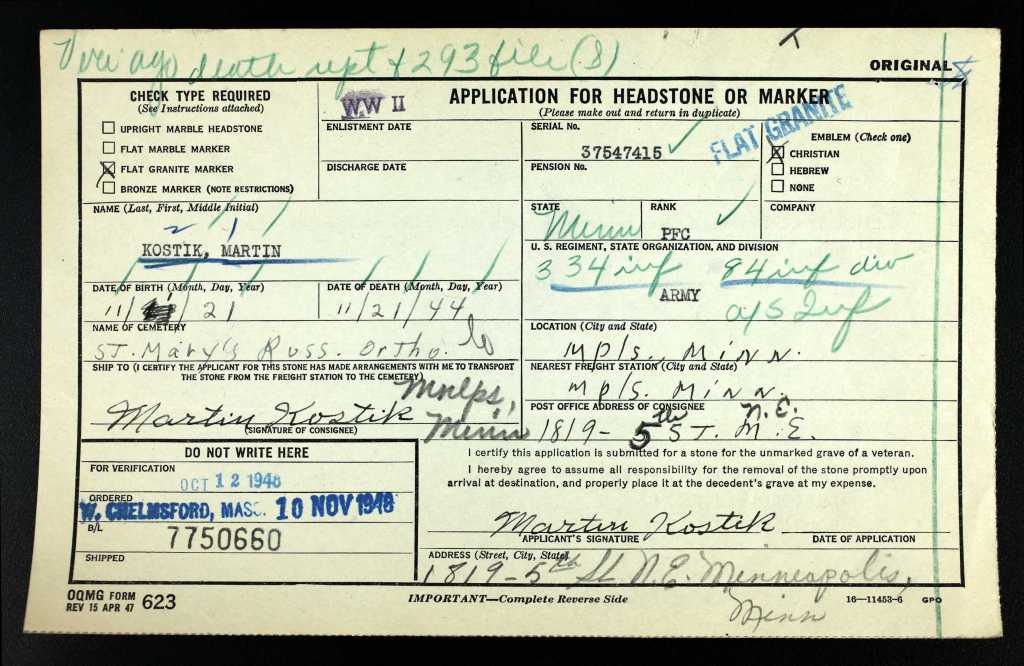
Martin was buried in a temporary military cemetery in Holland. In 1948 his remains were returned to Minnesota for reburial.

Martin is buried at St Mary’s Orthodox Cathedral Cemetery in St Anthony, MN.
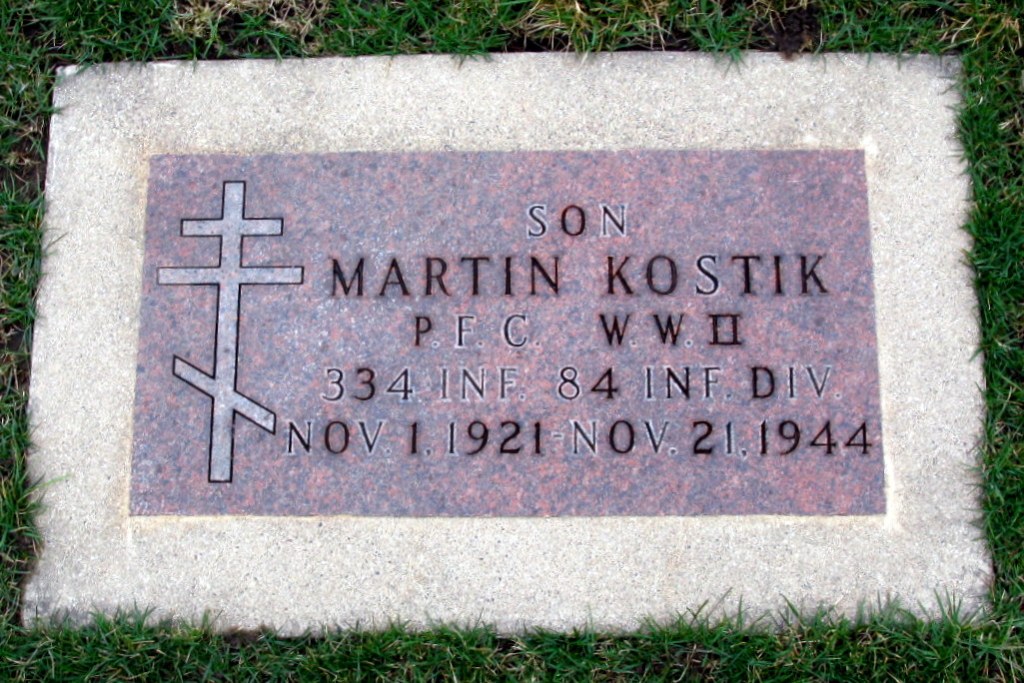
Martin’s name is 1 of 6 Edison Heroes inscribed on a monument at the cemetery.

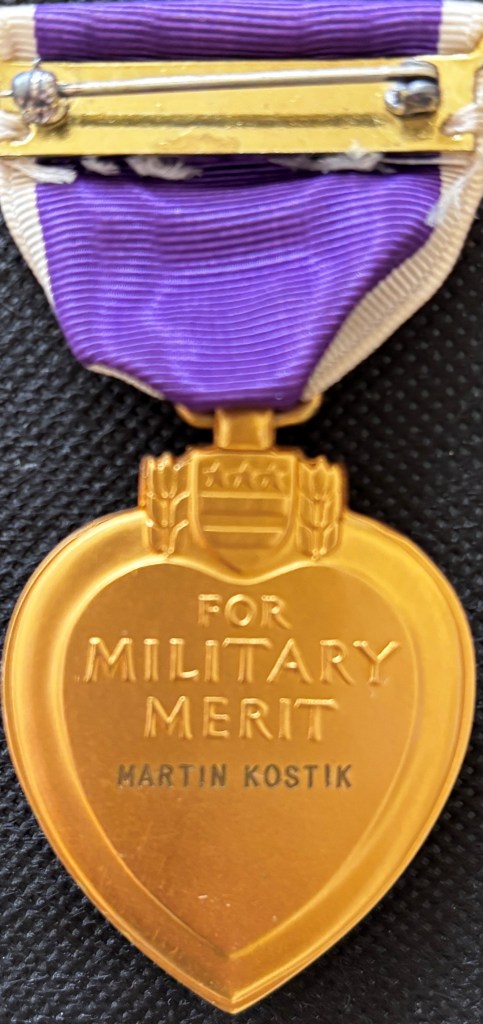
Martin was awarded the Purple Heart for his service.

 Edison Heroes