
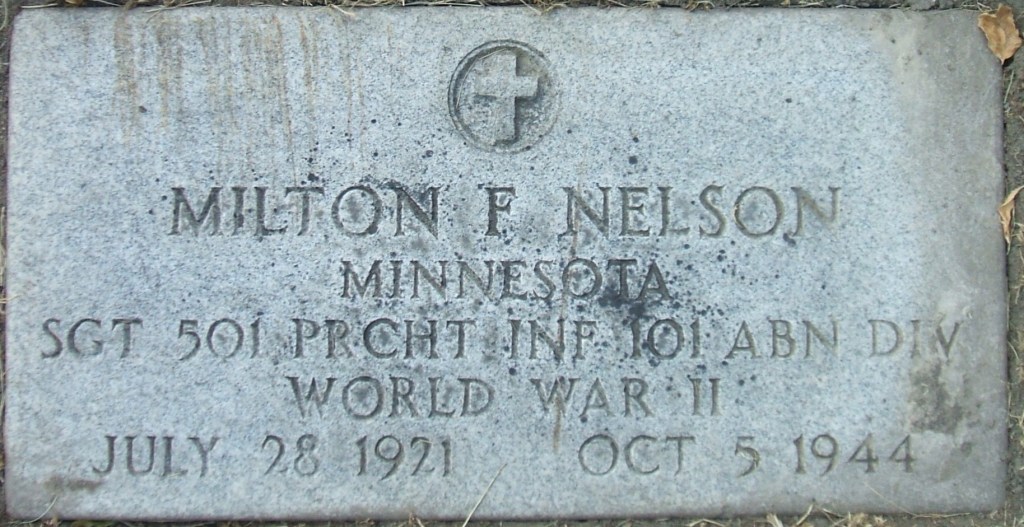
28Jul1921 – 5Oct1944
Edison Days
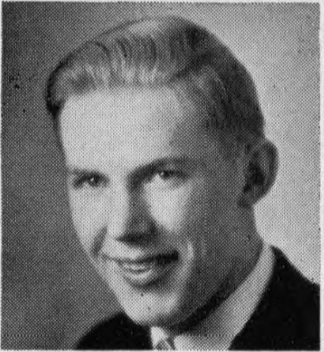

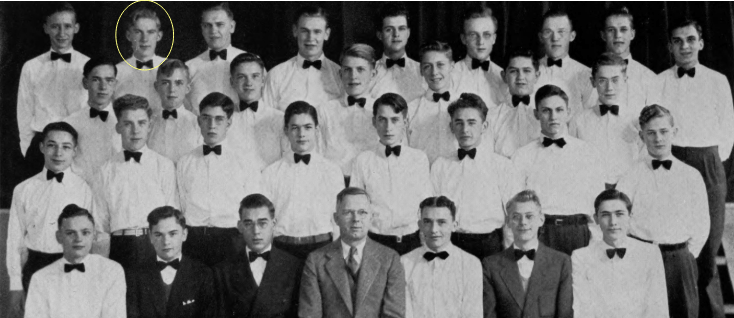
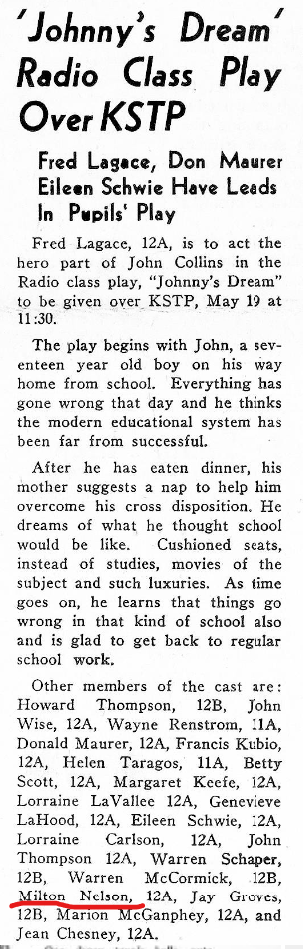
Milton graduated with the Class of June 1939.
Military Service
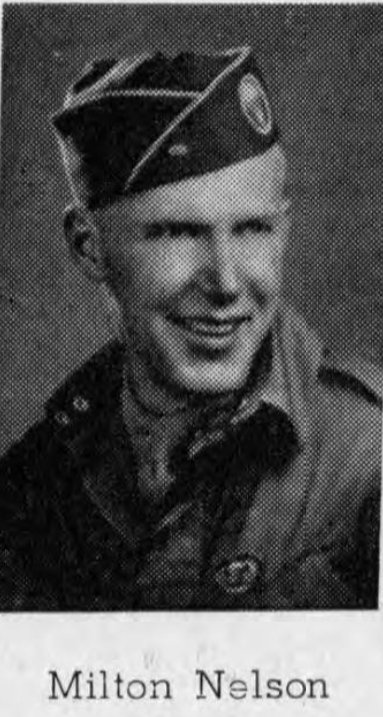

Rank: Sergeant
Branch: United States Army
Unit: Company C – 1st Battalion -501st Parachute Infantry Regiment – 101st Airborne Division
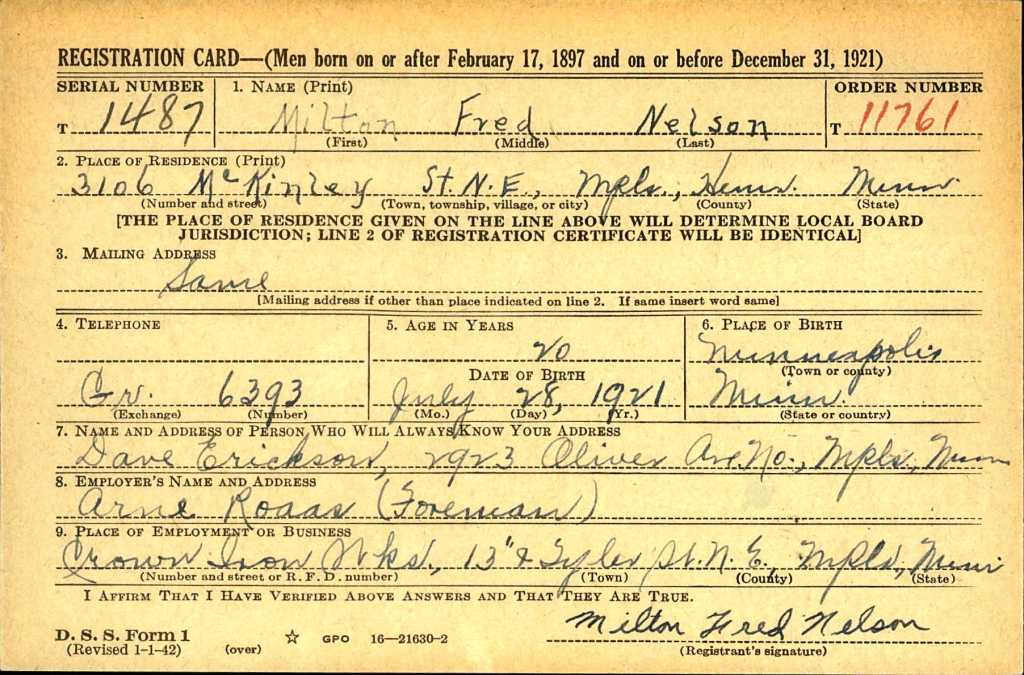
Milton joined the Army in December 1942. It is unknown where he attended basic training. After basic training it is likely that he volunteered to be a paratrooper. He would have been sent to Camp Toccoa, Georgia where the 501st Parachute Infantry Regiment was activated just a month before Milton joined the service. While all paratroopers were volunteers, only a minor fraction were actually qualified jumpers during training at Camp Toccoa.
In March 1943, the unit moved to Ft. Benning, Georgia to jump train all members not previously qualified. With jump training over, the regiment was assigned to the Airborne Command at Camp MacKall, North Carolina. This was its homebase during prolonged maneuvers in North Carolina, Tennessee, and Louisiana. In January 1944, the regiment deployed to England, by way of Camp Myles Standish, Massachusetts. Once in England the 501st PIR became permanently attached to the 101st Airborne Division.
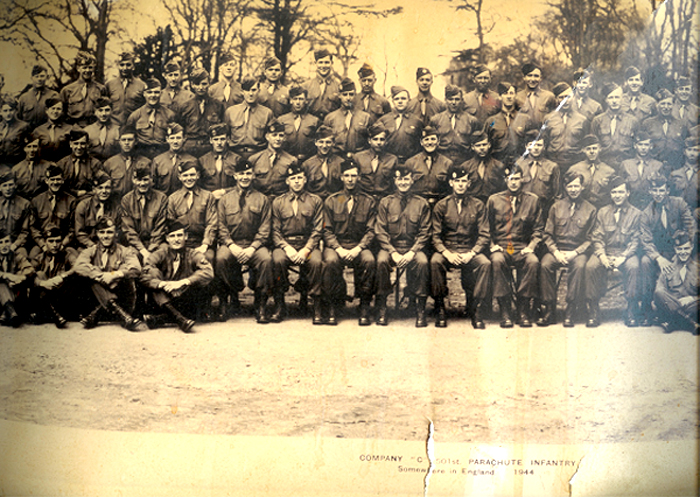
Milton has not been identified in this photograph
Milton and Company C participated in the D-Day invasion on 6Jun1944.
The entire 501st PIR (less its 3rd Battalion) loaded at Merryfield Airport, England, departing around 2245 hours on June 5. Company C was assigned objectives north and east of Carentan. Objectives included helping seize the critical La Barquette canal locks and destroy Douve River bridges to block German reinforcements from the west.
The flight across the Channel faced low clouds, poor visibility, and heavy flak, scattering the drops widely. Many troopers from Company C and the battalion landed far off-target but assembled in small groups and fought with initiative to achieve the missions anyway.
The battalion and regiment linked up scattered forces and engaged in intense hedgerow combat to secure the area and connect Utah Beach forces inland. These included actions supporting the capture of a key causeway at Pouppeville and fighting around Carentan. After over a month of heavy fighting, Milton and the rest of the division were sent back to England for refitting, replacements, and retraining.
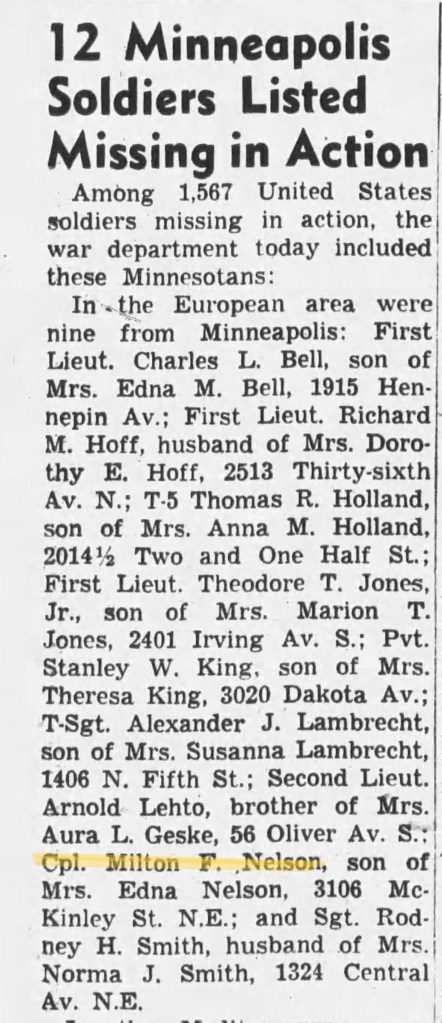
At some point during the fighting in Normandy, Milton’s family was told he was missing in action.
After 2 months in England, Milton and the 501st prepared to make their 2nd combat jump, codenamed Operation Market Garden
On 17Sep1944 the 101st Airborne Division (with the 501st PIR) jumped in daylight into Holland as part of the airborne corridor to seize bridges for the British XXX Corps advance toward Arnhem. The 1st Battalion (including Company C) landed approximately 5 miles east of its planned drop zone near Veghel but quickly reoriented. The battalion helped capture intact the vital highway and railroad bridges over the Aa River and Willems Canal at Veghel—key links on “Hell’s Highway.” This allowed initial Allied ground forces to push north.
After the bridges were secured, Company C and the battalion defended against repeated German counterattacks along the corridor in areas around Veghel, Eerde, and Schijndel. The 501st held positions amid artillery, mortars, and infantry probes while the broader Market Garden operation stalled at Arnhem.
In early October the broader operation was stalled near Driel. As the operation transitioned to a static defense, the 101st relieved British units on “the Island”, the narrow strip between the Waal and Lower Rhine Rivers. Milton, and Company C were trucked north from the Veghel area. On October 4–5, Company C and the rest of the 1st Battalion engaged in some of their heaviest fighting of the Holland campaign near Driel, specifically around the railway bridge over the Rhine east of Driel (Gelderland, Netherlands). This was part of efforts to hold the line against German counteroffensives in the Nijmegen salient.
It was on the 2nd day of heavy fighting, 5Oct1944 that Milton was killed in action. Details of his death are unknown.
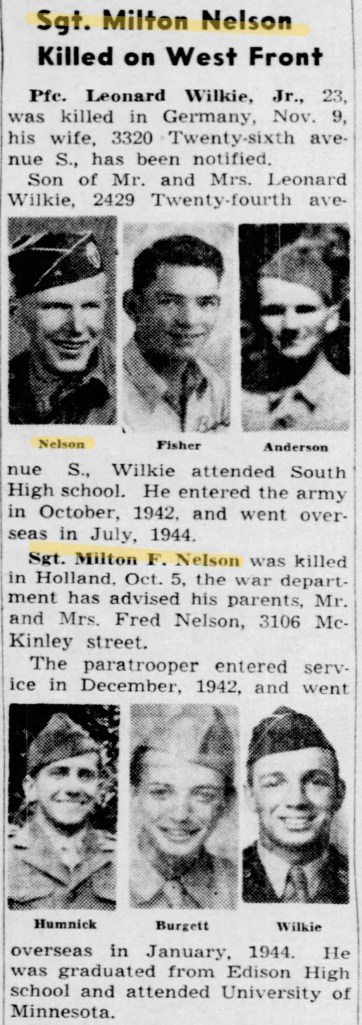
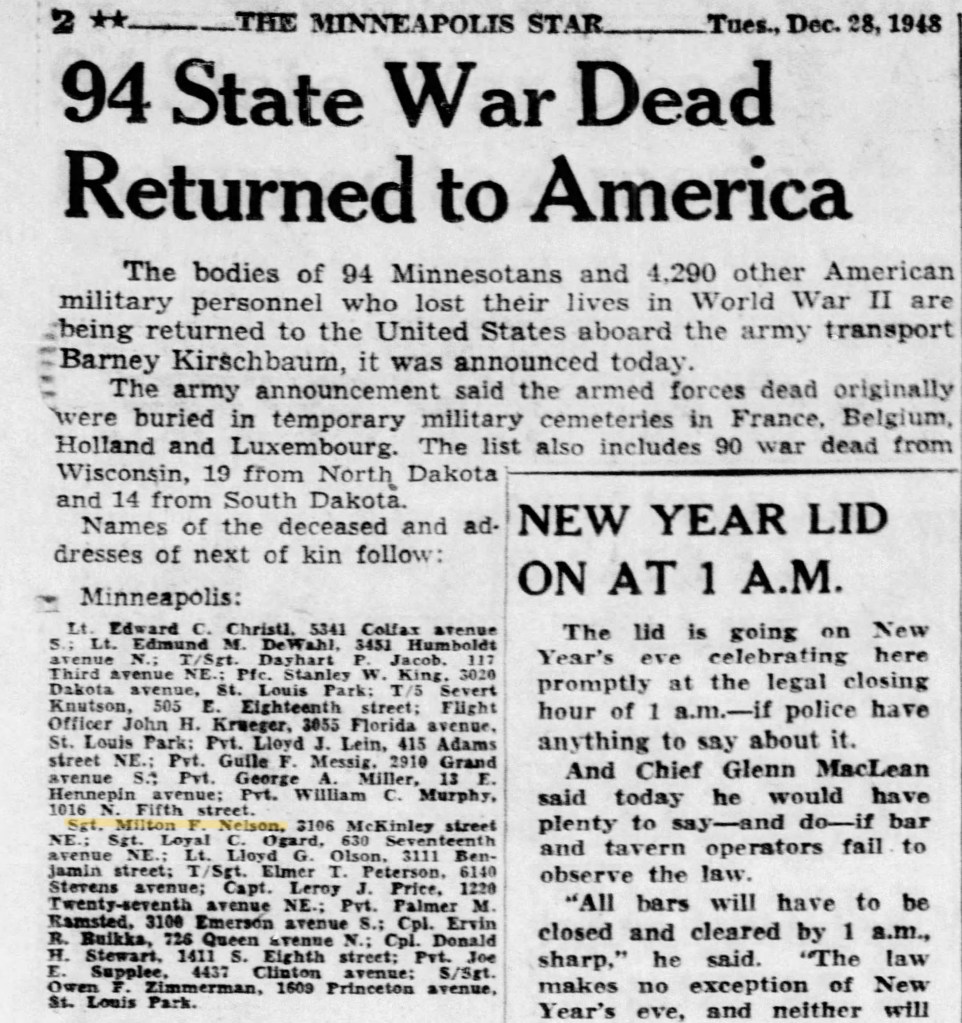
Milton was buried in a temporary military cemetery in Holland.
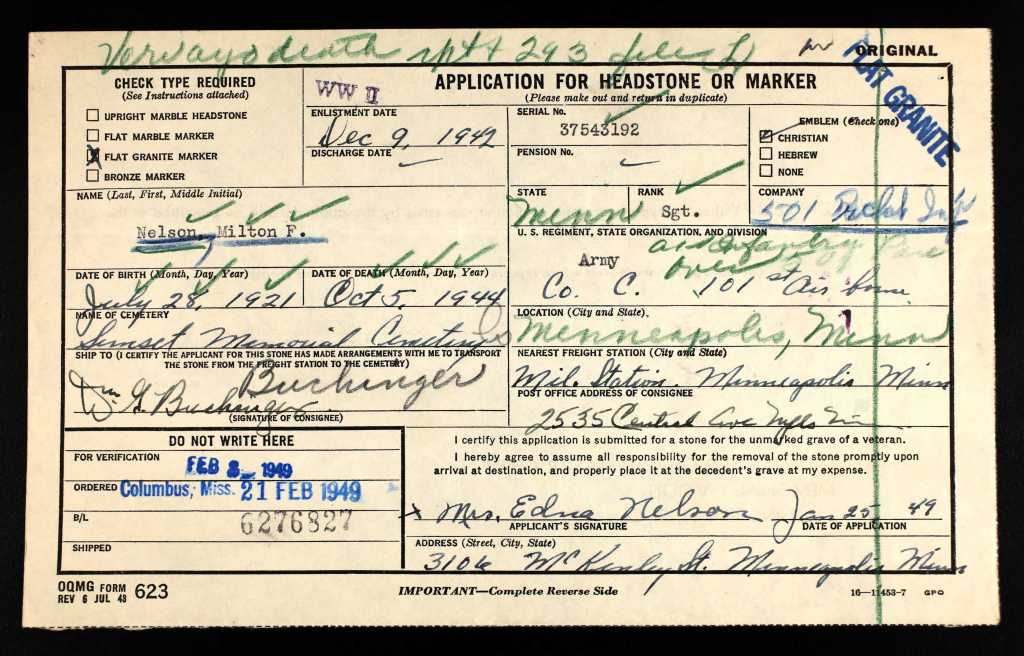
In December 1948 Milton’s body was returned to Minnesota for reburial.
His funeral was held on 7Feb1948.
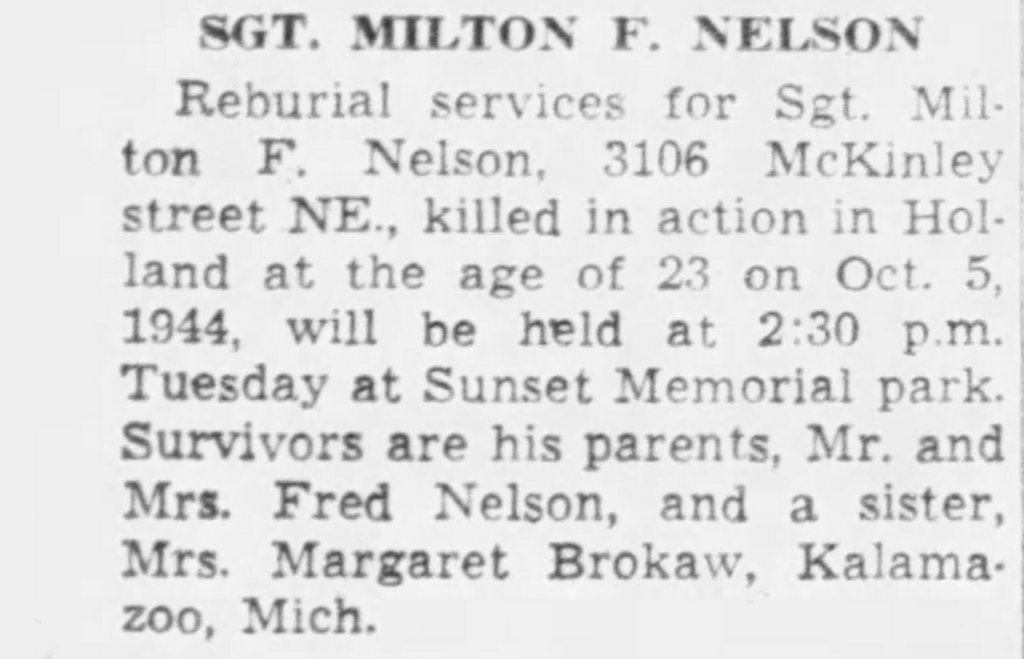
Milton is buried at Sunset Memorial Cemetery in Minneapolis, Minnesota.
Postscript
While not as famous as Easy Company of the 506th Parachute Infantry Regiment, featured in the HBO miniseries Band of Brothers, Milton’s experience with the 501st Parachute Infantry Regiment was nearly identical. Watching Episode 1 through Episode 5 of Band of Brothers will give an idea of Milton’s experience at Camp Toccoa, Georgia, the D-Day invasion, and Operation Market Garden.
 Edison Heroes