
7Jan1923 – 14Nov1944

Edison Days
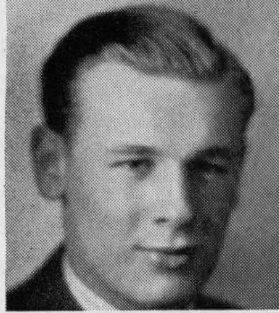
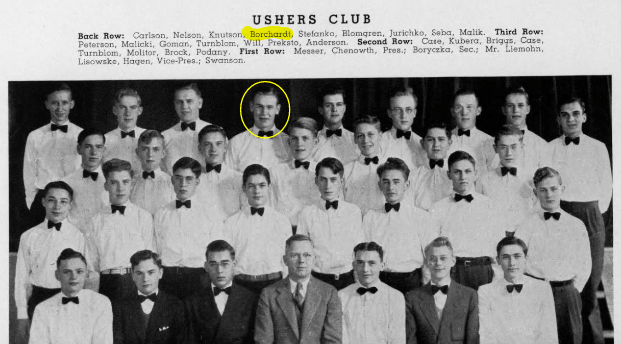
Robert graduated early with the Class of June 1939 when he was just 16 years old! He participated in Hi-Y and he was a member of the Ushers Club.
Military Service
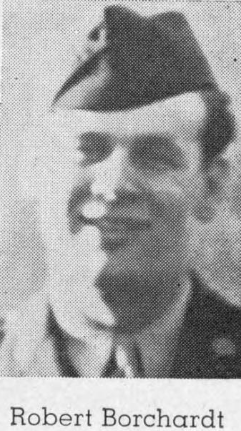

Rank: Private
Branch: United States Army
Unit: Medical Detachment – 71st Infantry Regiment – 44th Infantry Division
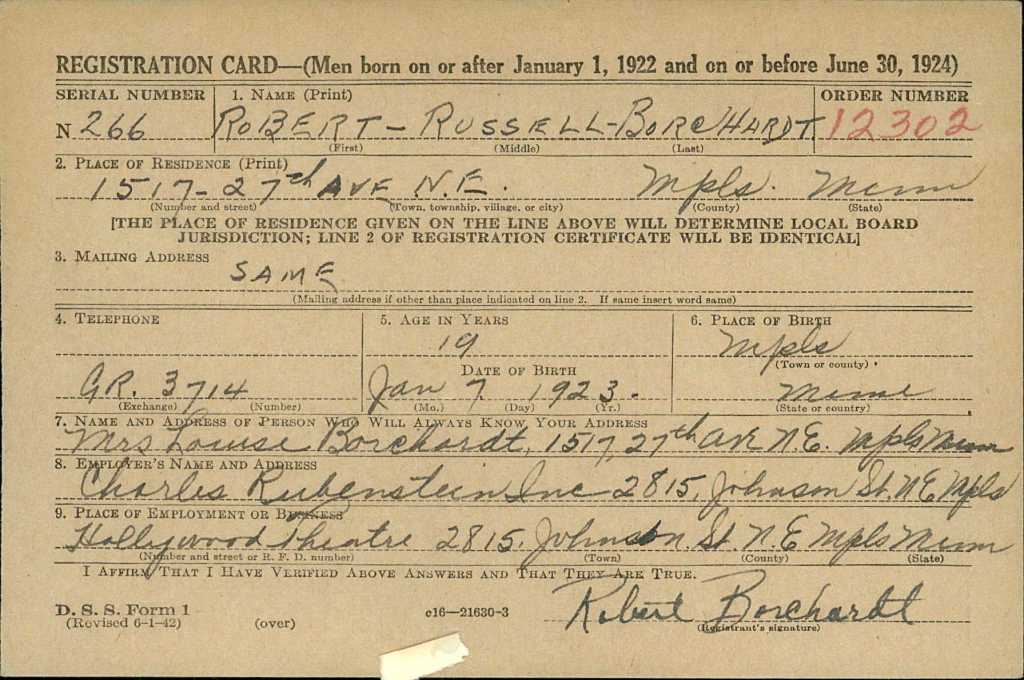
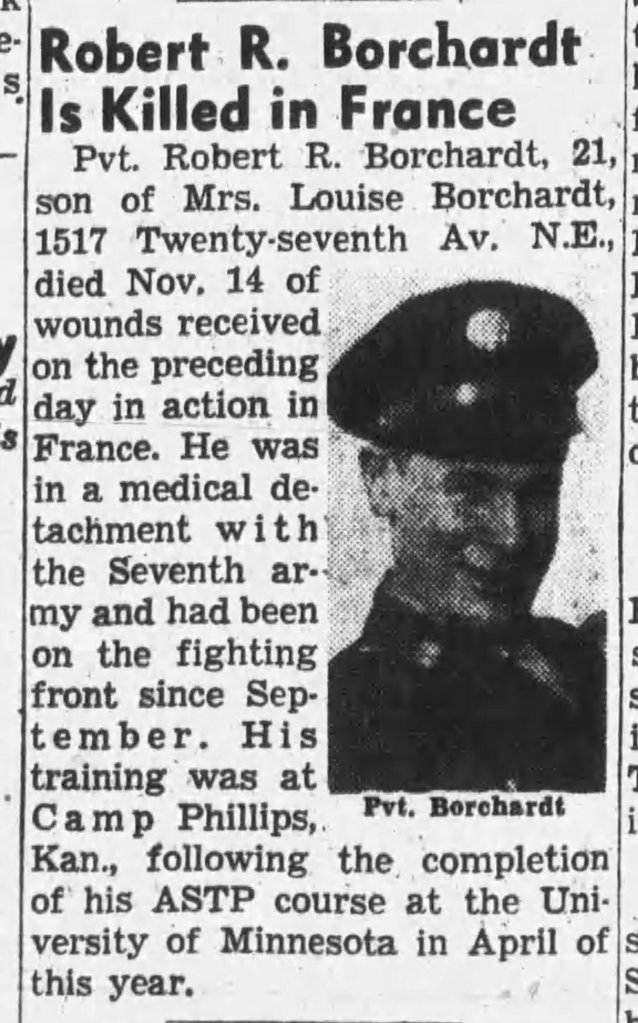
Robert joined the Army in March 1943 and was in the Army Specialized Training Program (ASTP) at the University of Minnesota from July 1943 until April 1944. It is likely that his training was medical related. After ASTP he went to Camp Phillips near Smolan, Kansas for additional training. He went oversees in September 1944,
The following excerpt is from a regimental history published in 1946.
The 71st Infantry Regiment sailed from the Boston Port of Embarkation on the morning of September fifth, 1944, on the USS Monticello, the con-verted Italian luxury liner Conte Grande. It formed part of the first units to land directly at the newly liberated port of Cherbourg, France, in a direct movement from the States. Moving from Cherbourg to the vicinity of Montebourg, the Regiment bivouacked in apple orchards and pastures. Here the Regiment received its trucks, and the issue of equipment and ammunition to ready it for combat completely. During the time in Normandy, an intensive athletic and training schedule was carried out. The men were particularly instructed in hedge row and broken terrain fighting. On October tenth the rail element left Valognes on French “40 et 8” boxcars for the front. The motorized convoy left the Normandy peninsula two days later, arriving at the Alsatian city of Luneville, France, at the same time as the rail unit. As the men bivouacked within hearing distance of enemy artillery, they learned that the Regiment’s first combat mission was to relieve elements of the 79th Division in their defensive positions on the line.
The first companies of the Regiment entered combat on the twenty-third of October, 1944. They relieved elements of the 315th Infantry Regiment of the 79th Division east of Luneville, France, in the vicinity of Embermenil. The Regiment occupied dug in positions in Le Remabois and in the eastern part of the Foret de Parroy. In the last week of October and the first weeks of November, with a series of night attacks, the First Battalion drove the Germans from their remaining strong-holds in the forest. By continued and active patrolling, the Germans were kept from any effective offensive action in this part of the line…
…These last weeks of October and first weeks of November are remembered as a long ordeal of foggy rain and soggy mud. As the days went on, the rain became more insistent, driving its wetness to the very skin of the soldier. The men wore wet clothing for days at a time. Foxholes and gun positions were flooded and caved in again and again. The men found themselves living and fighting in a brown sea of oozing, sticky mud. Trench foot became a greater danger to the individual than enemy shrapnel. A hot meal served while in reserve was a greater treat for the front-line soldier than a dinner with music at the Waldorf would have been to the average citizen…
…On the 13 November 1944, the Regiment first took the offensive, launching an early morning attack in the Les Remabois Woods between Embermenil and Leintrey. It was a cold morning and the combination of the first snowfall of the season and the deep mud made battle conditions extremely difficult. The 7lst Infantry, with the 114th Regiment on its right flank and the 324th Regiment on its left, began the first of a series of thrusts that resulted in the liberation of Sarrebourg, one of the major cities of Alsace.
The initial attack began at 0710, meeting stiff resistance almost immediately, with two battalions being stopped by constant artillery, mortar, and small arms fire. Company I pushed through, capturing Leintrey by 0930, the first of many villages and towns liberated by the Regiment, and went on to take Hill 310, its initial objective. In this engagement the company suffered 90 casualties in three hours. The rest of the day was spent by all battalions in consolidating the new positions, preparing for the expected counterattack, and readying themselves for a new attack the next morning. The bitter cold continued, and cases of exposure and trench foot were numerous among all units. In many cases it was impossible to get adequate supplies through to all the men because of the constant shelling of positions by massed enemy artillery.
It was during this action that Robert was suffered a gunshot wound to the thigh. He would die of his wound the next day.
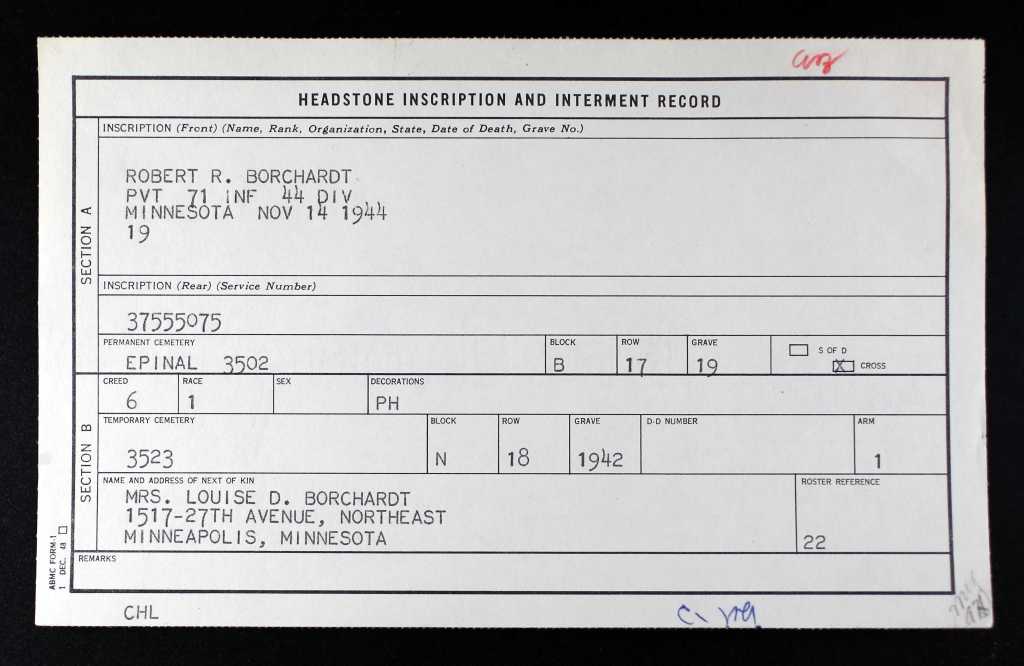
Robert was originally buried in a temporary cemetery in Epinal, France. After the war, Epinal became a permanent military cemetery, and Robert is 1 of 5,252 American’s buried their.

 Edison Heroes