
13October1919 – 9Jun1944
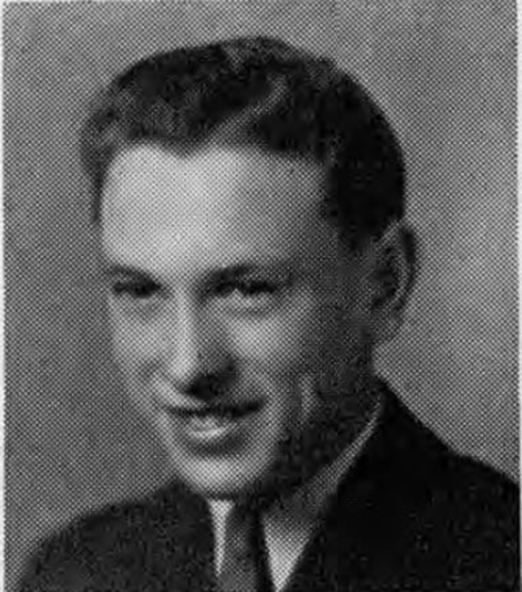

Edison Days
Robert graduated with Class of January 1938. After graduation, Robert attended, and graduated from, the Minnesota School of Business.
Military Service
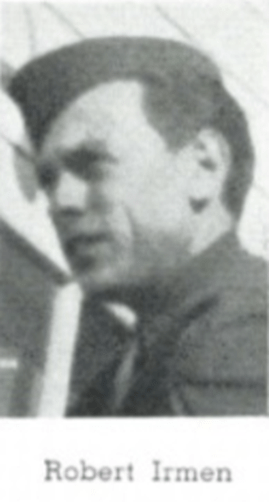

Rank: Staff Sergeant
Branch: United States Army Air Force
Unit: 831st Bomb Squadron – 485th Bomb Group (Heavy) – 15th Air Force
Robert likely entered the army in February 1942. After basic training he was possibly assigned to the 29th Bomb Group in Boise, ID. The activation of his eventual unit, the 485th Bomb Group took place at the Fairmont, Nebraska Army Airfield in September 1943. It was built from the original cadre which was actually assembled from the 29th Bomb Group, stationed at Gowen Field, Boise, Idaho. The group consisted of four squadrons (828th, 829th, 830th and 831st). After the group was formed, it began receiving ground personnel and air crews from various sources, including advanced training fields across the country.
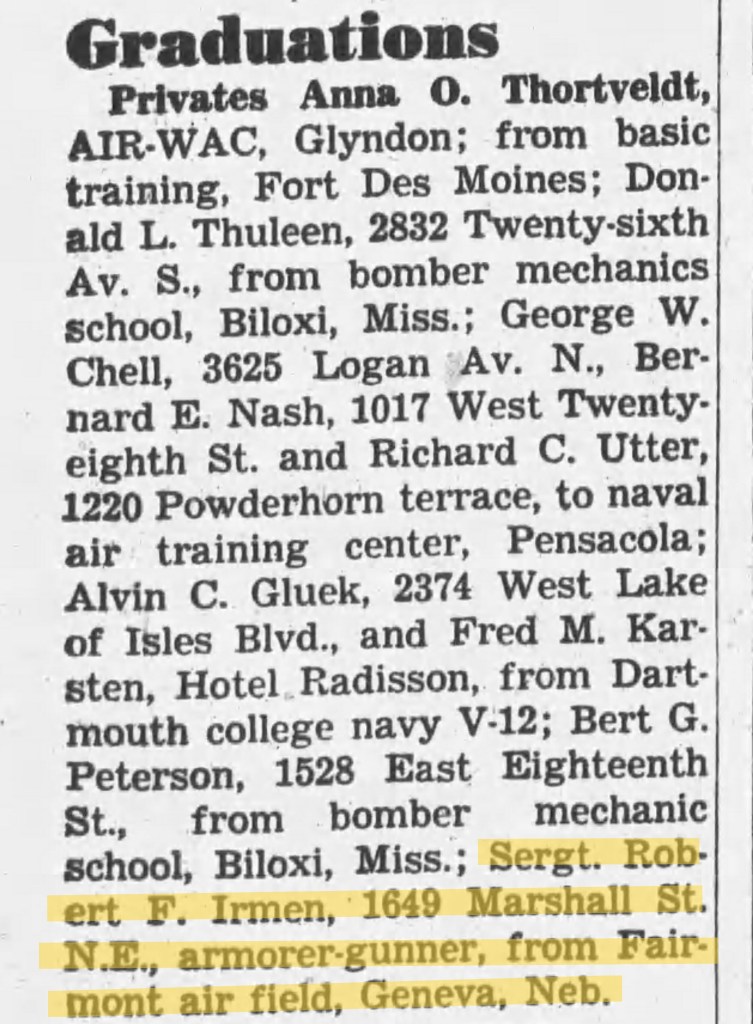
The crews received additional training at Fairmont and by early March 1944 their training was completed, and they were deemed fit for combat. Robert graduated as an armorer-gunner crewman.
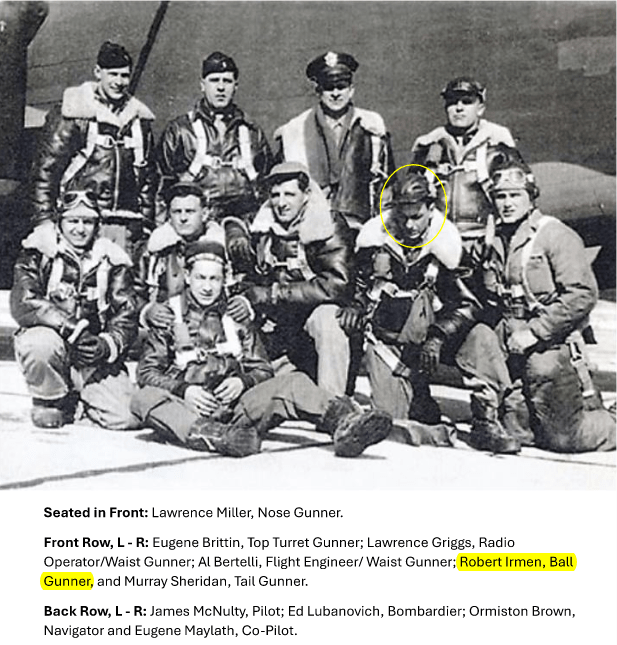
Sometime during this period Robert was assigned to a crew as the Ball Turret Gunner.
The 72 crews from the four squadrons began their individual overseas flights, initially flying to Brazil, with stops along the way, and then continuing the long overseas flight to Dakar, West Africa. From there they flew on to Marrakech and then to Oudna, Tunisia. The group began flying practice missions in Tunisia and by 15April1944 the crews began flying their planes to a field near Venosa, Italy.
The 485th Bomb Group flew its first combat mission on 10May1944. Robert’s plane flew on about 1/2 of the missions that the group conducted, and could have included targets in Yugoslavia, Italy, Austria, France, and Romania.
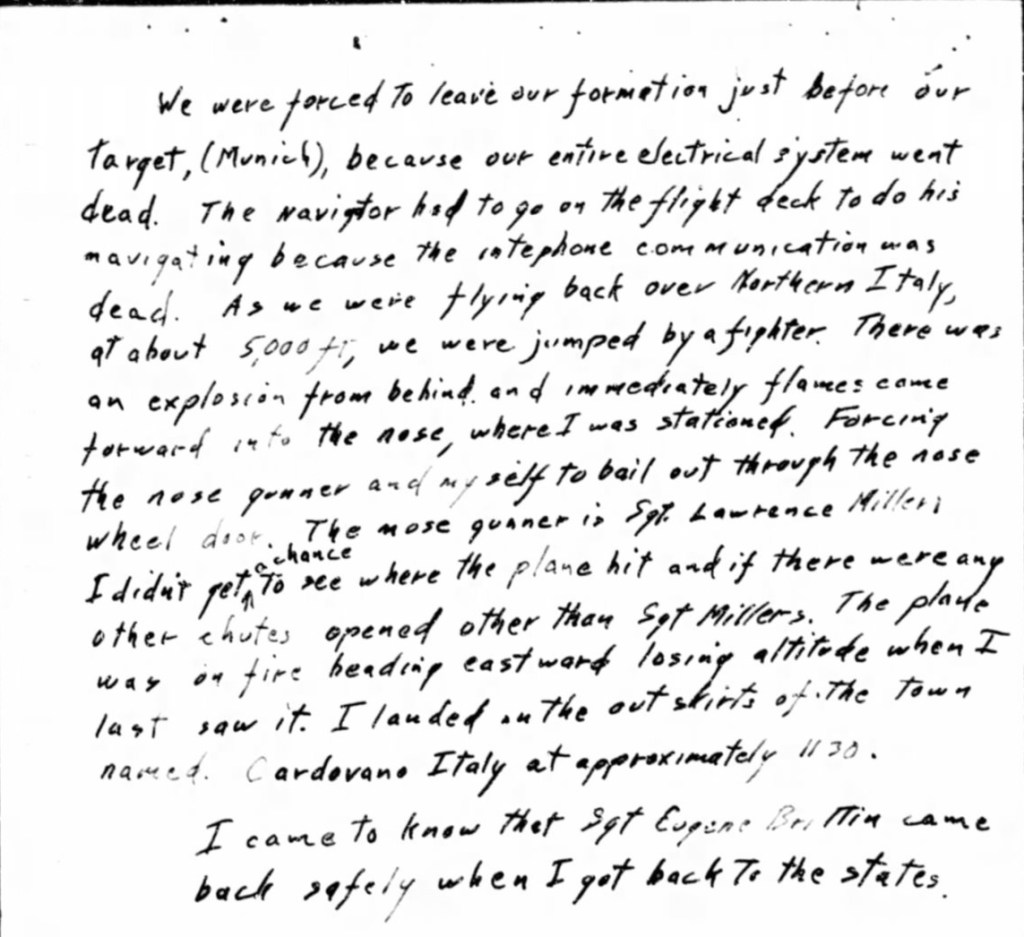
Robert’s final mission was the groups first mission to Germany. The target was an aircraft factory in Munich. The mission to Munich likely consisted of 36 planes. As the planes approached Munich for their bomb run, Robert’s plane had a failure of the electrical system which caused the pilot to drop out of the formation and try to return to their base in Italy over 600 miles away.
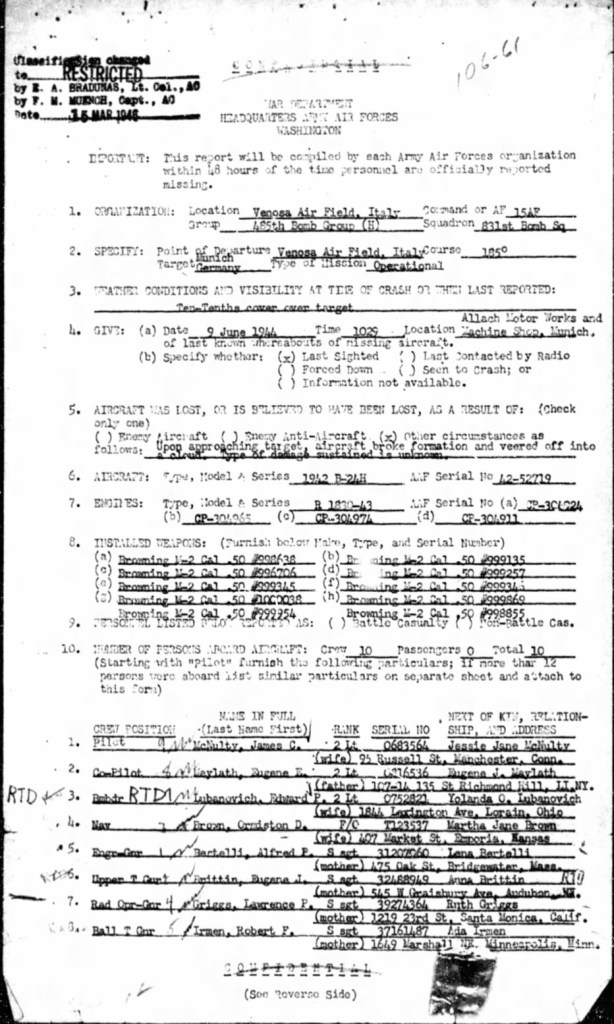
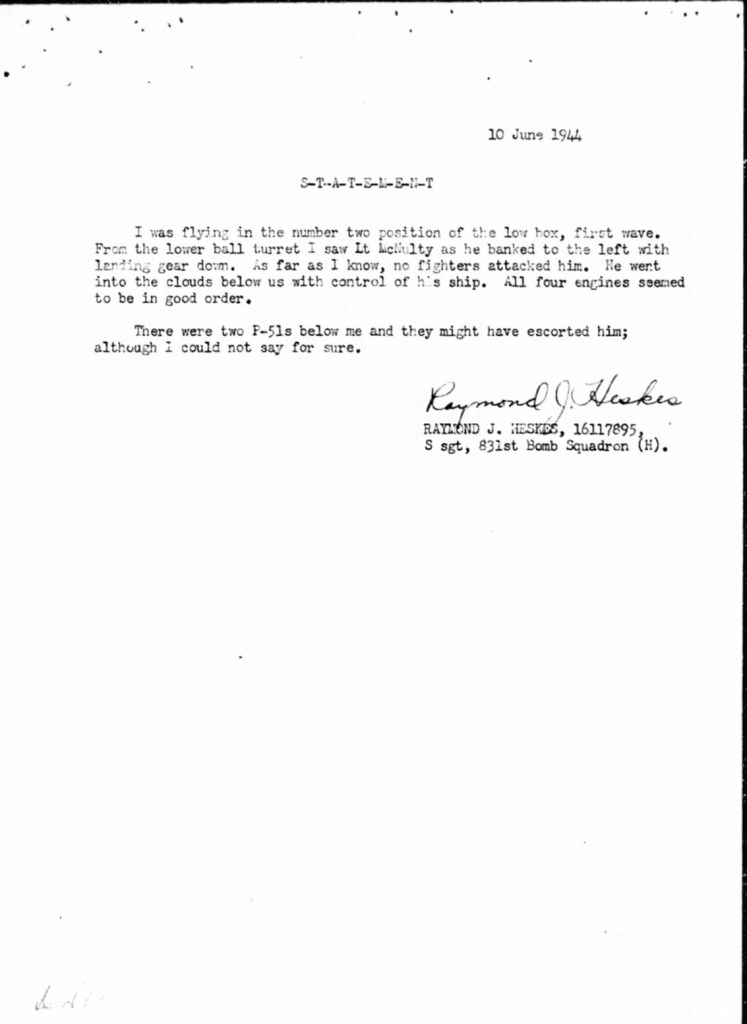
As they struggled to navigate back to their base, the plane was attacked by a German fighter plane.
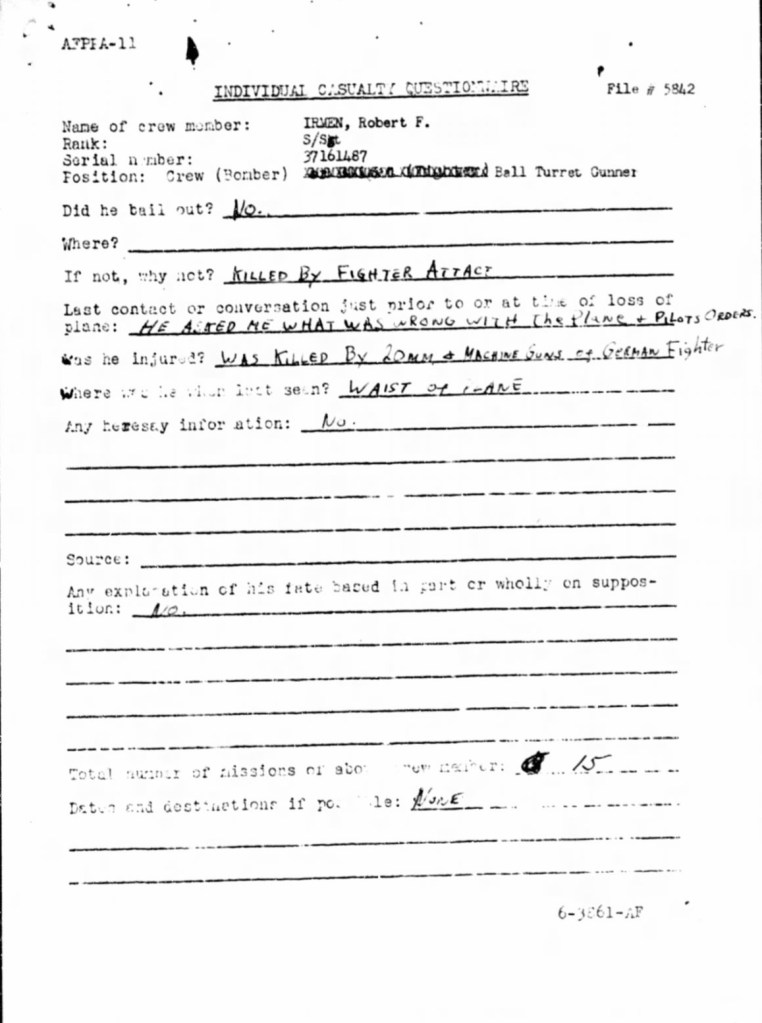
Robert was killed when he was hit by 20mm cannon and machine gun fire from the German fighter in the initial attack.
4 of the 10 crewmen bailed out of the stricken bomber, Robert was dead, and the fate of the other 5 crewman was unknown.
1 of the men that bailed out died when his parachute failed to open. The other 3 landed in Northern Italy and were captured by the Germans and became Prisons of War (POWs). 1 of them reported that he last saw the stricken plane descending and on fire. The plane crashed in enemy territory in a location unknown to the Army. The fate of Robert and the men who went down with the plane was unknown.
6 weeks after the mission, Robert’s family was informed that he was missing in action.
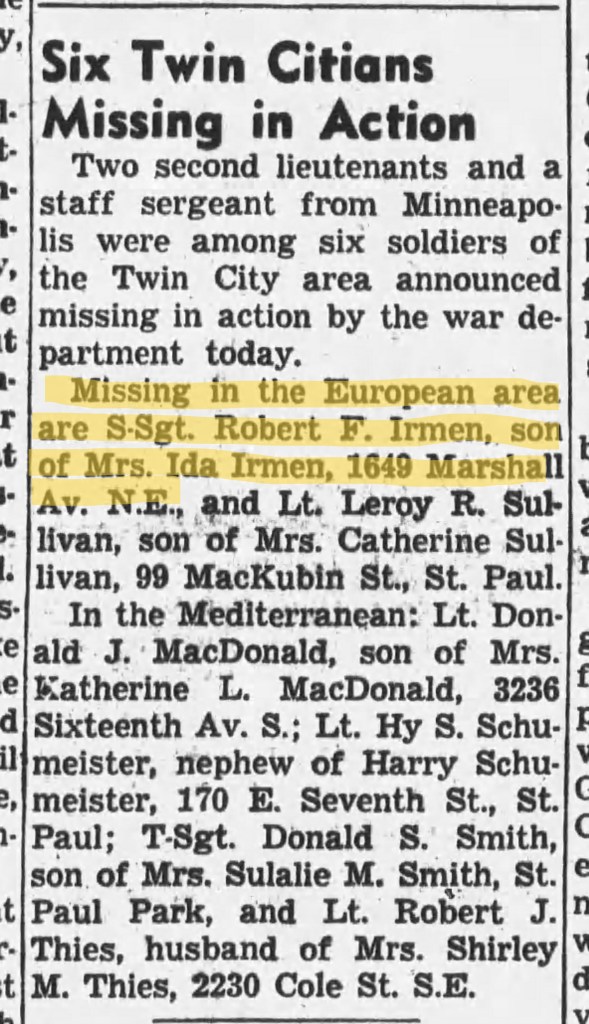
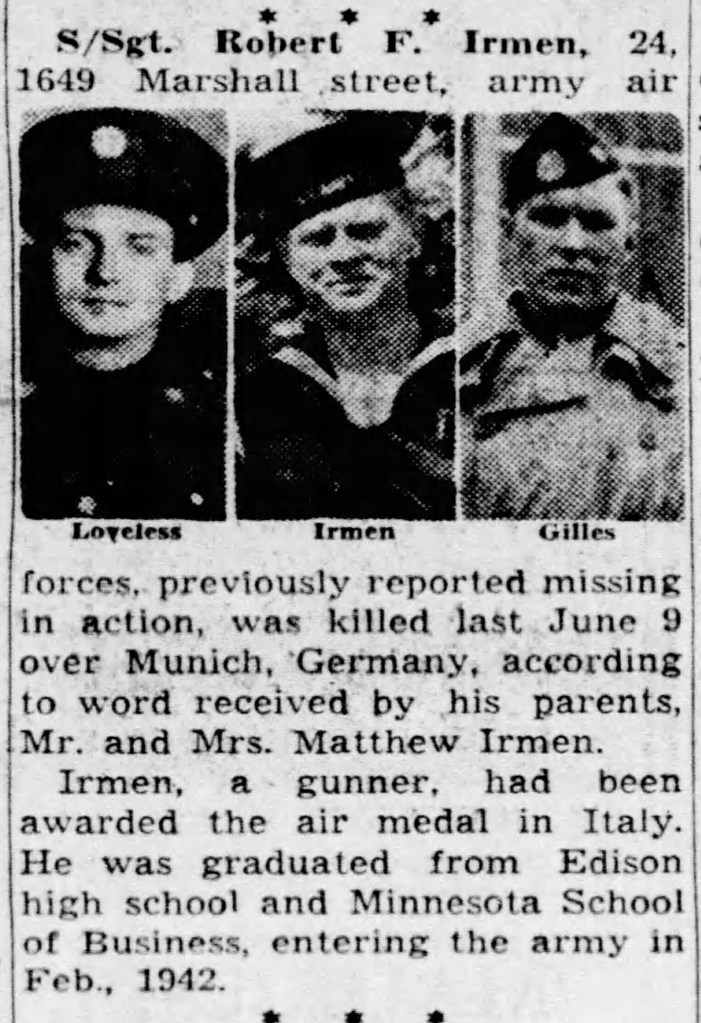
Almost a year after being reported as missing in action, Robert’s family was informed that he was killed in action.
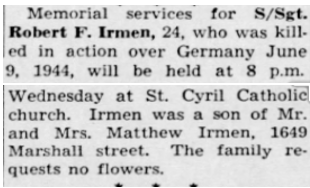
Robert’s family held a memorial service for him in June 1945.
Unbeknownst to Robert’s family, and almost concurrent with the memorial service for him, 1 of the liberated POWs from his crew wrote a letter to the pilot’s family and shared what he knew of the fate of the plane.
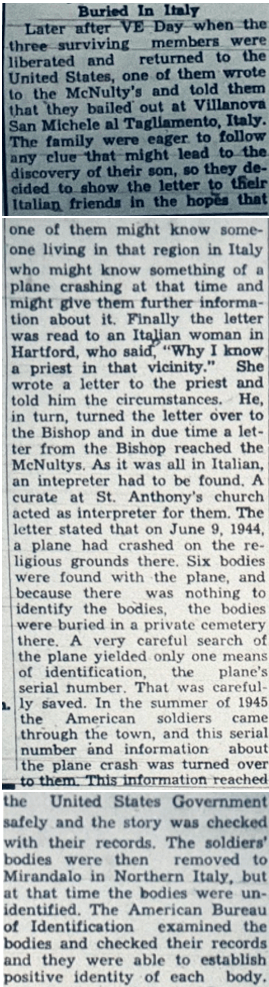
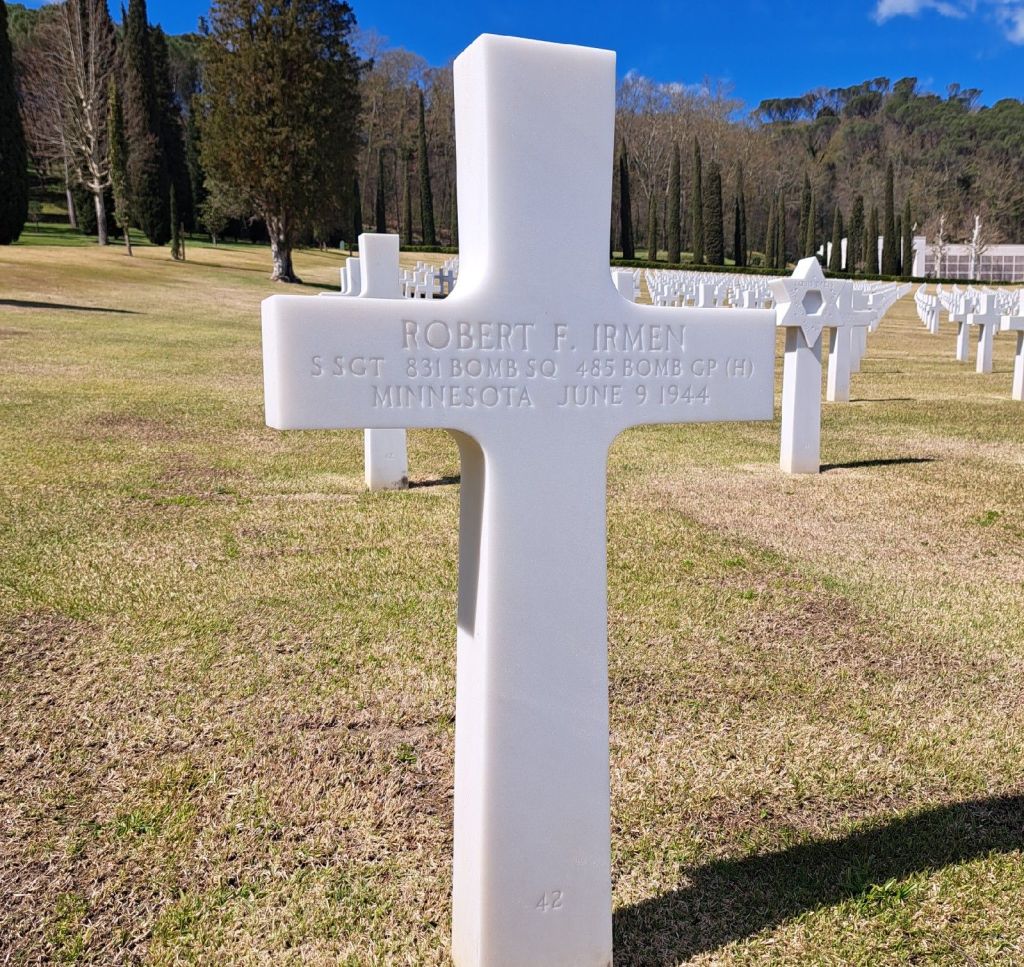
Robert’s remains were eventually relocated to the Florence American Cemetery and Memorial at Florence, Città Metropolitana di Firenze, Toscana, Italy.
 Edison Heroes