
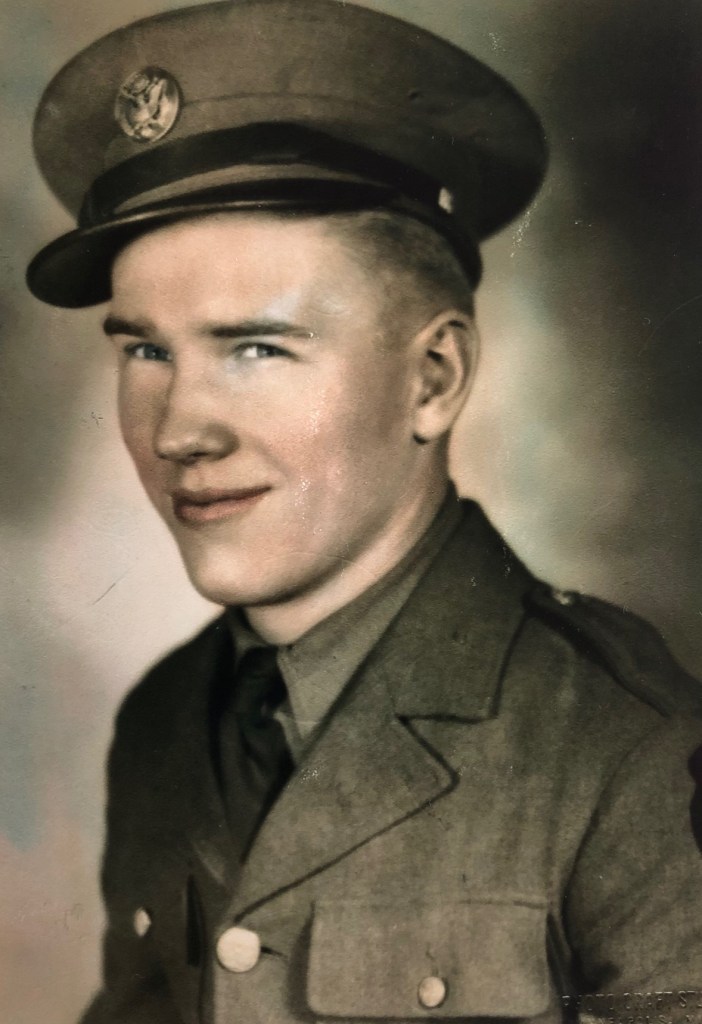
19May1921 – 5Feb1944
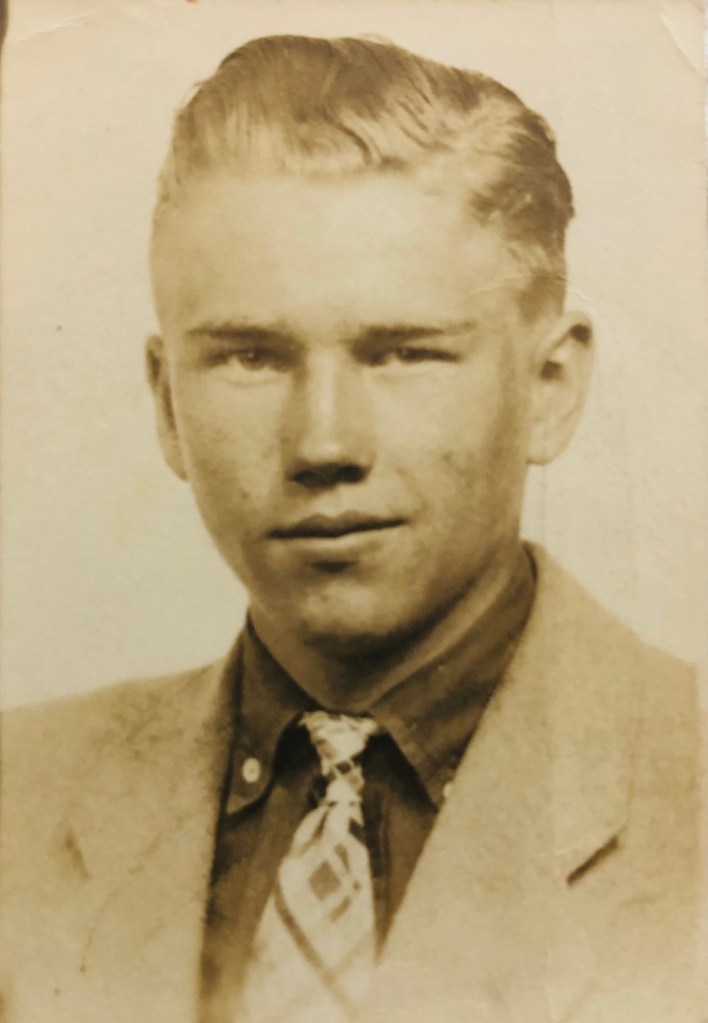
Thank you to the family of Robert Sorenson for sharing family photographs and mementos of his life.
Robert (Bobby) was born in Cloquet, MN and his family lived in Carlton, MN at the time. The family moved to Minneapolis before his first birthday and moved into a house at 2552 Cleveland Street when he was 1. He attended Pillsbury School as a child.
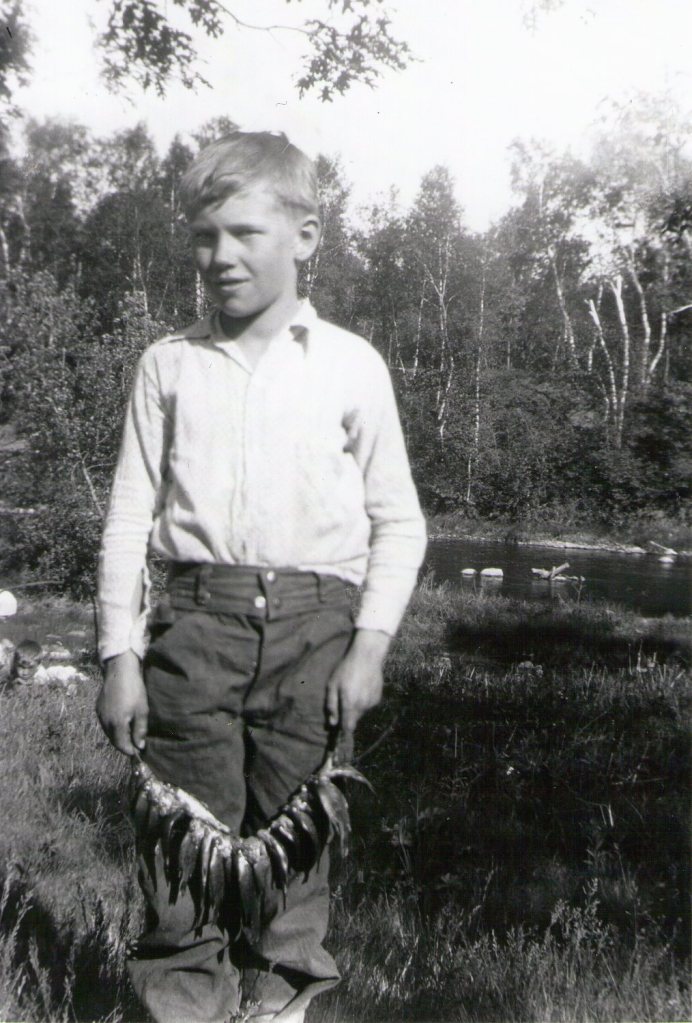
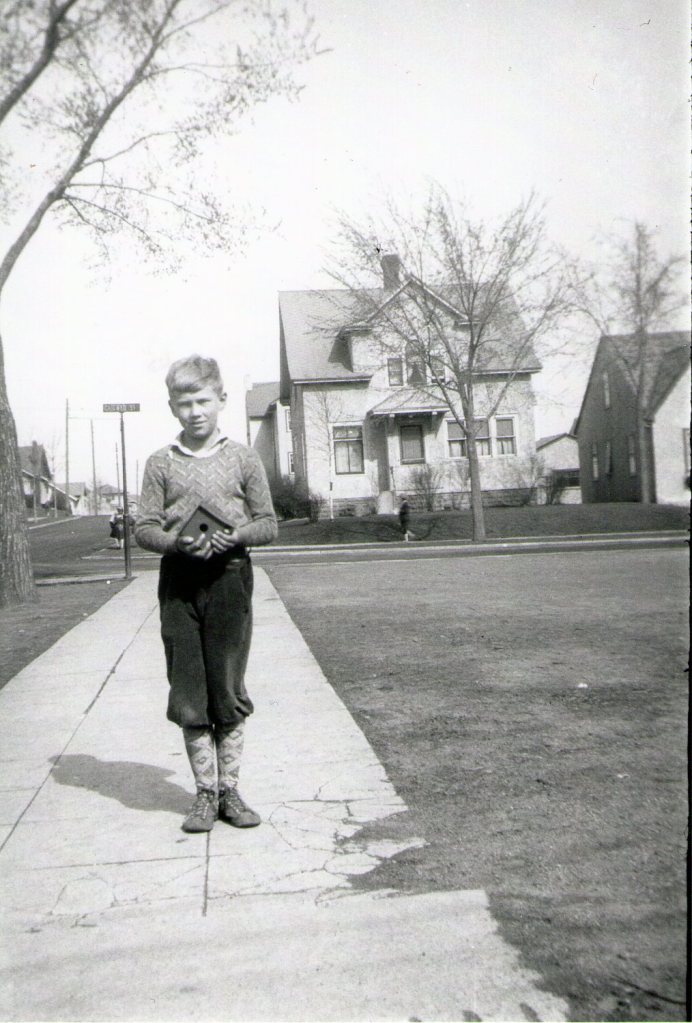
Edison Days
Bobby attended Edison High School but no yearbook pictures from his time in school have been located. In 1938, while in the 12th grade, Bobby withdrew from Edison io join the Civilian Conservation Corps (CCC). The Civilian Conservation Corps (CCC) was a public work relief program that operated in the United States during the Great Depression. It employed millions of young, unmarried men in conservation and infrastructure projects, providing them with jobs, food, shelter, and a small monthly wage. The CCC’s work included reforestation, flood control, and building national and state parks.
Military Service
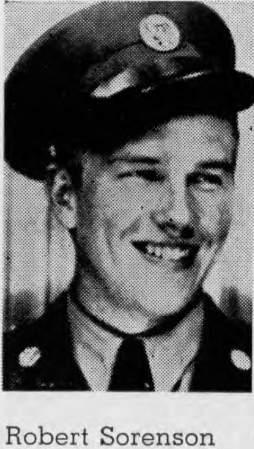

Rank: Private First Class
Branch: United States Army
Unit: Headquarters Company – 1st Battalion – 135th Infantry Regiment – 34th Infantry Division
Bobby enlisted in the Minnesota National Guard in 1939. Because he suffered from asthma, he was afraid that he would not pass a physical exam. The solution was for his best friend Russ Larson to pretend to be Bobby and take the physical for him. Bobby and Russ went into the Army together.
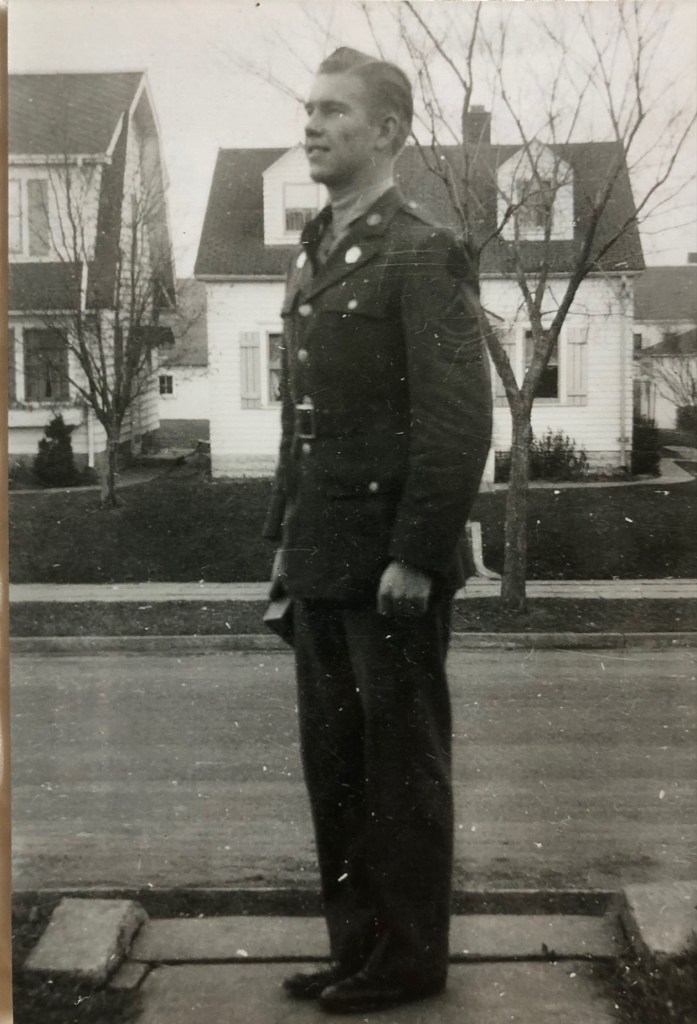
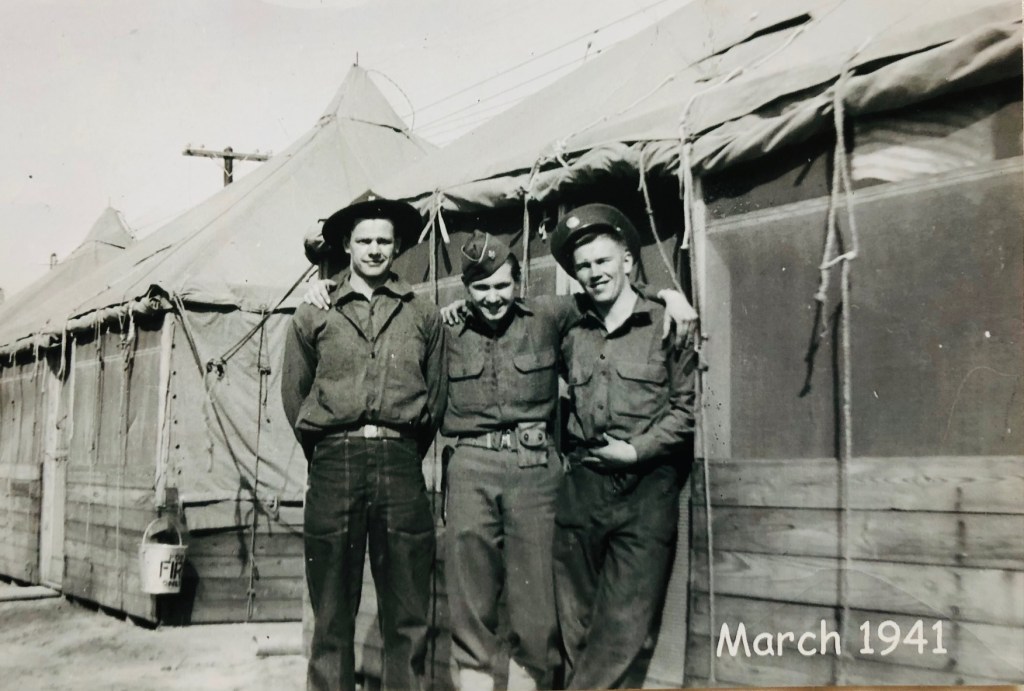
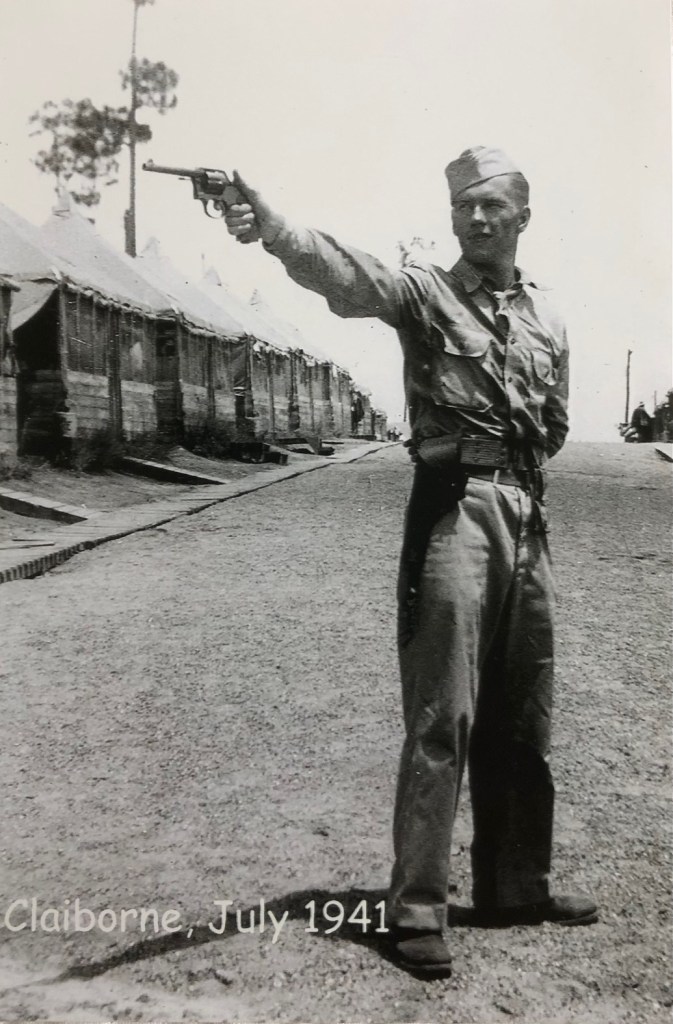
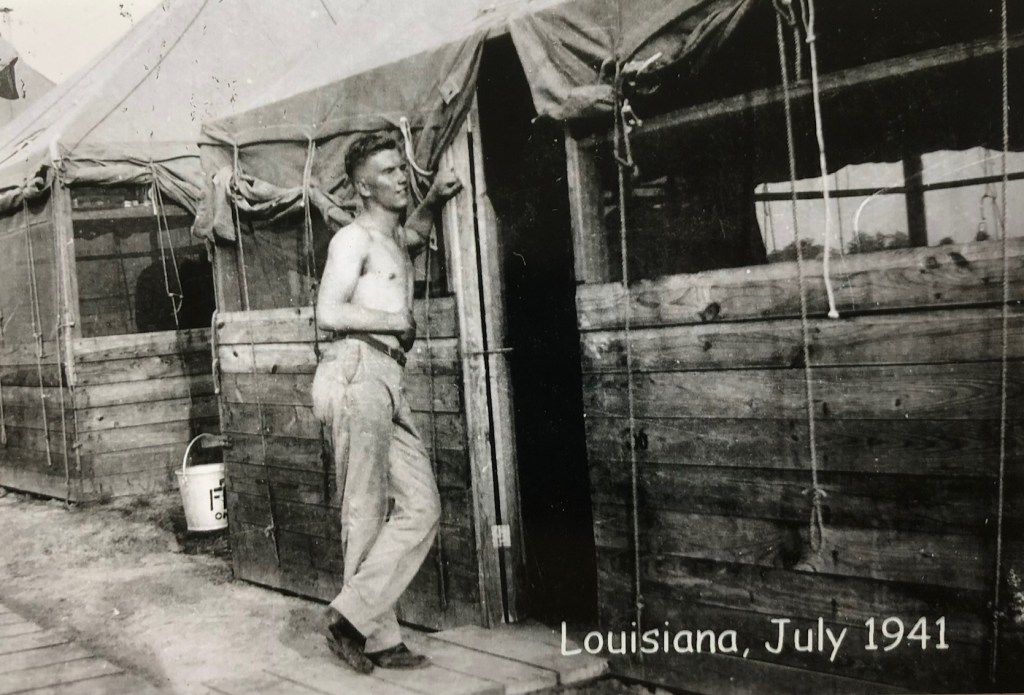
The 135th Infantry Regiment was federalized into active military service in early February 1941. In late February Bobby and the other 1,575 men of the 135th traveled by train to Camp Claiborne, Louisiana. The unit conducted training and military maneuvers until 30Sep1941.


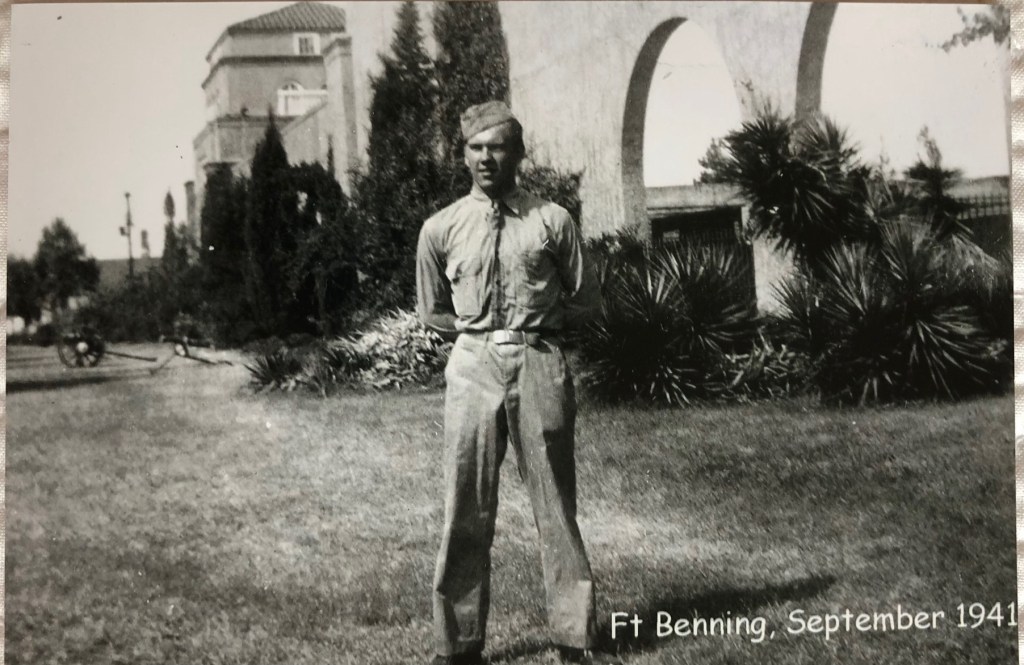
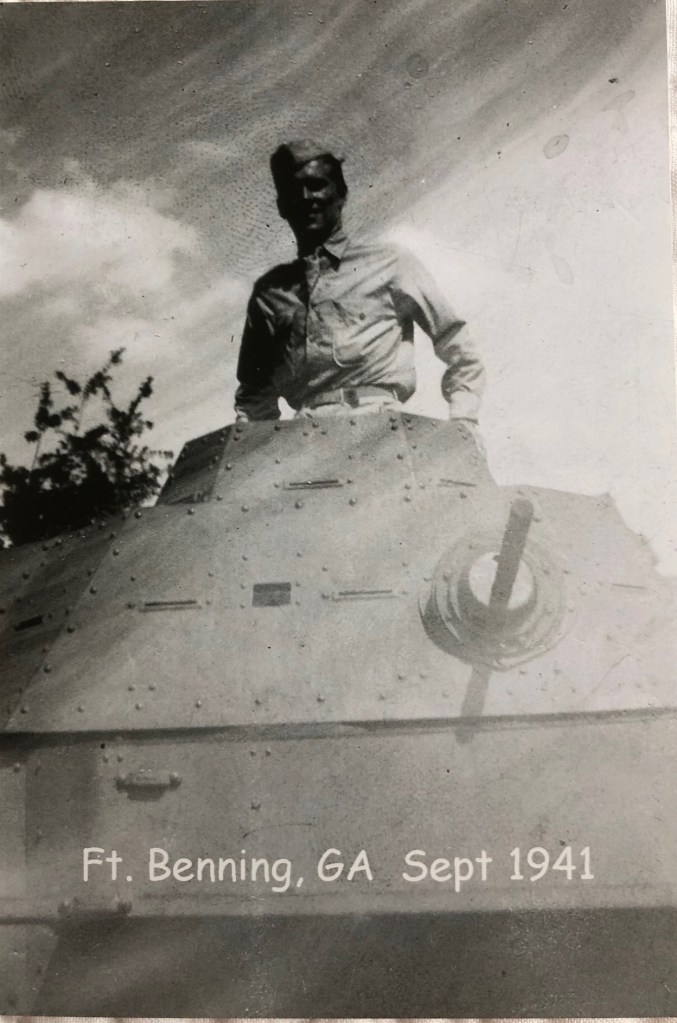
After the Japanese attack on Pearl Habor and the US declaration of war on 8Dec1941, there was a fear that the US would be attacked again. The 135th was tasked with coastal defense. The 1st Battalion was assigned the defense at Fort Barrancas, Florida. This only lasted until New Year’s Day 1942. On 8Jan1942 the Regiment was train bound for Fort Dix, New Jersey to prepare to go overseas. On 30April1942 Bobby was aboard a ship and headed for Belfast, Northern Ireland.
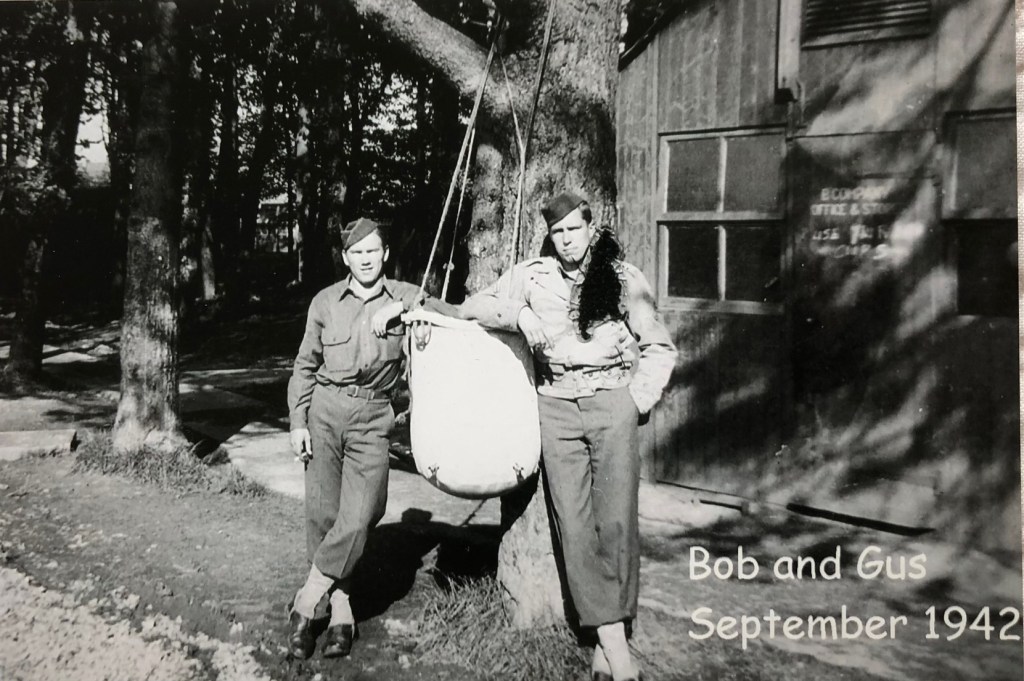
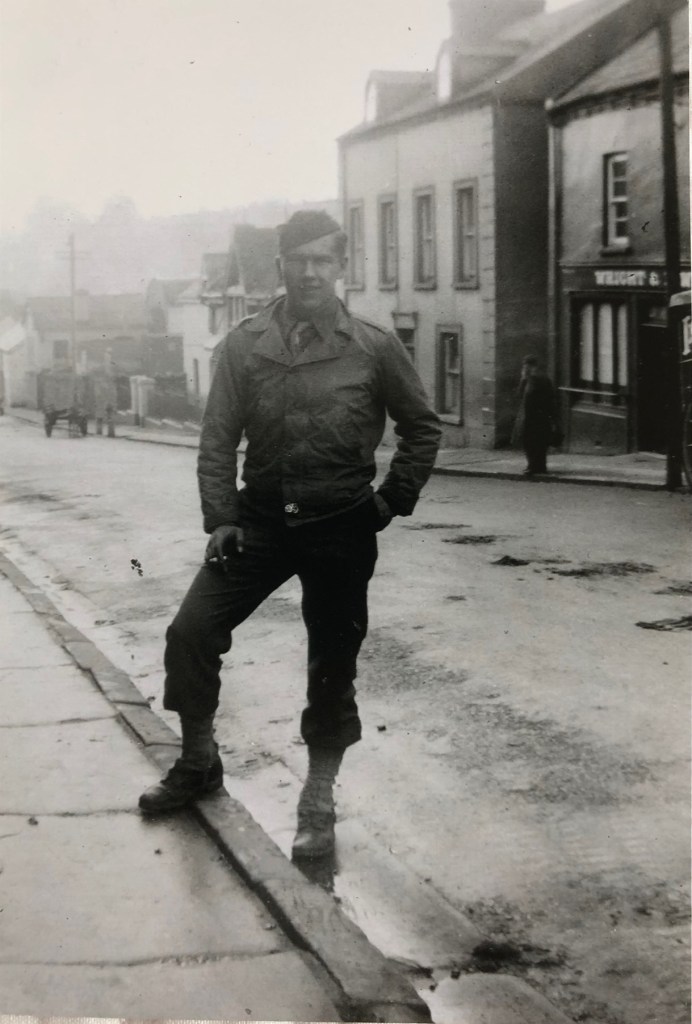

The unit trained in Northern Ireland through November 1942. On 8December1942 the unit began the journey to Africa. Traveling by train and then ship, they arrived at Oran, Algeria on 3Jan1943. On 14Feb1943 the 1st Battalion would see its first combat against the Germans and suffer their first casualties as well.
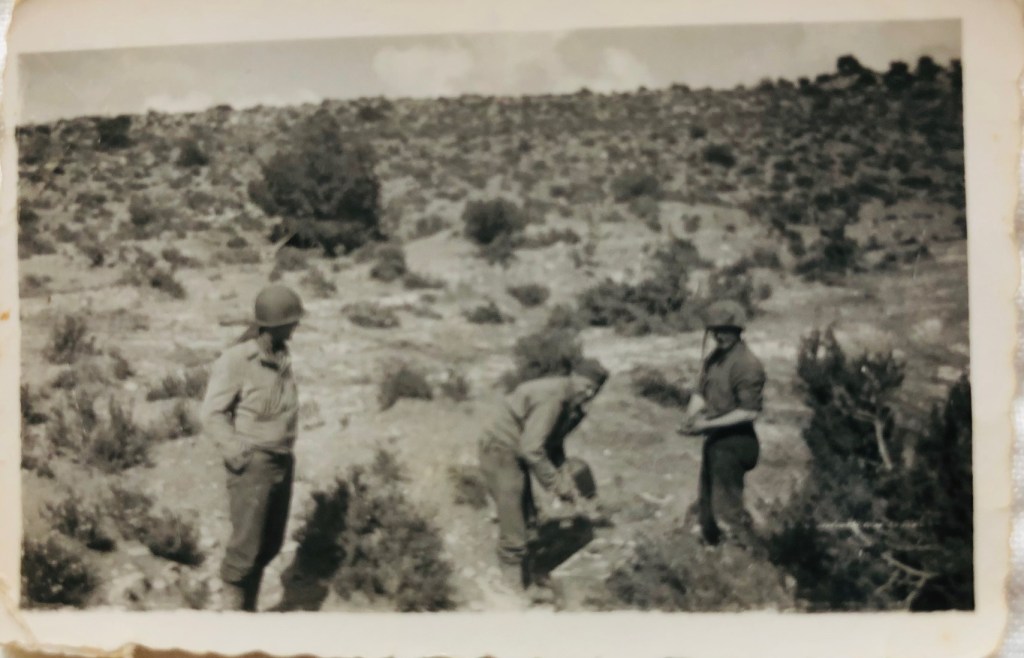
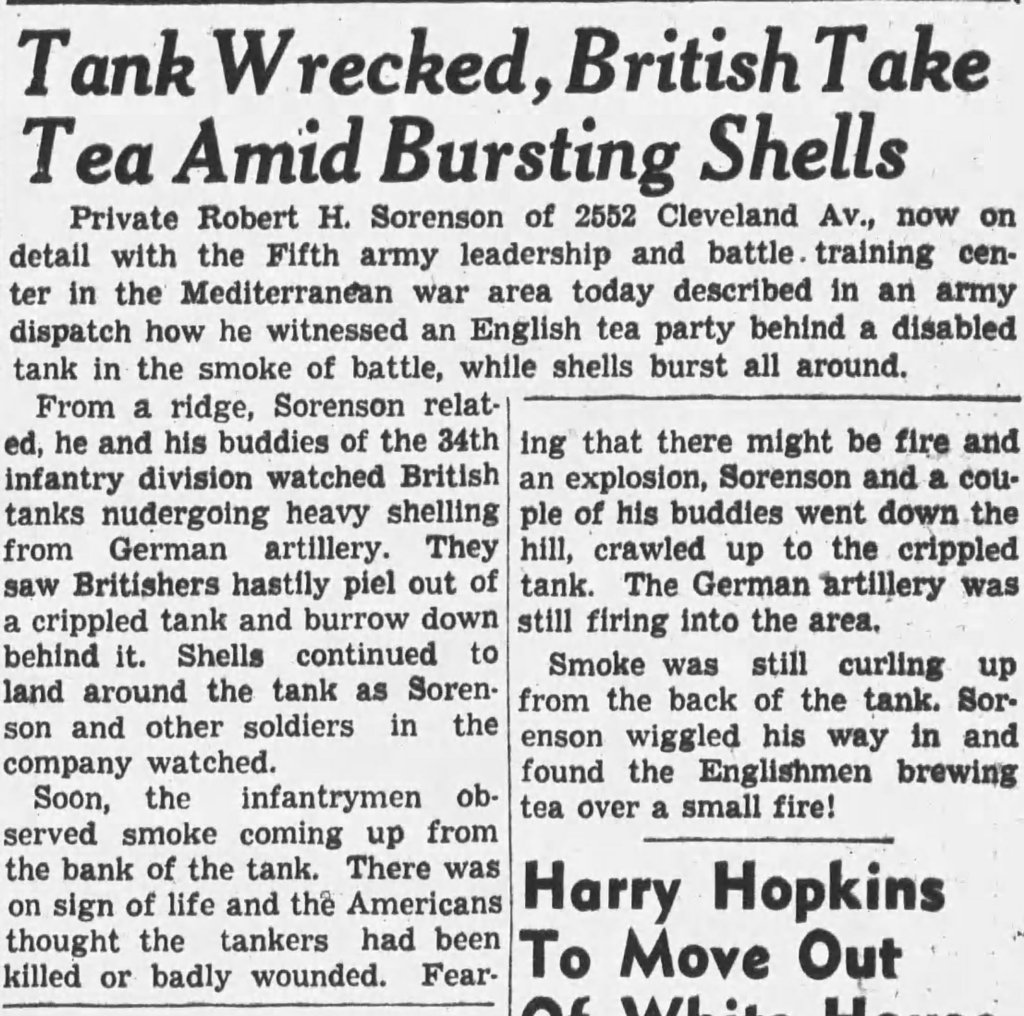
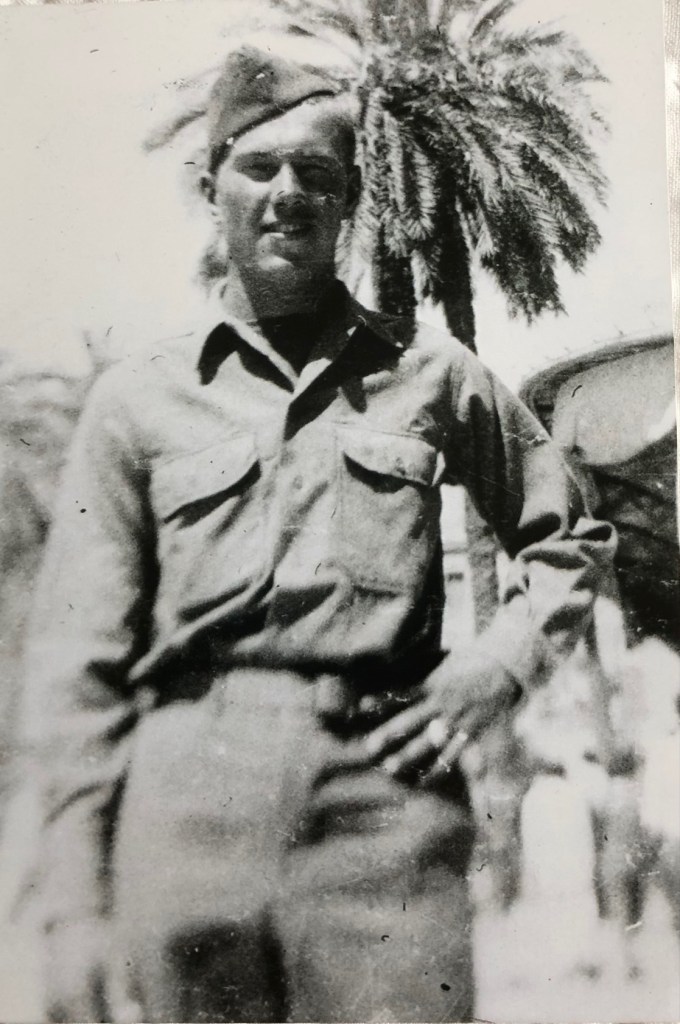
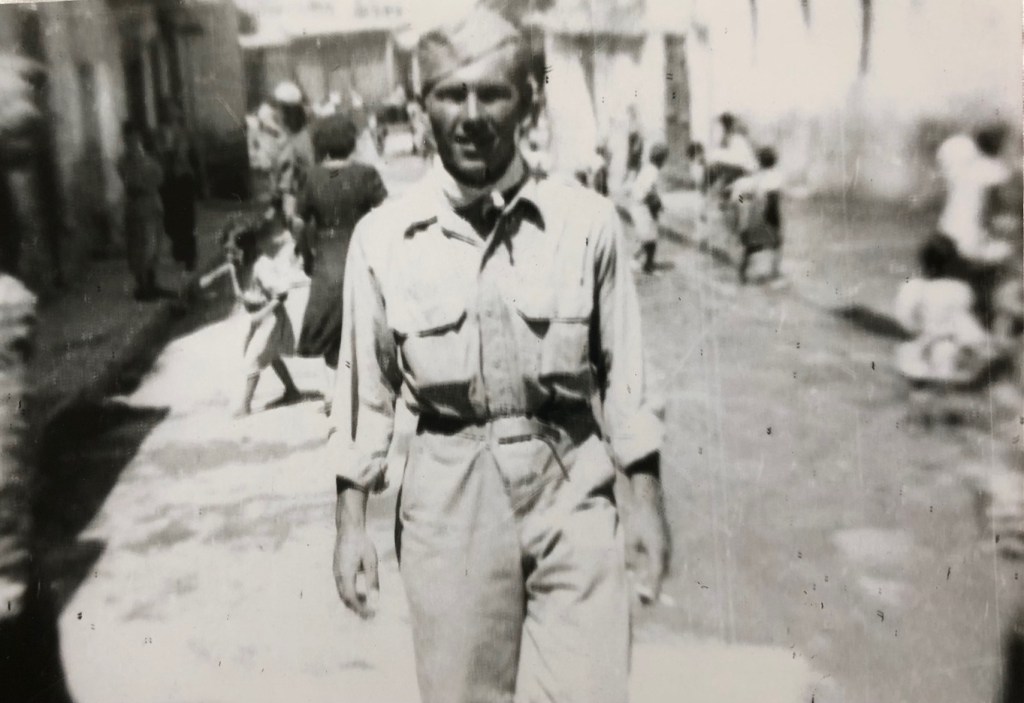
The 135th Infantry Regiment was involved in bitter fighting with the Germans over the next few months before defeating them in a decisive battle at Hill 609 near Djebel Tehent in northwestern Tunisia on 1May1943. The African campaign was over.
Family records indicate that Bobby was wounded while in Africa and received the Purple Heart medal.
After several months in a camp near Chouigui, Algeria, the unit underwent a month of training before they were to join the Italian campaign. Traveling by ship, on 21Sep1943 the unit landed near Paestum on the West coast of Italy. Within 2 weeks, they were back in combat.
Family records indicate that the men would fraternize with Italian civilians, but they were unsure if they could be the enemy as Italy was still aligned with Germany at the time.

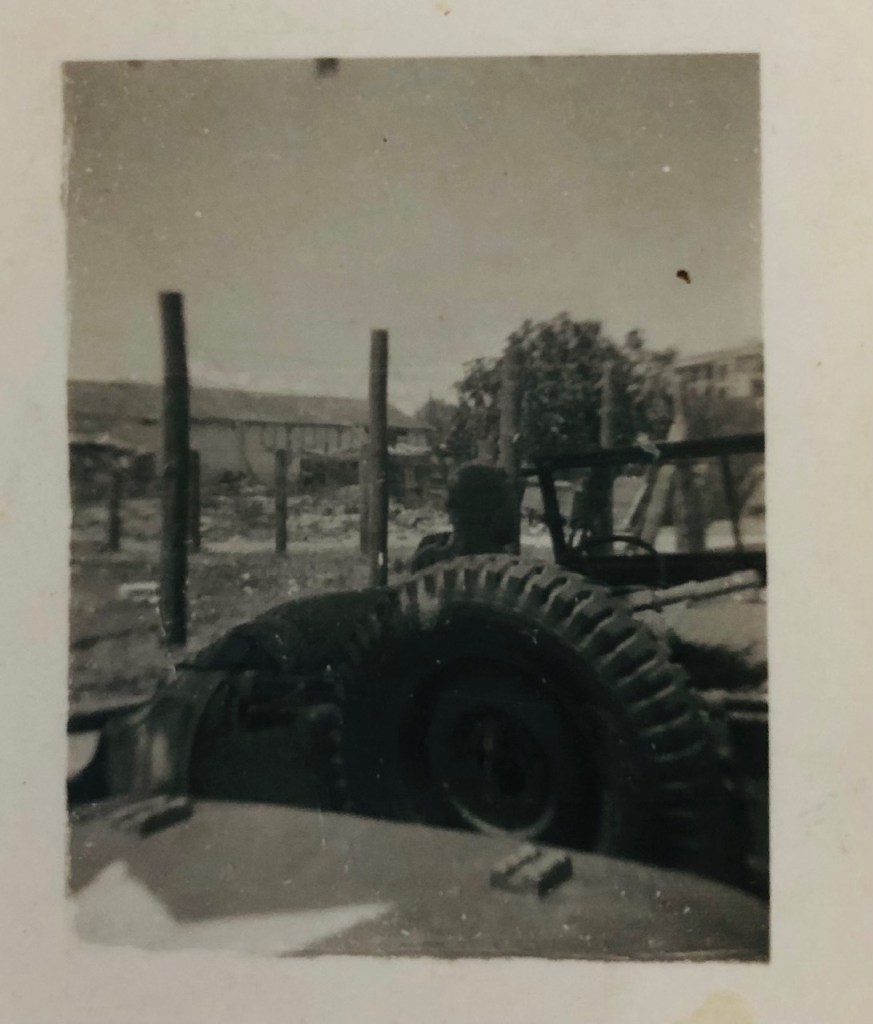
An excellent account of the 135th Infantry Regiments experiences during October, November, and early December of 1943 can be found here.
http://www.34ida.org/images/135inf/135inf_rr4309.txt
http://www.34ida.org/images/135inf/135inf_rr4311.txt
Records indicate the Bobby was treated for a hand injury and then returned to duty in December. It is unknown how he was injured.
The following excerpt is from a Regimental History.
The 34th Division was relieved by the 2nd Moroccan Division on 10-11 December, and the Regiment left for an assembly area at S. Angelo d’Alife on 12 December. During the period of inactivity at S. Angelo d’Alife the Regiment went through a period of training and was reconstituted with replacements and new equipment. The men were able to secure clean clothing and showers, which most of them had not had since coming to the Italian front. There was entertainment in the form of stage shows and movies.
New Years Day found the regiment poised and prepared to strike more telling blows against the enemy. The operation upon which it was about to embark was the long awaited and much discussed assault on the enemy’s “Winter Line”, built in depth from San Vittor to Cassino, a distance of approximately nine kilometers.
On the night of 4 January, at 2330A, the wheels of the attack were in motion. The 3rd Battalion was attacking San Vittore, while the 1st Battalion had moved to the north of the 3rd Battalion and was attempting to cross a gulch in the vicinity of (946187) and then assault Hill 346, a shoulder of the Mt. Chiaia Hill Mass northwest of San Vittore. In the meantime, the 2nd Battalion displaced forward to Cleo Morelle prepared to resist any counterattack, or continue
the mission of the 1st Battalion.
Bitter fighting continued for the remainder of January with the regiment suffering 112 men killed in action, 391 wounded in action, and 24 missing in action for the month.
February started the way January ended, engaged in deadly combat with the German army.
By the end of the 4th of February, the 2nd Battalion erroneously reported that they had penetrated to Hill 593, and the 1st Battalion was slowly advancing on Hill 445. By this time, the strength of the Rifle Companies was depleted as a result of the incessant fighting in which the regiment had been involved since re-entering the line at S. Pietro. The 3rd Battalion alone had suffered 165 casualties in the first four days of this action. This was an all-time high in number and rate for so short a period in the records of the Battalion. By this time some of the rifle companies in the regiment were down to approximately 50% of their fighting strength. Nevertheless, the men of the’ regiment fought with tenacious fury and succeeded in repelling every counterattack launched by the enemy.
At this time the 1st Battalion, 135th Infantry, was committecd on the left of the 2nd Battalion and a coordinated attack was to be made by both Battalions. However, this plan failed. The 1st Battalion failed to make good progress because of heavy small arms and mortar fire coming from the west and also from the Abbey di Montecassino. It later was ascertained that the CO of the 2nd Battalion, l35th Infantry, had erred in his calculations and his battalion was not on Hill 593 as he had previously reported. This permitted the enemy to fire enfilade fire from an exposed right· flank. The Battalion Commander was relieved and Major Landon placed in command. The 1st Battalion did finally succeed in getting some people on Hill 445. From here they dispatched a platoon (actually the size of a squad) to continue the momentum of the drive southward. This platoon succeeded in reaching the walls of the Abby Di Montecassino where they gathered in 14 enemy prisoners from a cave dug in the Monastery Hill. This represented the furthest advance on the Abbey made by troops of the Division and never was equaled while the Division was in position there.
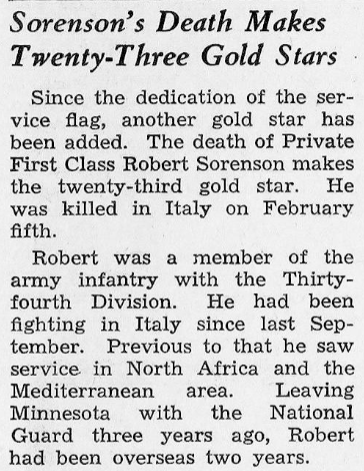
It was on this day that Bobby was killed in action. Family records indicate that a Captain in the regiment asked for a volunteer to go on a reconnaissance mission with him. While riding in a jeep both the Captain and Bobby were killed by enemy sniper fire.
Military records show that he was killed by artillery fire.
The Regimental History does not mention Bobby’s death specifically, but they do record that the Commanding Officer of his unit, Captain Kimble Midkiff was killed in action on the same day as Bobby. Bobby was buried in a temporary military cemetery in Italy.

The shock of Bobby’s death caused his Mother to be hospitalized for several weeks.
Within a couple of months after his death, his family received his Purple Heart medal and a letter of condolence from President Roosevelt.
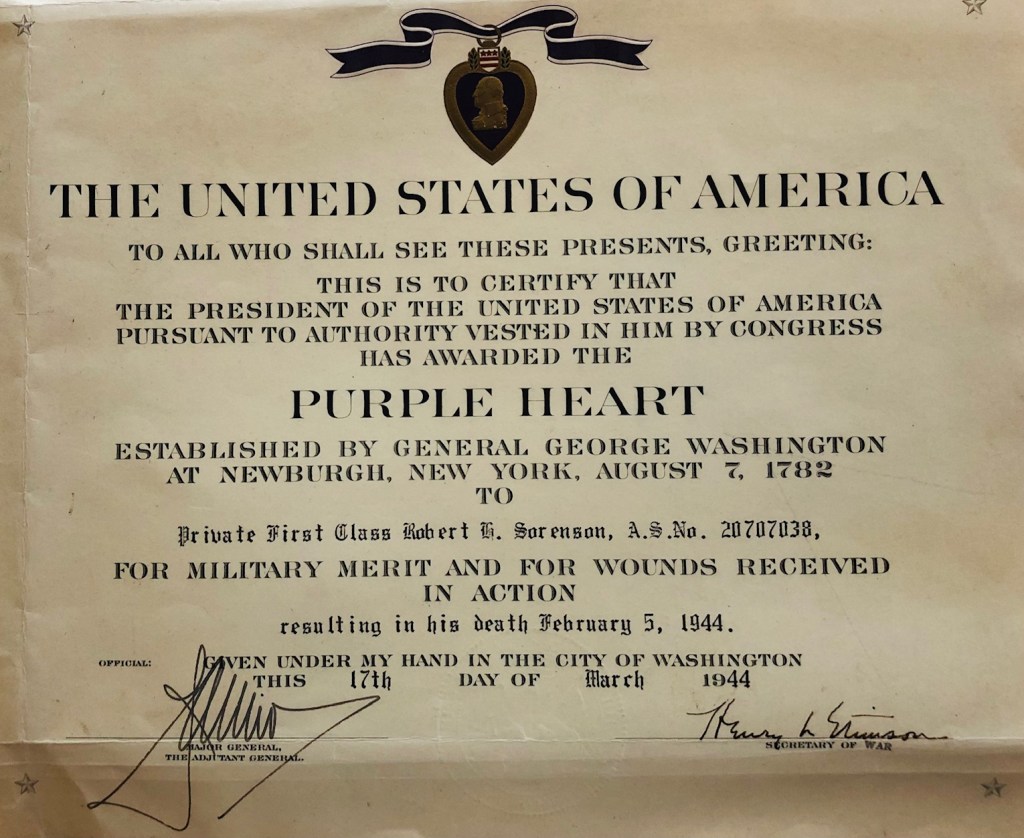
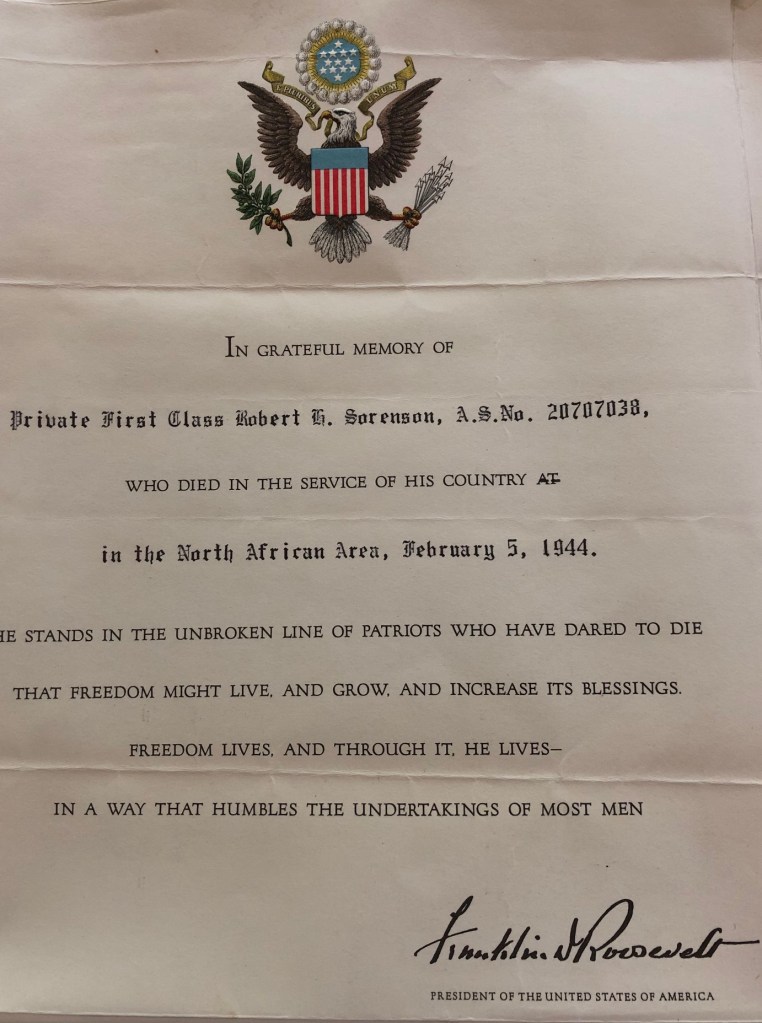
On 28May1844 Bobby’s family held a memorial service for him.
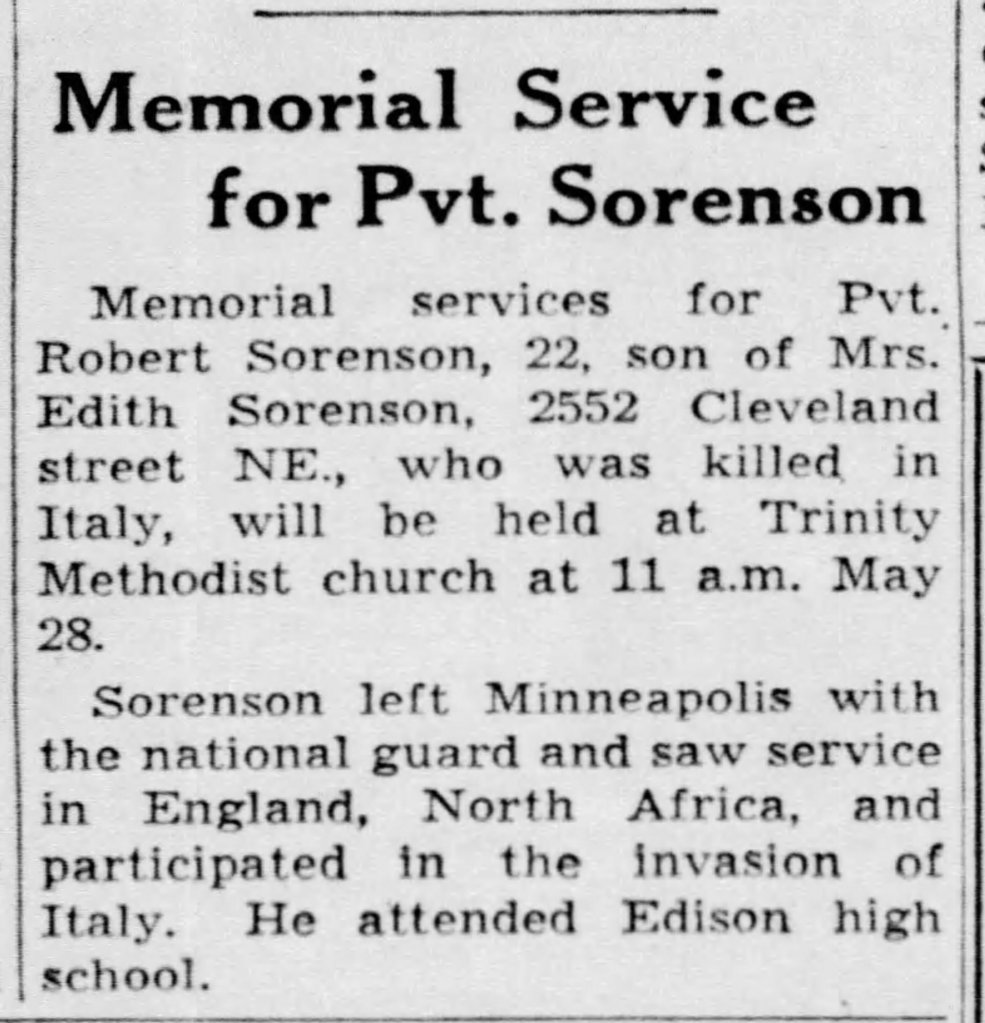
Bobby’s death was covered in the Edison Record student newspaper as well.
In October 1948 Bobby’s remains were returned to Minnesota for reburial.
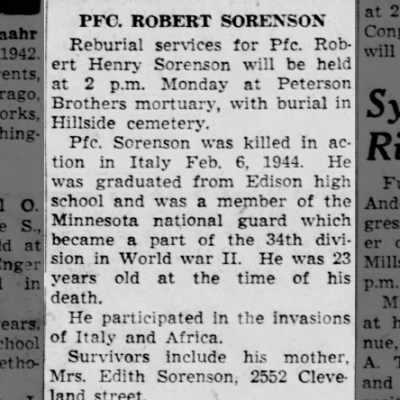
Russ Larson, Bobby’s best friend, and the man who took his military physical for him in 1939 so that he could join the National Guard was one of the Pallbearers.
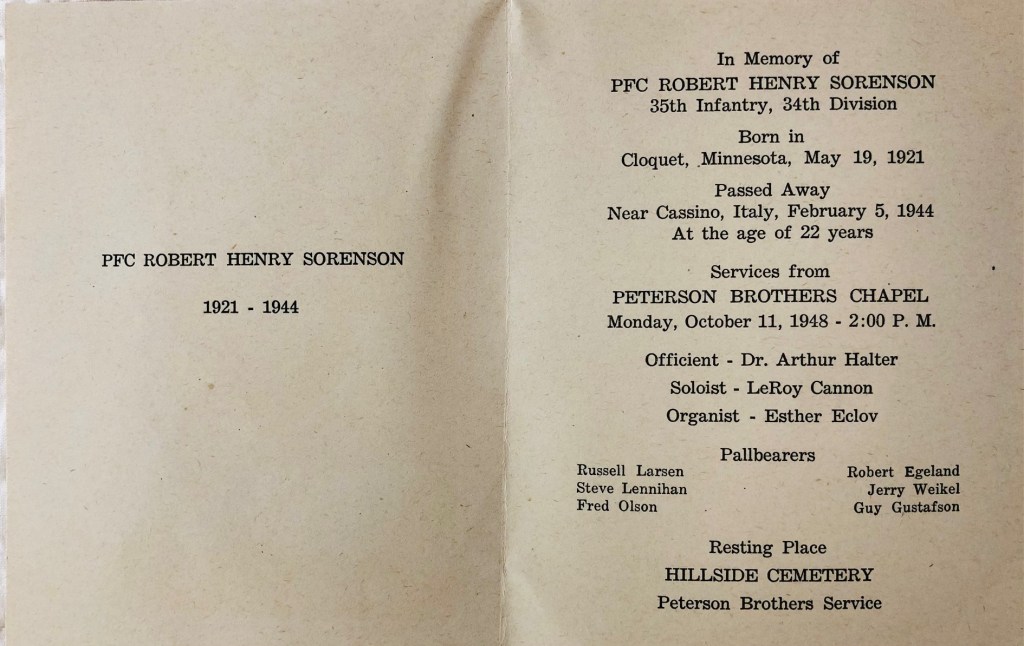
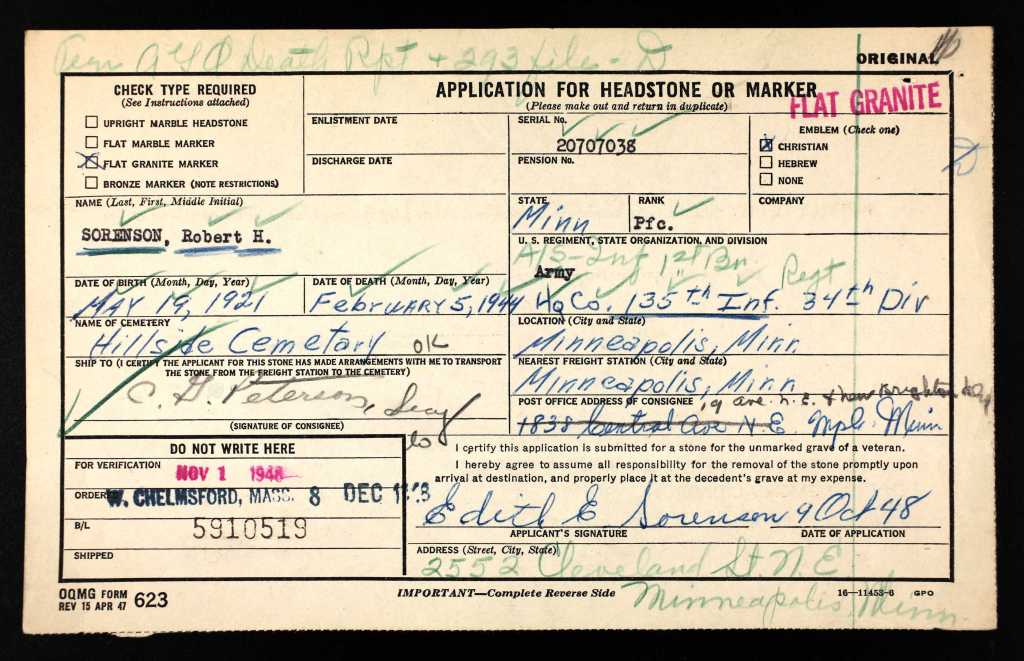
Robert is buried at Hillside Cemetery in Minneapolis, MN.

 Edison Heroes