
2Oct1926 – 16May1945
Edison Days
Records indicate that Stanley attended De La Salle High School in 1943 and Edison in 1944. No pictures have been found from his time at Edison, and it appears that he left school prior to graduation to join the Marines.
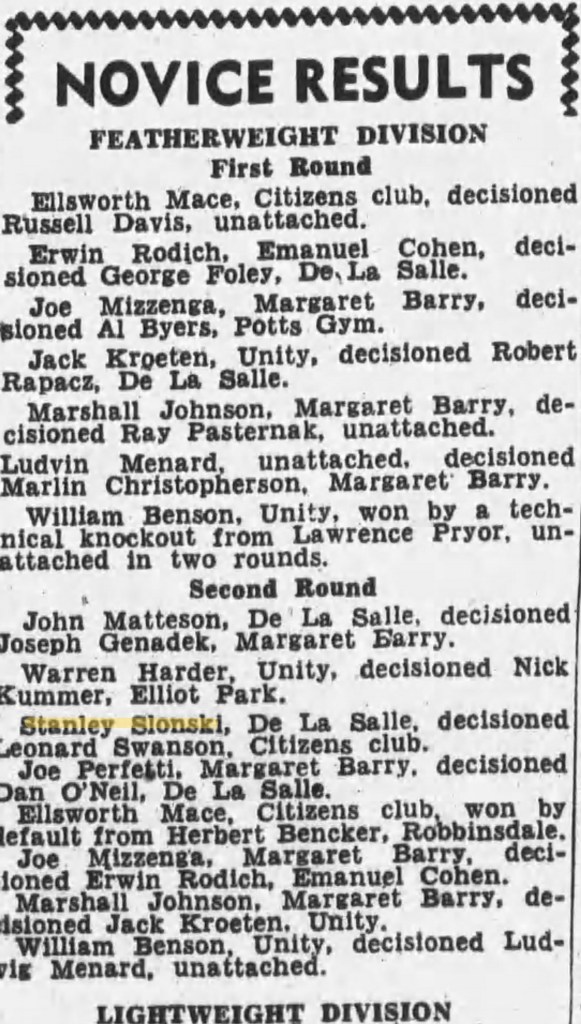
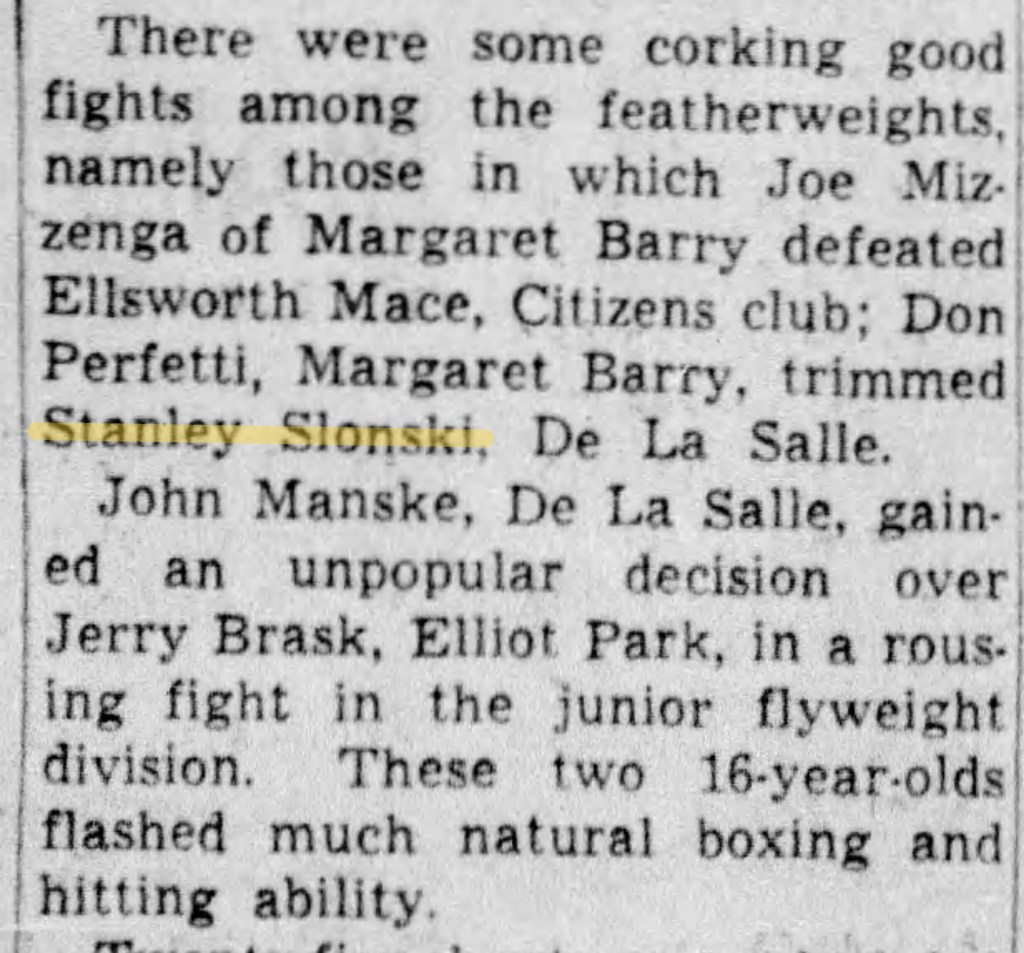
Stanley’s name appeared several times in the Sports section of the Minneapolis paper when he participated in amateur boxing matched.
Military Service
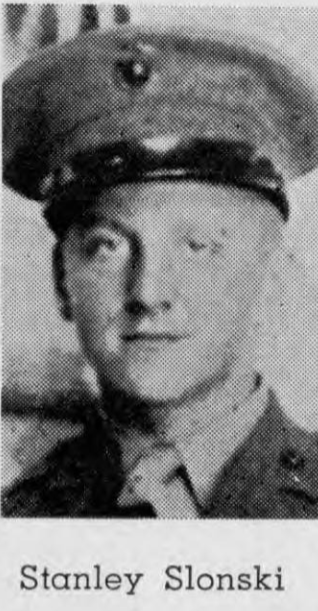

Rank: Private First Class
Branch: United States Marine Corps
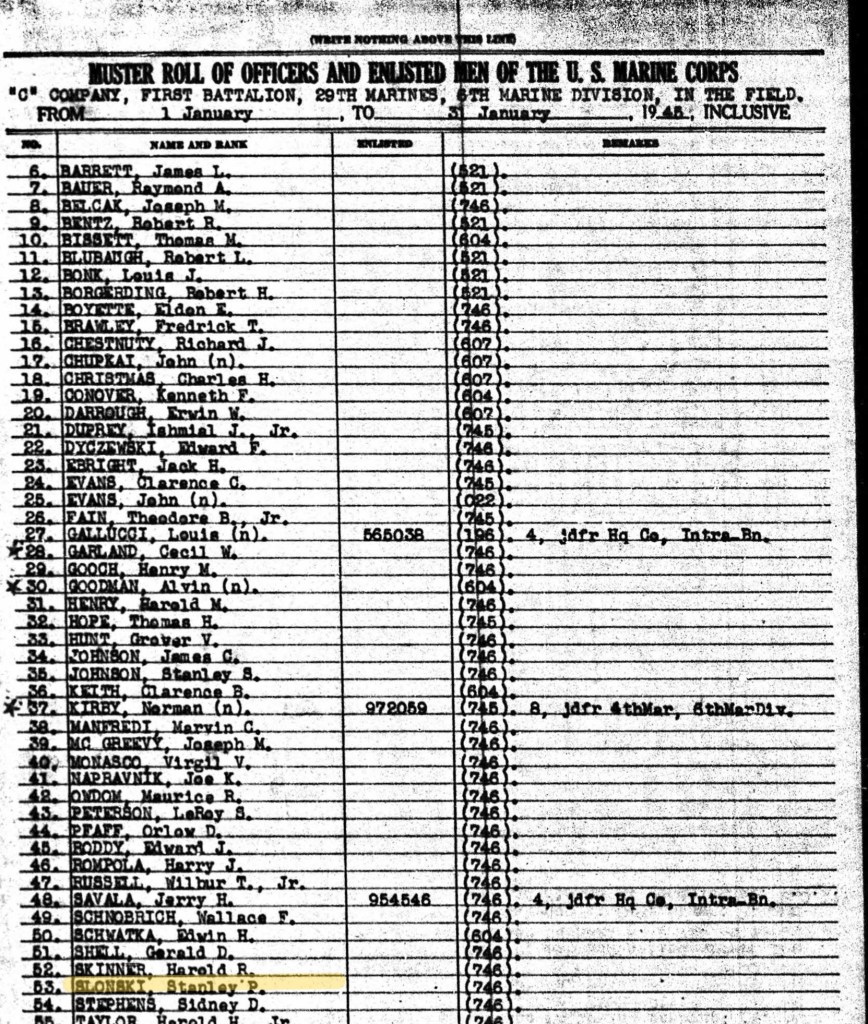
Unit: Company C – 1st Battalion – 29th Marine Regiment – 6th Marine Division
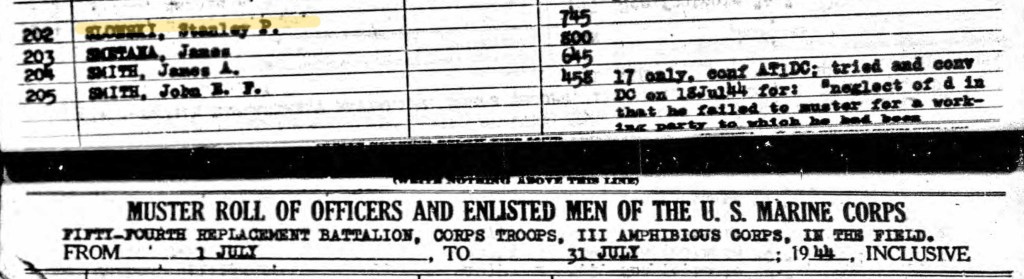
Stanley enlisted in the Marine Corps on 16Dec1943. He was 17 years old! He attended basic training at Marine Corps Recruit Depot San Diego in San Diego, California. After 16 weeks of basic training, he was assigned to the 54th Replacement Battalion to wait for assignment to a combat unit.
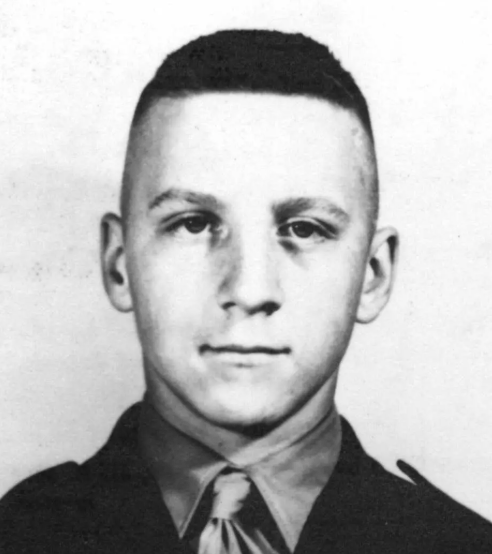
Stanley likely joined the 29th Infantry Regiment in September 1944 on Guadalcanal. The 6th Marine Division was newly formed and was training for “Operation Iceberg”, the invasion of Okinawa, Japan.
The invasion of Okinawa started on 1Apr1945. The 6th Marine Division landed as part of the III Amphibious Corps on the western beaches of Okinawa. The division’s initial objectives were to seize Yontan Airfield and protect the northern flank of the invasion force. Assault elements of the 4th and 22nd Marines hit the beaches first under heavy naval gunfire and air support. Resistance was surprisingly light—far lighter than expected. The division quickly secured the airfield by early afternoon. Stanly and the 29th Marines were originally slated as division reserve but came ashore later that day due to the lack of opposition. By the end of the day, over 60,000 troops ashore with minimal casualties
Over the next 2 days the division pushed rapidly northward along the Ishikawa Isthmus, advancing well ahead of schedule. By April 3, they were approaching Ishikawa with only scattered resistance. The 29th Marines continued supporting roles on the division’s left flank.
For the next week the 6th Marine Division swept through northern Okinawa, covering roughly 55 miles from the landing beaches in just two weeks. Stanley was participated in patrols, road repairs, securing villages. Although Japanese resistance was light, they still had to contend with minor Japanese delaying actions and snipers.
By mid-April, the division encountered the main Japanese defensive stronghold on the Motobu Peninsula—a rugged, six-square-mile area centered on the 1,200-foot Mount Yae-Take. This was a defender’s paradise of steep ravines, dense vegetation, caves, mines, and hidden artillery. The 6th Marine Division launched a two-pronged assault against the Yae-Take positions. The 29th Marines played a major role in the fighting.
Japanese forces used caves, reverse-slope defenses, and well-sited machine guns and artillery. Logistics were challenging due to the terrain. Marines carried water and ammo up steep slopes, and stretcher parties brought wounded down.
This was the battle in which Stanley and the 29th Marines honed their small-unit tactics.
Heavy fighting continued for another week. On April 20, General Lemuel C. Shepherd declared the Motobu Peninsula secured. The Japanese defenders in the area were largely wiped out as they would fight to the death instead of surrender. Marine casualties were high. Approximately 207 killed and 757 wounded.
After northern Okinawa was largely cleared, the 6th Marine Division shifted to the southern front to relieve exhausted Army units on the western flank of the Shuri Line defenses. The move southward happened from May 4 to May 11, with the division repositioning to support the broader Tenth Army offensive. The previous fight has prepared Stanley and the 29th Marines for the attritional battles ahead against the interconnected cave/tunnel systems of the Shuri Line.
On 16MAy11945 Stanley and the 29th Marines were involved in the in the assault on the Sugar Loaf Hill complex, the western anchor of the Japanese Shuri defenses. The Marines.
maid repeated advances against reverse-slope positions, interlocking machine-gun and mortar fire, and cave networks.
Stanley was killed in action during this battle. The circumstances of his death are unknown. Stanley was buried in a temporary military cemetery on Okinawa.
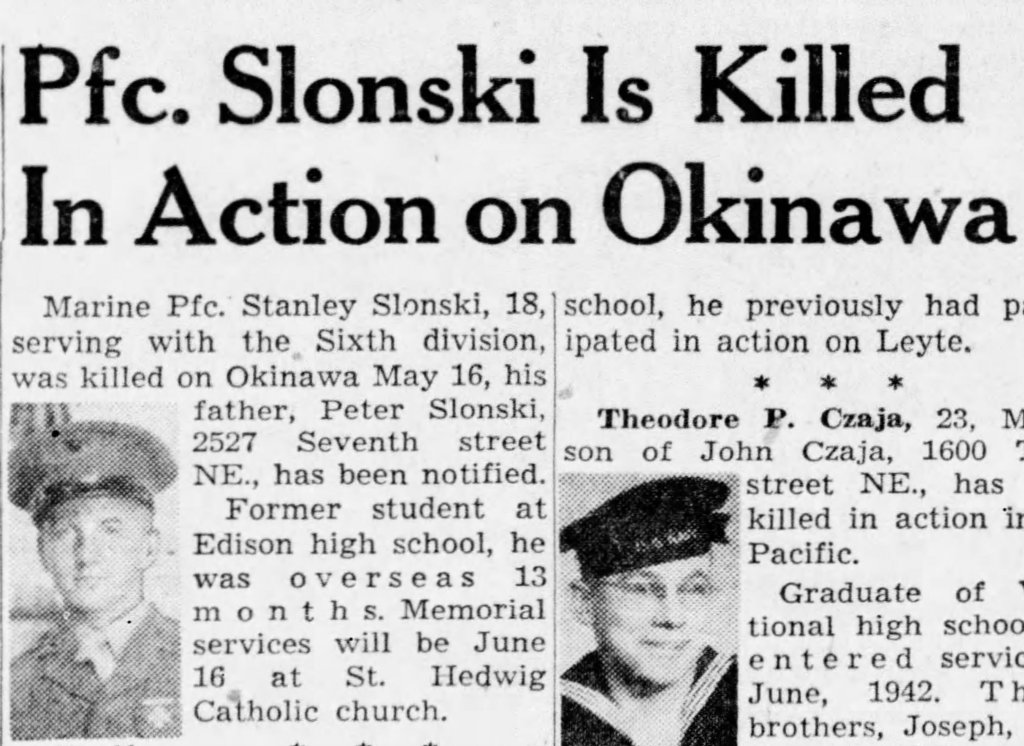
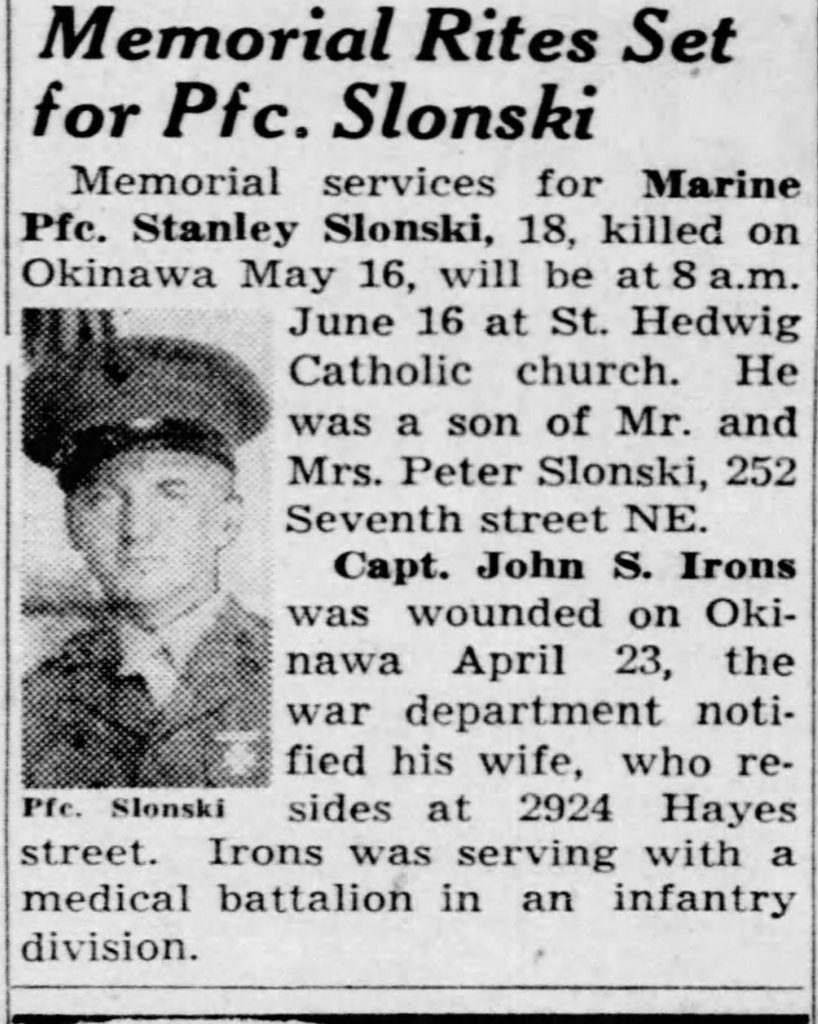
His family held a memorial service for Stanley a month after his death..
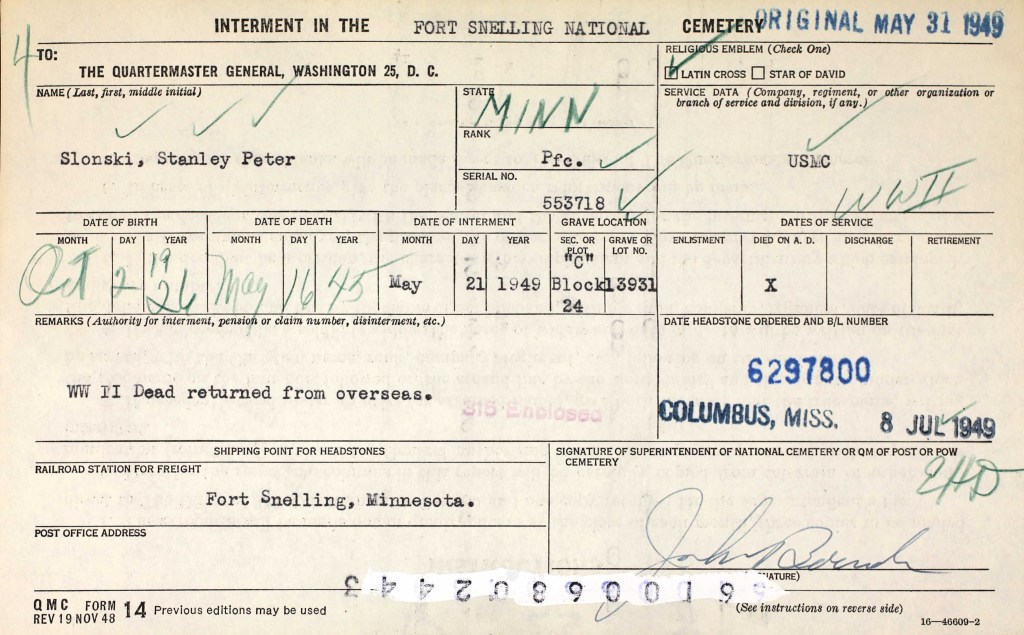
In 1949 Stanleys remains were returned to Minnesota for reburial.
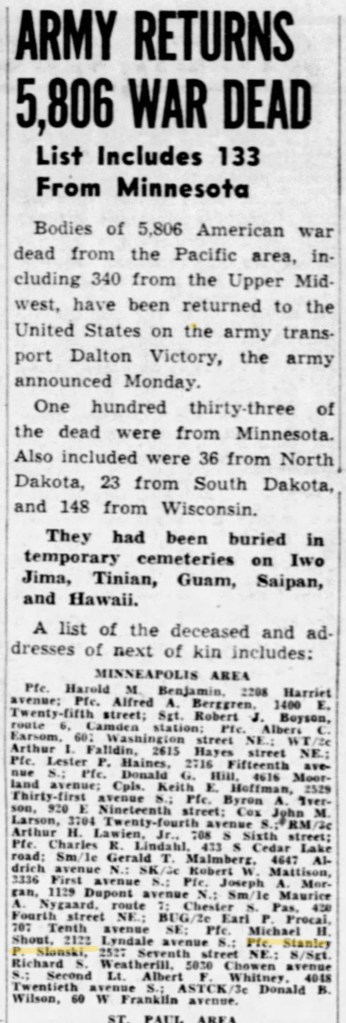
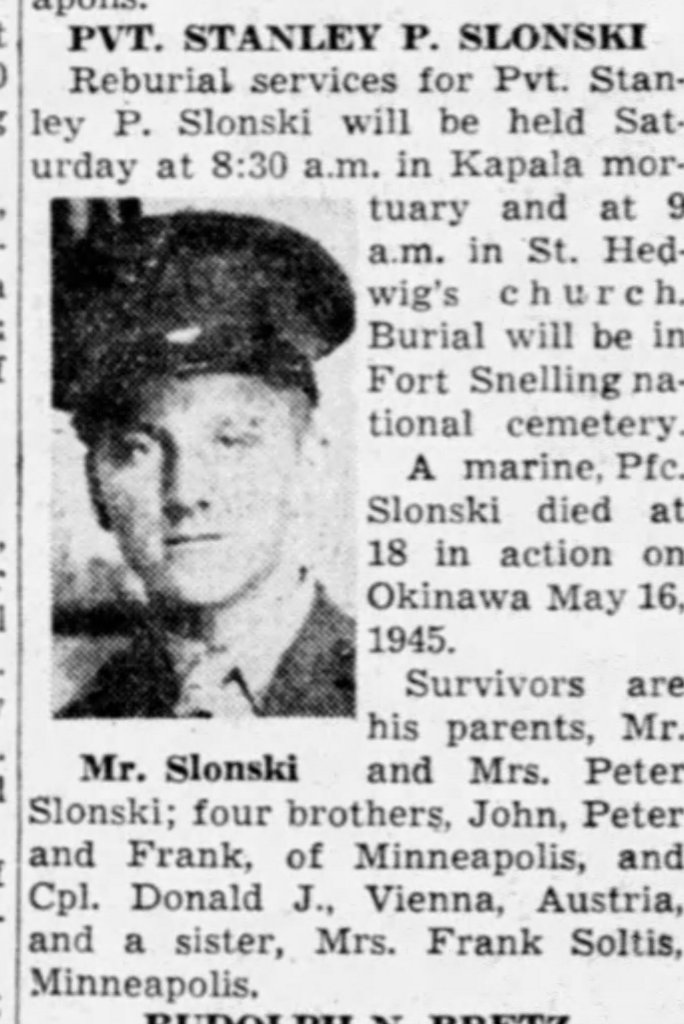
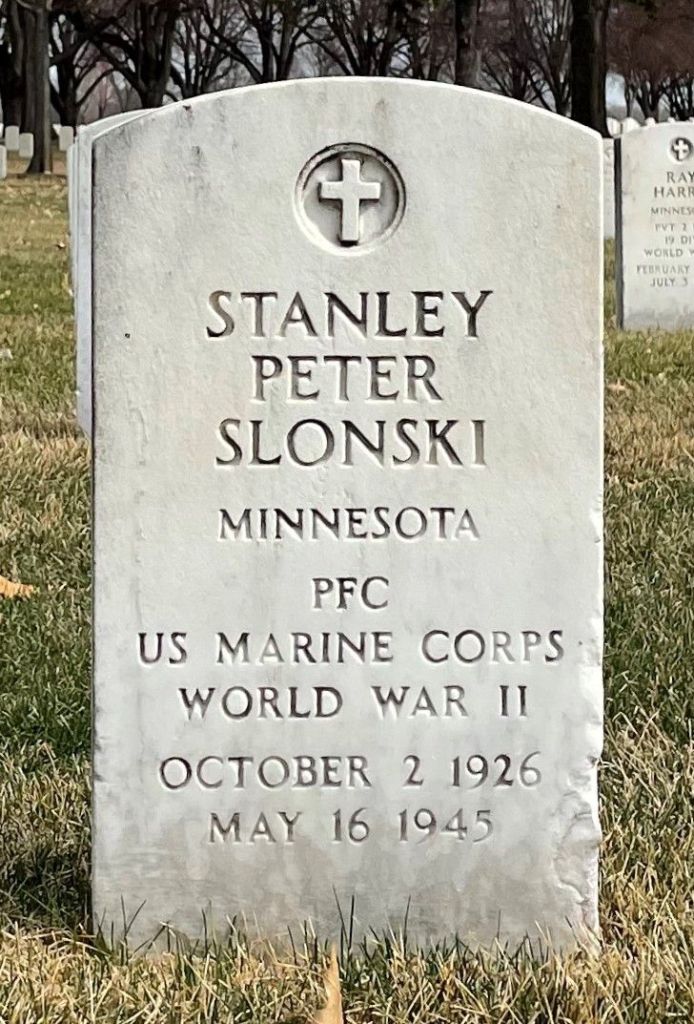
Stanley is buried at Fort Snelling National Cemetery in Minneapolis, Minnesota.
Postscript
The 6th Marine Division would later describe May 16 as one of its “bitterest” days, with hundreds of casualties across its regiments. For the entire Okinawa campaign, Stanley’s regiment, the 29th Marines, suffered 551 men killed in action. The most of any Marine regiment on Okinawa.
Episode 9 of the HBO series The Pacific is about the Battle of Okinawa and may provide some insight into Stanley’s experiences as a Marine fighting on Okinawa.
 Edison Heroes