
26July1921 – 26Mar1944
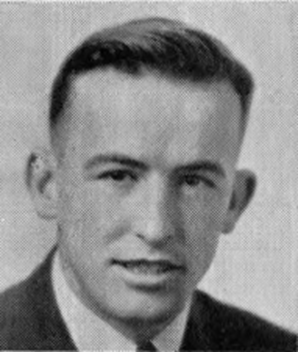

Edison Days
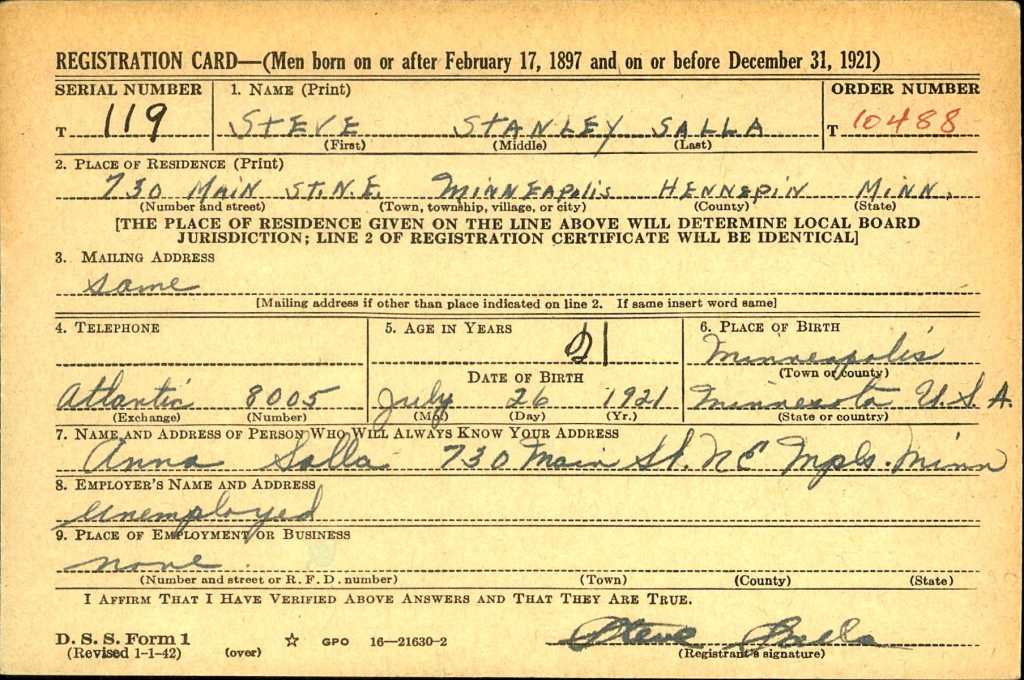
Steve graduated with the Class of January 1941. He was a letter winner in gymnastics and football.

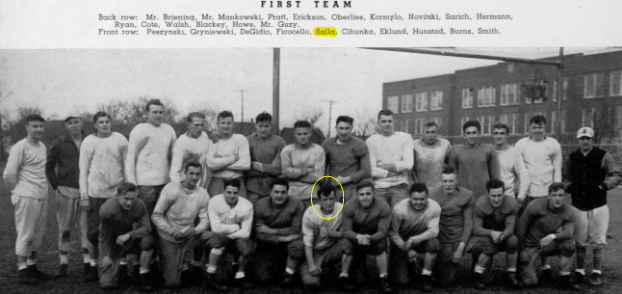

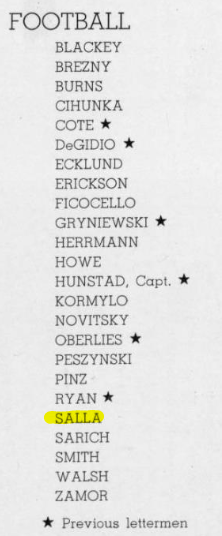
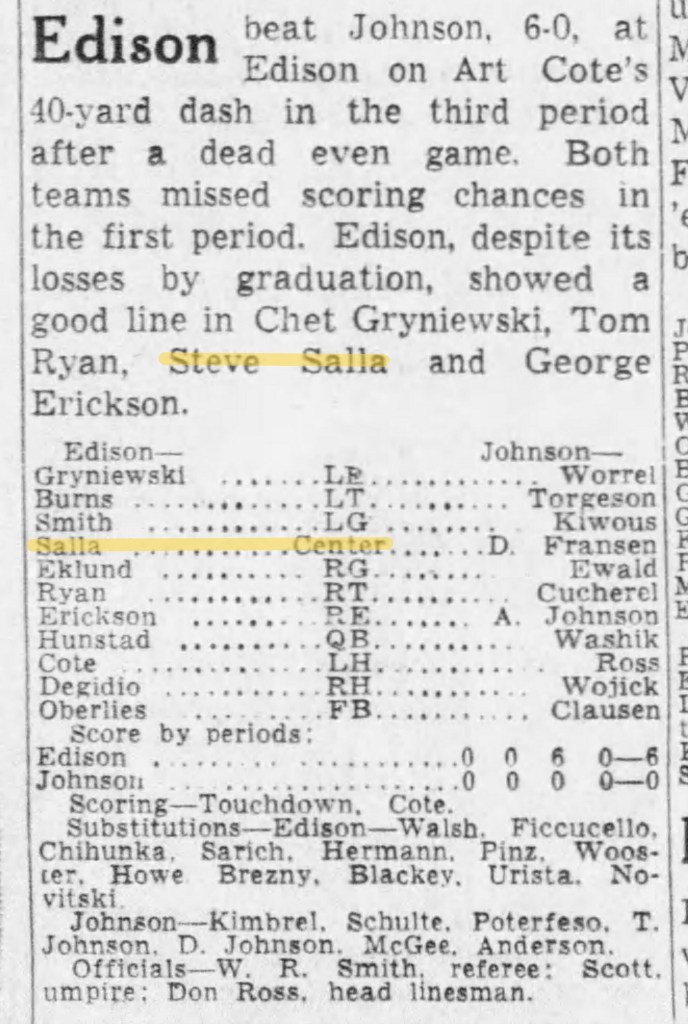
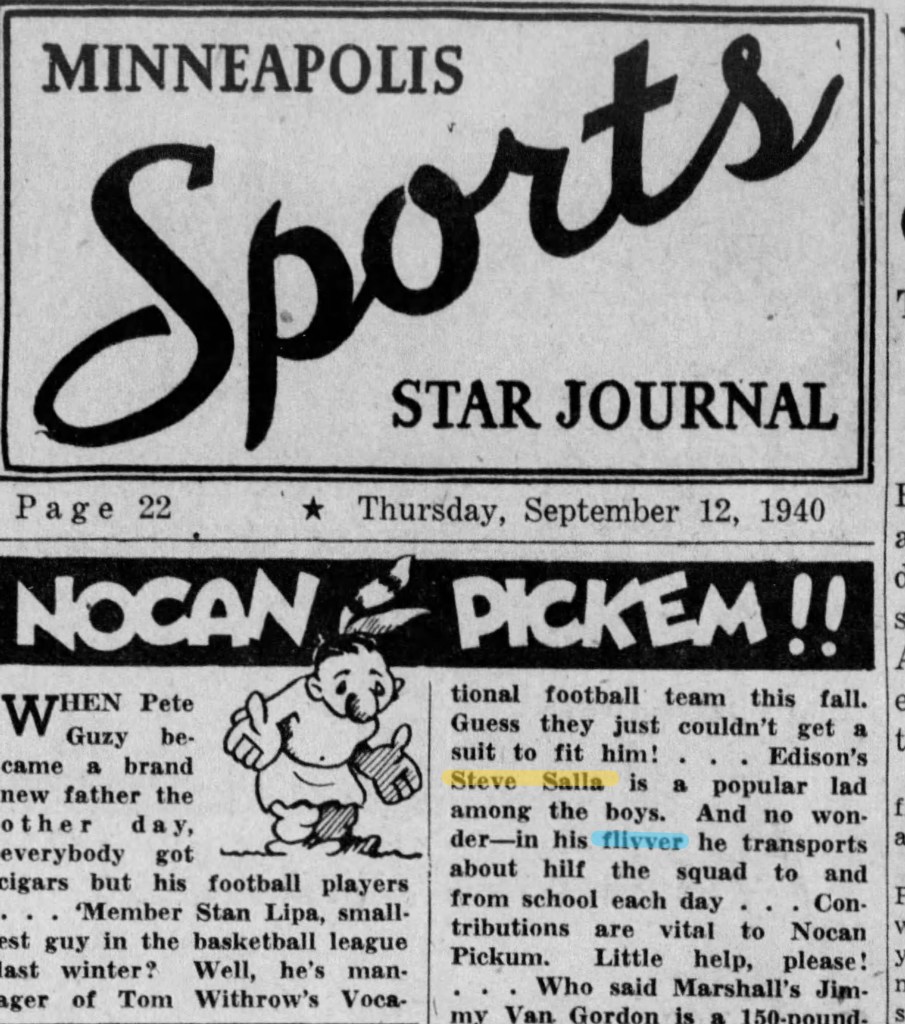
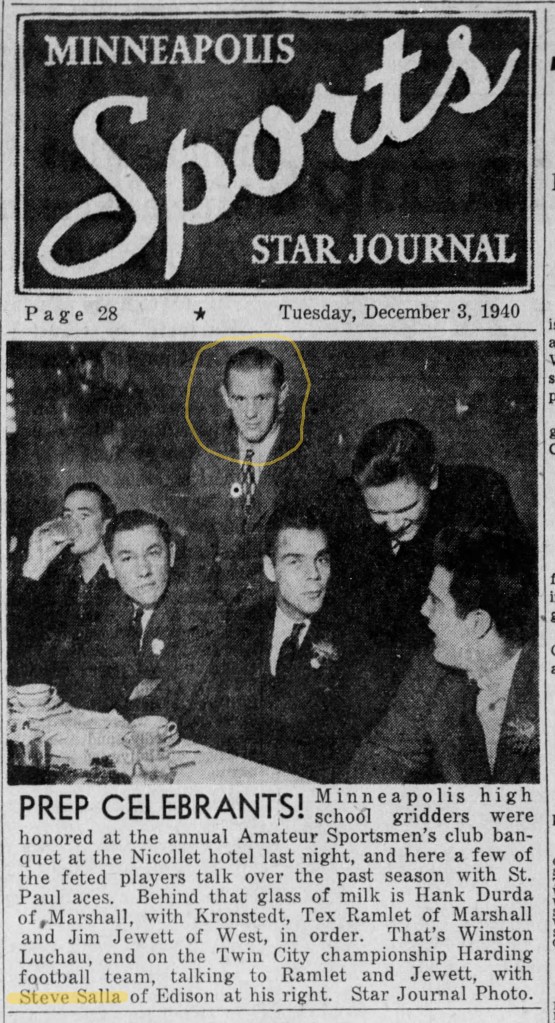
During his Senior year of Football, Steve made the local sports page several times
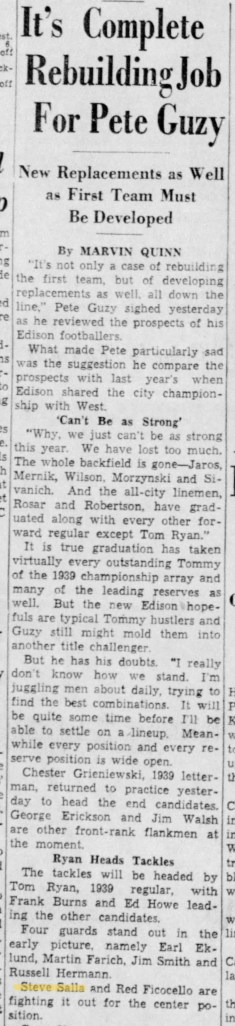
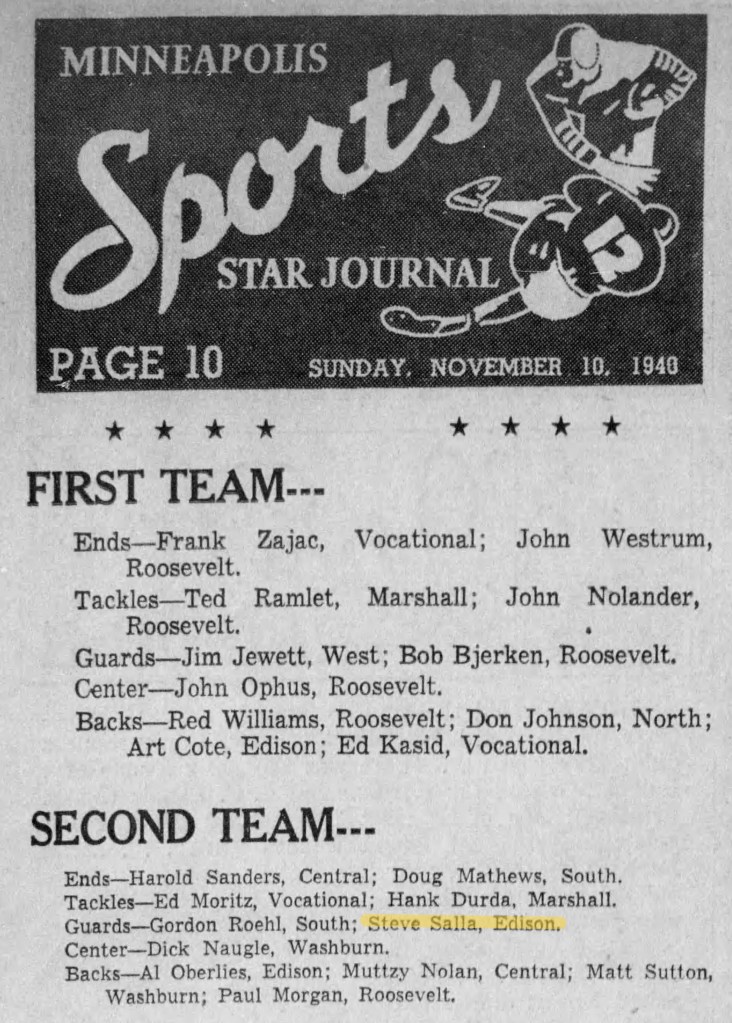
At the end of the 1940 season Steve was selected as a Second Team All City Guard.
Military Service
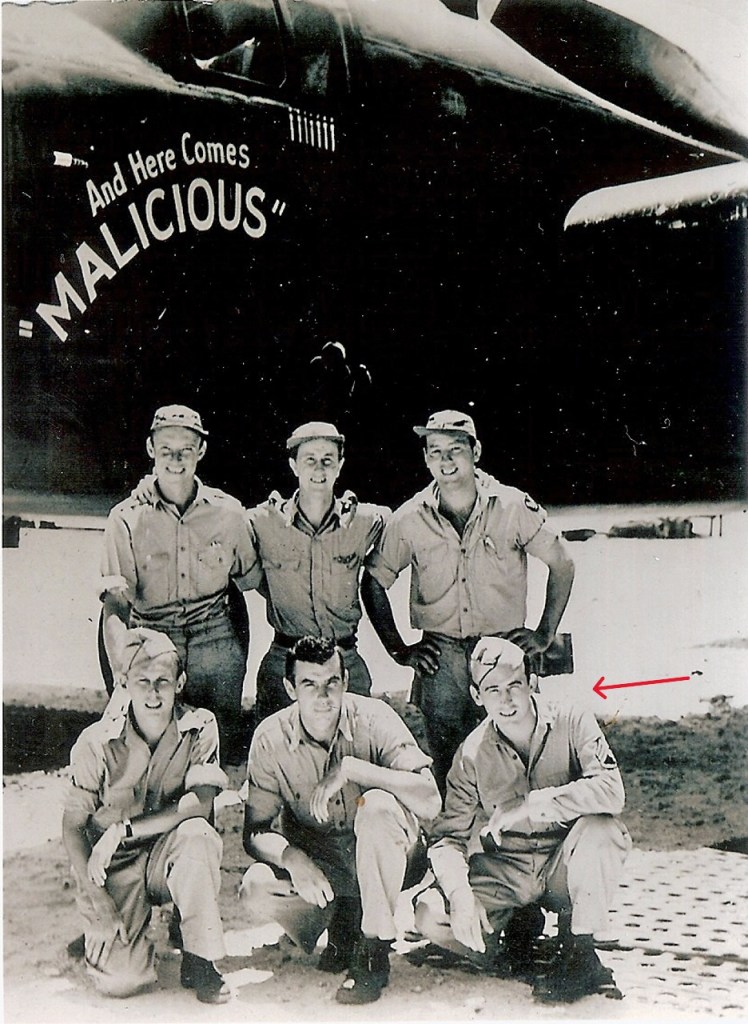
Rank: Staff Sergeant
Branch: United States Army Air Force
Unit: 48th Bomber Squadron – 41st Bomber Group (Medium) – 7th Air Force
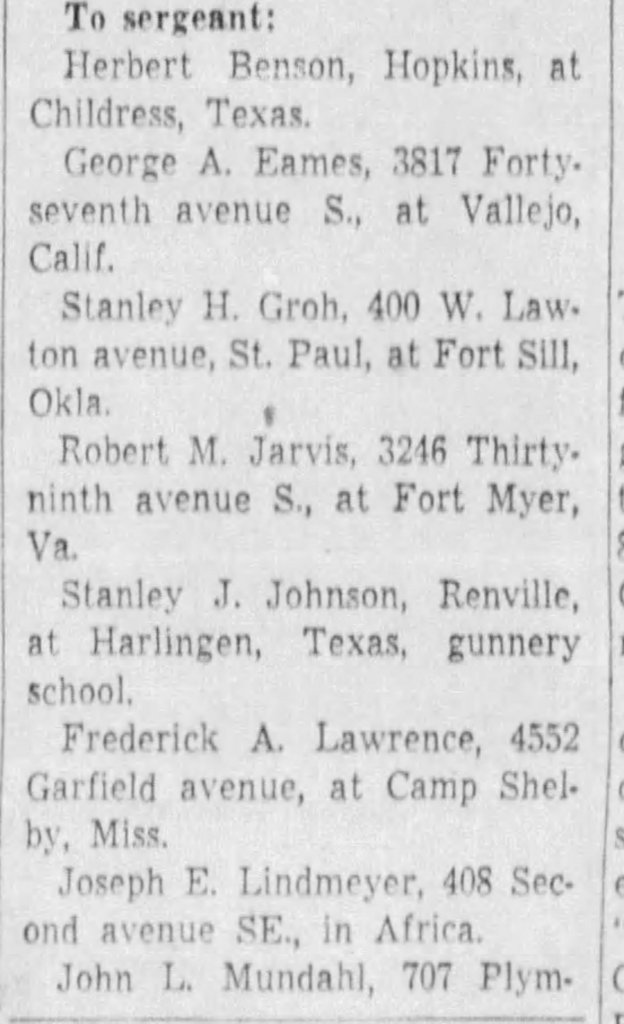
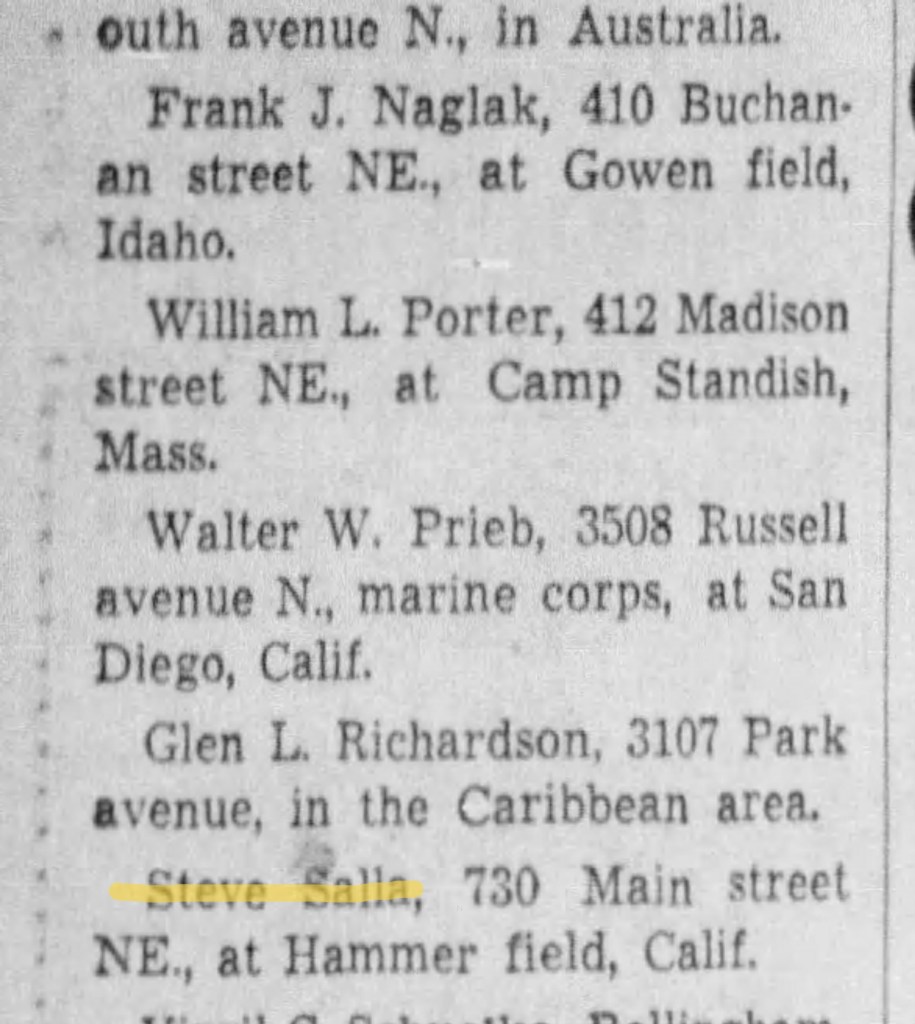
Steve was inducted into the Army on 9Oct1942 at Fort Snelling. He reported for active duty on 22Oct1942. He received training in St. Petersburg, FL, at Lowry Field, CO, Tyndall Field, FL, and at Hammer Field in Fresno, CA. In April 1943 he was promoted to Sergeant.
Steve and the 48th Bomb Group moved to Hickam Field at Pearl Harbor, Oahu, Hawaii in September 1943 for additional training. In late 1943 they moved again to Tarawa in the central Pacific to begin operations against Japan. Arriving 13Jan1944, Steve’s last base was Apamama Airfield on the Kiribati Atoll in the Gilbert Islands.
Steve’s first mission as an engineer/gunner on a B-25G Mitchell bomber occured on 16Janury 1944 when 12 planes attacked a Japanese airfield on Mille Atoll.

Steve and the 48th continued to fly missions throughout January, February, and March 1944 against Japanese shipping, airfields, and military installation at places like Maeloelap Atoll, Ailingalap Atoll, Jaluit Atoll, and Wotje Atoll.
A mission on 21Jan1944 involving the 48th was filmed by Army cameramen. The video has been enhanced with sound effects and color stabilized.
Steve’s plane was the reserve aircraft that day and did not fly on this mission. At the 23m30 sec mark of the video, one of the planes makes a belly landing due to damage sustained in the raid. The pilot of that plane, Lionel D. Colley, joined Steve’s crew as the Acting Command Pilot on the day Steve’s plane was shot down.
On22Mar1944 Steve and his crew flew their first mission from a different airstrip at Eniwetok Atoll to attack Japanese barracks and military installations on Ponape Island. All 9 planes returned successfully.
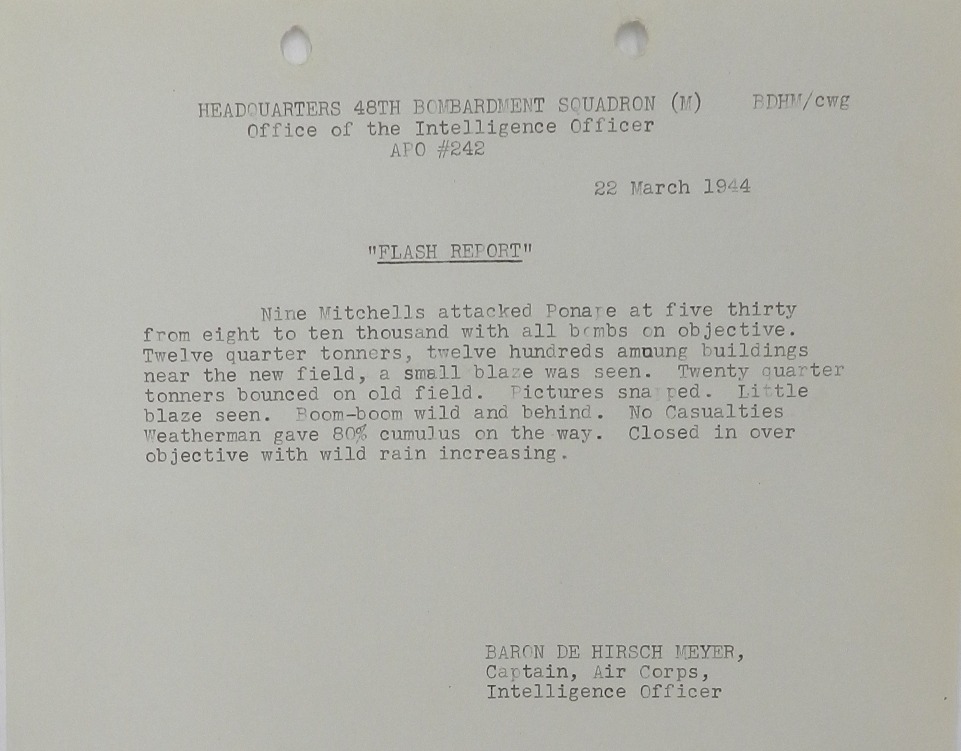
They returned to Ponape Island again on 23Mar1944.
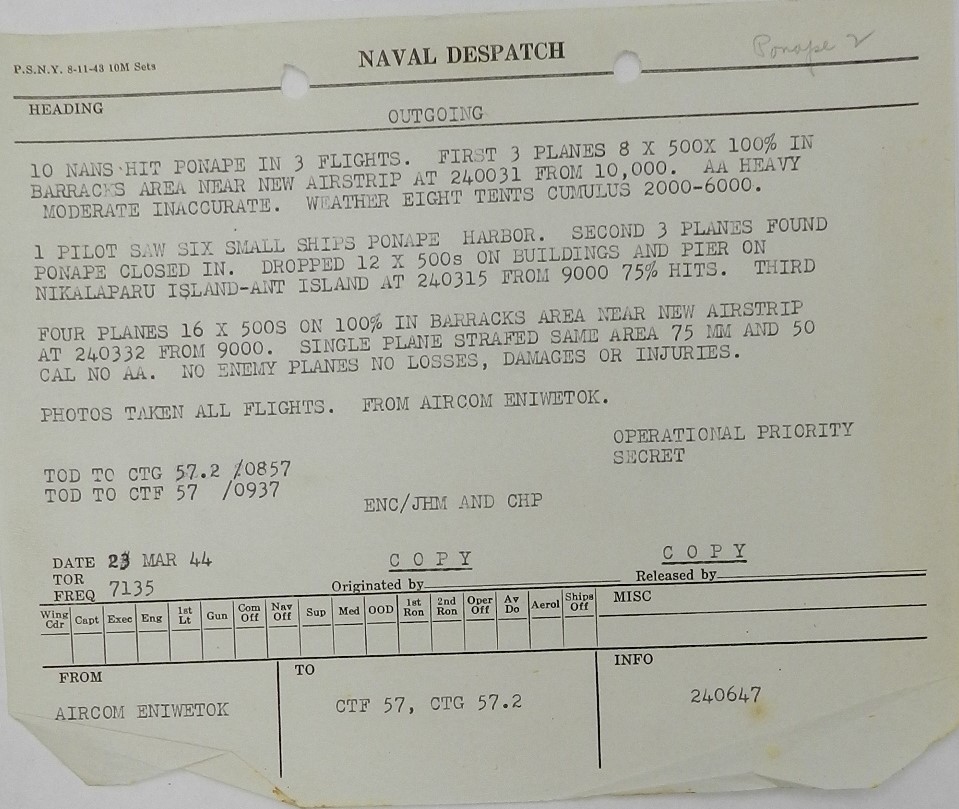
2 days later they returned to Ponape Island for a 3rd time.

Steve’s 4th, and last, trip to Ponape Island took place on 26Mar1944.
Taking off from Eniwetok, Steve’s plane was in 1 of 4 planes in the first group to take off. Their primary target was a new airstrip and military installations on the Ponape Island. 20 miles out from the target they were at 200′ above the water going 230 miles per hour. Poor weather over the primary target diverted them to the secondary target, Ponape Town.

Leaving the target, Steve’s plane was attacked from above by a Japanese “Zeke” fighter plane.
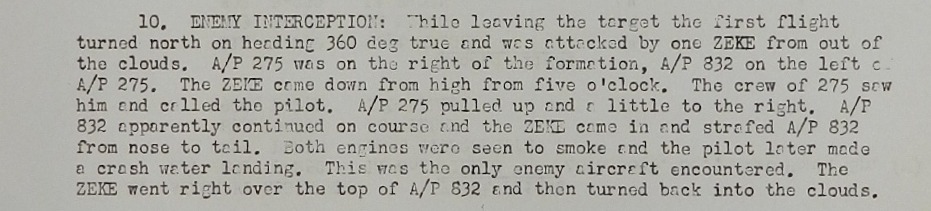
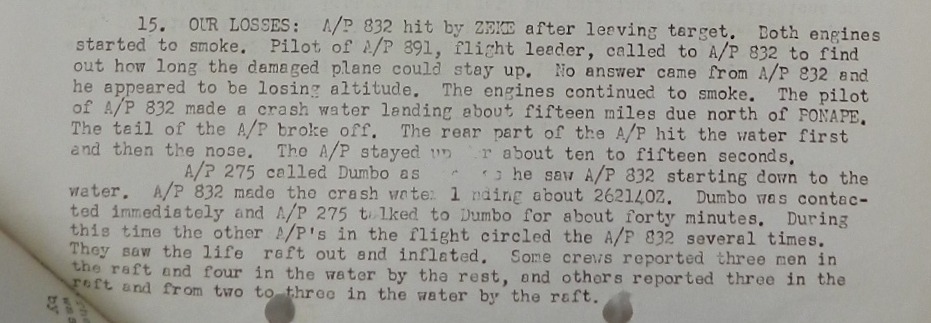
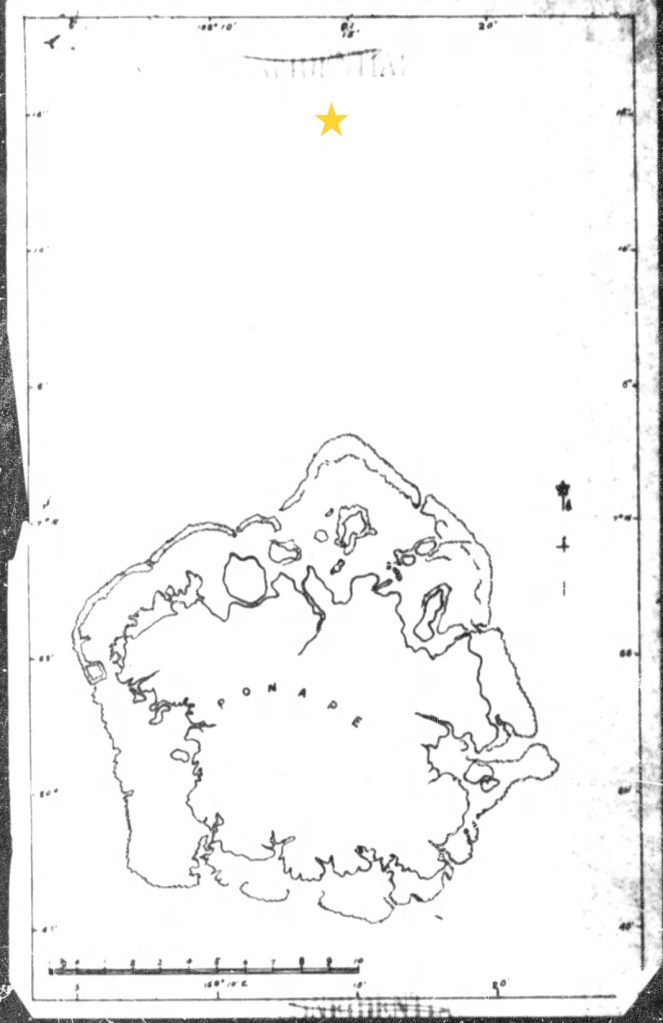
Steve’s plane made a forced landing into the ocean approximately 15 miles North of Ponape Island. The other planes in the flight observed Steve’s plane go down and they witnessed a life raft in the water with 3 or 4 men aboard and 3 of 4 men in the water hanging onto the raft. They also called for a “Dumbo” amphibious rescue plane to try and pick the crew up.

Later, another “Dumbo”, with fighter escort returned to search for the crew, but found nothing. The next day, three B-25s from the 48th Bombardment Group flew a search mission within two miles of the north and west of Ponape then south to Ant Island and north about 18 miles and 50 miles east of Pakin. The search had nil results.
The fate of the crew is unknown. There was no record of their capture by the Japanese. Originally declared missing in action, Steve and the crew were officially declared dead on 19Jan1946.
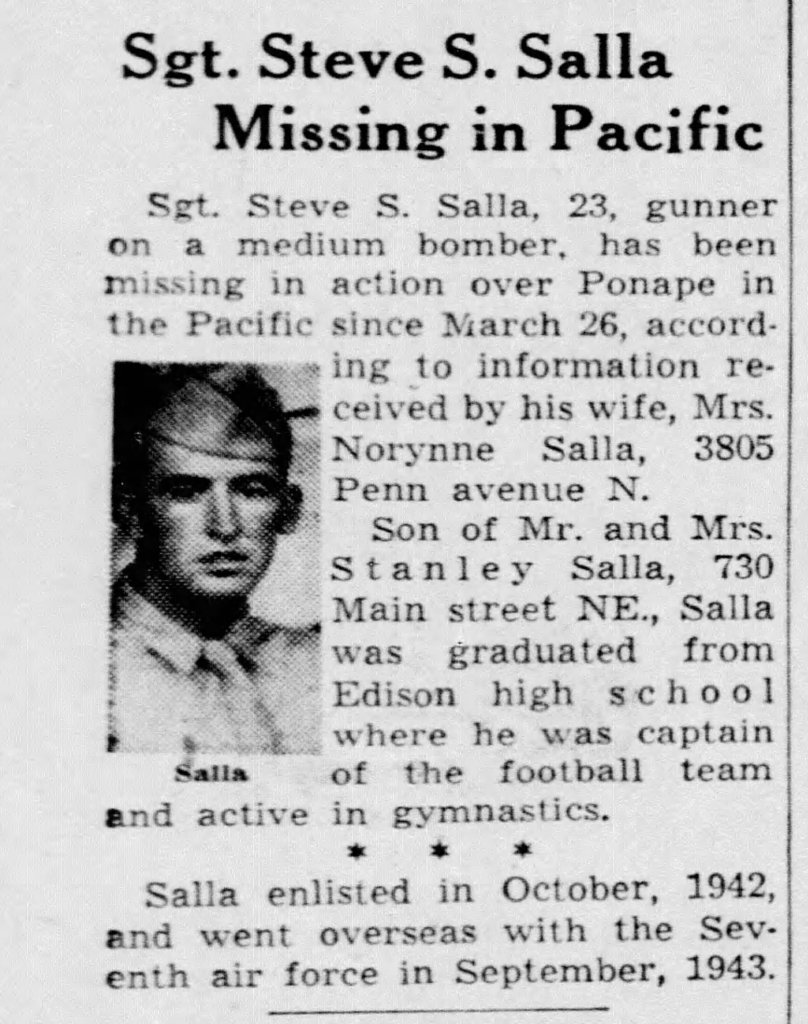
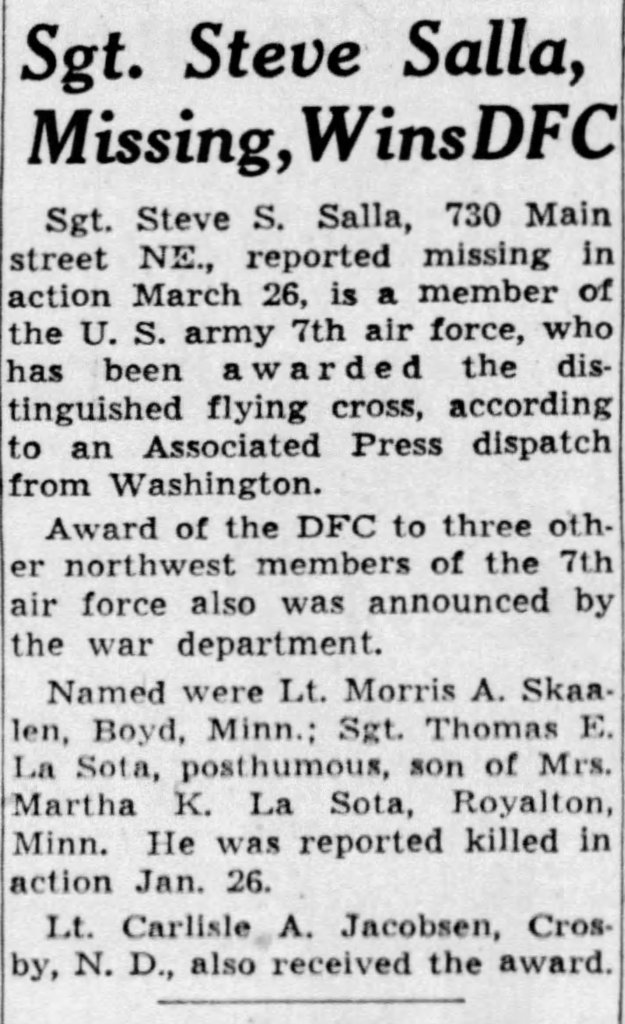
The Distinguished Flying Cross medal is awarded to any officer or enlisted person of the armed forces of the United States for heroism or extraordinary achievement while participating in aerial flight. The heroism or achievement must be entirely distinctive, involving operations that are not routine. It is not awarded for sustained operational activities and flights. The DFC is the fourth highest award for heroism and the highest award for extraordinary aerial achievement.

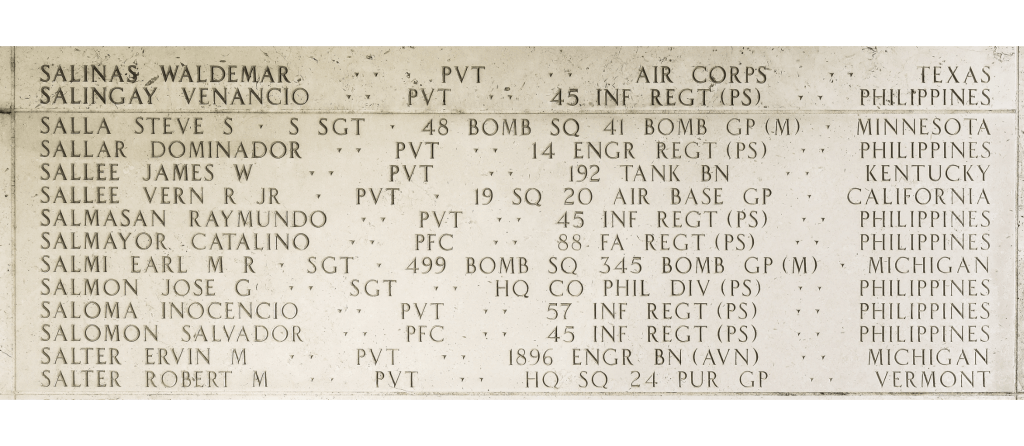
Steve’s name, and the names of his crewmates are included with the names of 36,286 missing American service members from the Pacific, and China-India-Burma theaters, on the Tablets of the Missing at the Manila American Cemetery and Memorial in the Philippines.
 Edison Heroes