28Dec1920 – 23Jul1942
Edison Days
Steeve graduated with the class of January 1939. He was listed as a “Camera Shy Senior” and there is no senior picture in the yearbook.

Military Service
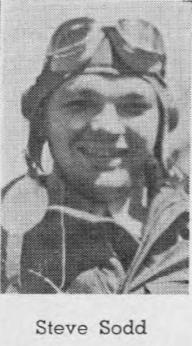

Rank: Private First Class
Branch: United States Army Air Corps
Unit: 2nd Observation Squadron – 27th Bombardment Group
Steve enlisted in the army on 4Mar1941 at Fort Snelling, Minnesota. It is unknown where he took basic training. After basic training he was assigned to the 2nd Observation Squadron based at Clark Field in Pampanga, the Philippines. He was an aerial photographer and machine gunner.
On 8Dec1941 American forces in the Philippines learned of the attack on Pearl Harbor [Note: Due to the international date line, it was still December 7 in Hawaii.]. Later that day several American airfields were bombed by the Japanese. Japanese forces landed on Luzon two days later. Some American aircraft were able escape to Australia at the start of the fighting, but the majority were destroyed on the ground within the first few days.
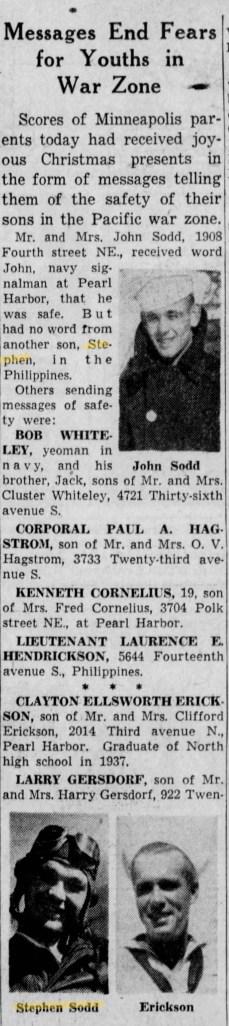
Ground personnel, including Steve, withdrew toward Bataan in early January 1942. They were absorbed into other Air Corps units still fighting on Luzon. Many ended up in the Provisional Air Corps Regiment (PACR), a hastily formed infantry unit of grounded airmen from multiple squadrons.
On December 26 Manila was declared an open city meaning that it was no longer being defended. The US and Filipino forces under Gen. Douglas MacArthur withdrew to the Bataan Peninsula to hold out until relief could arrive. The defenders were short of food, medicine, ammunition, and air/naval support. And many men were suffering from Malaria, dysentery, and starvation.
Japan launched a major offensive on 3Apr1942 and broke the defensive line near Mount Samat. Within days the defensive positions had collapsed, units were disintegrating, and Japanese forces were advancing toward Mariveles at the peninsula’s southern tip.
Concluding that continued fighting would produce a slaughter of his sick and starving men rather than any military result, on 9Apr1942 General Edward King surrounded his force to the Japanese.
Steve was 1 of an estimated 12,000 US service members and 66,000 Filipinos taken prisoner.
Following the surrender, prisoners were forced to march about 65 miles over 9 days in extreme heat and with little food or water. Known as the Bataan Death March, it was marked by extreme brutality: prisoners were starved, beaten, and bayoneted if they fell or could not continue. Estimates suggest that 7,000 to 10,000 men died during the march.
Steve survived the march and ended up at a POW camp named Camp O’Donnell. On 6June1944 he was transferred to the POW camp at Cabanatuan.
Weakened by the cruel treatment of his captors, and suffering from malnutrition and Malaria, Steve died on 23Jul1943.
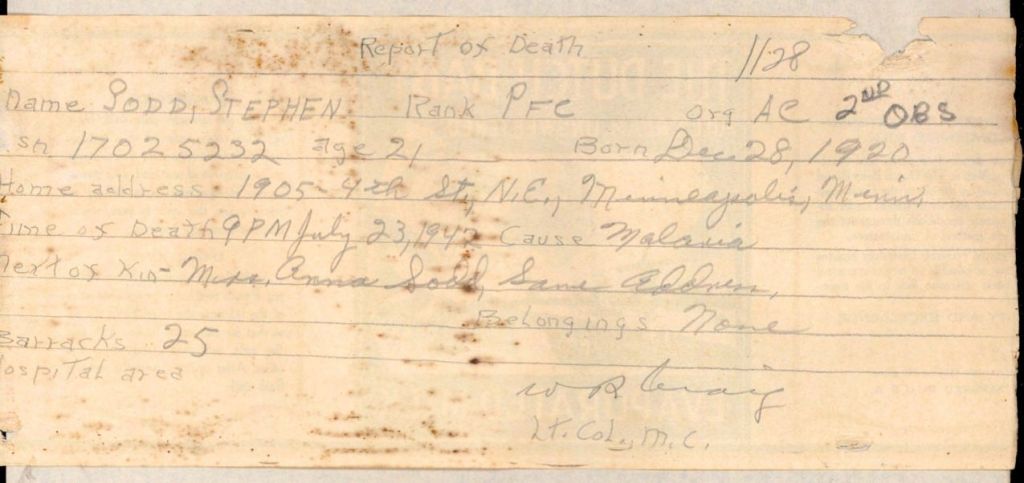
Steve was originally buried in a cemetery next to the camp.
Steve’s family did not receive official notification of his death until 7Aug1945.
On 28Sep1945 a memorial service was held in his honor.
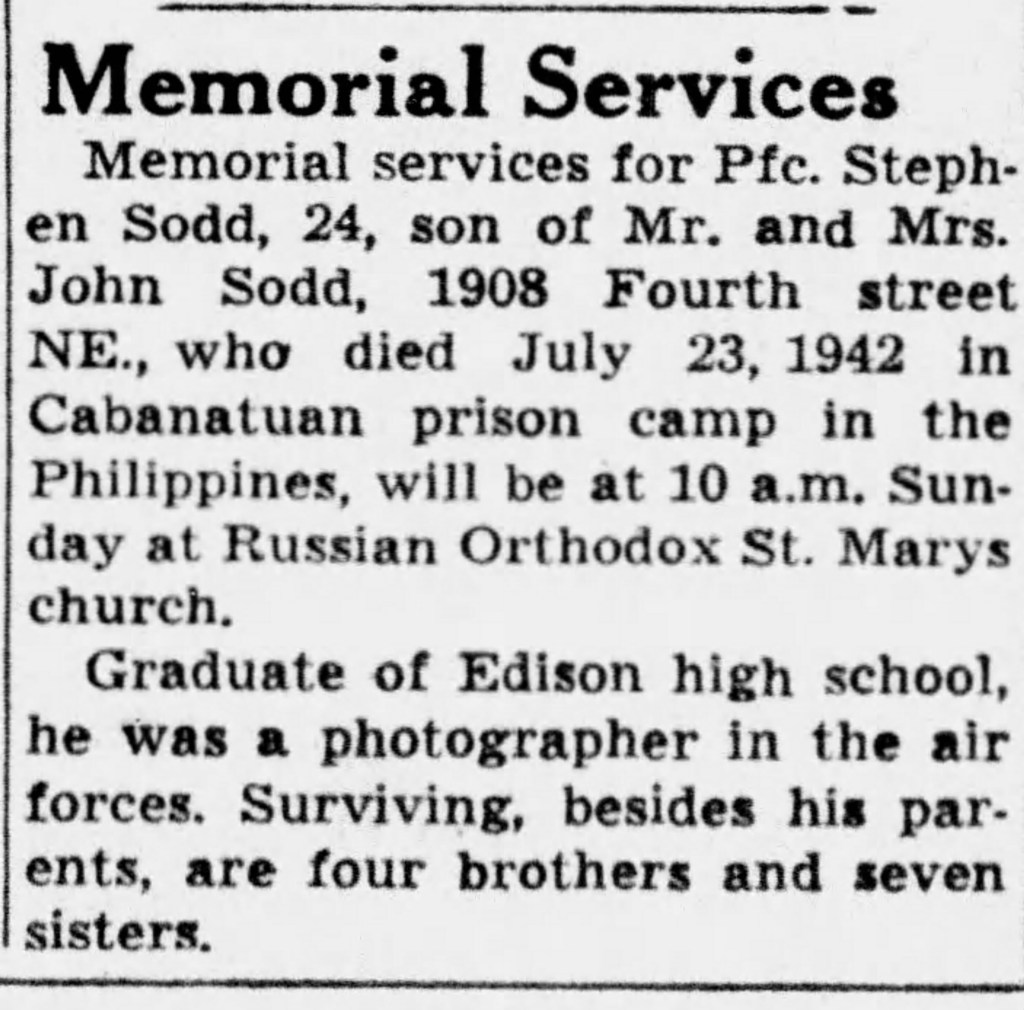
In 1949 Steve’s remains were returned to Minnesota for reburial.
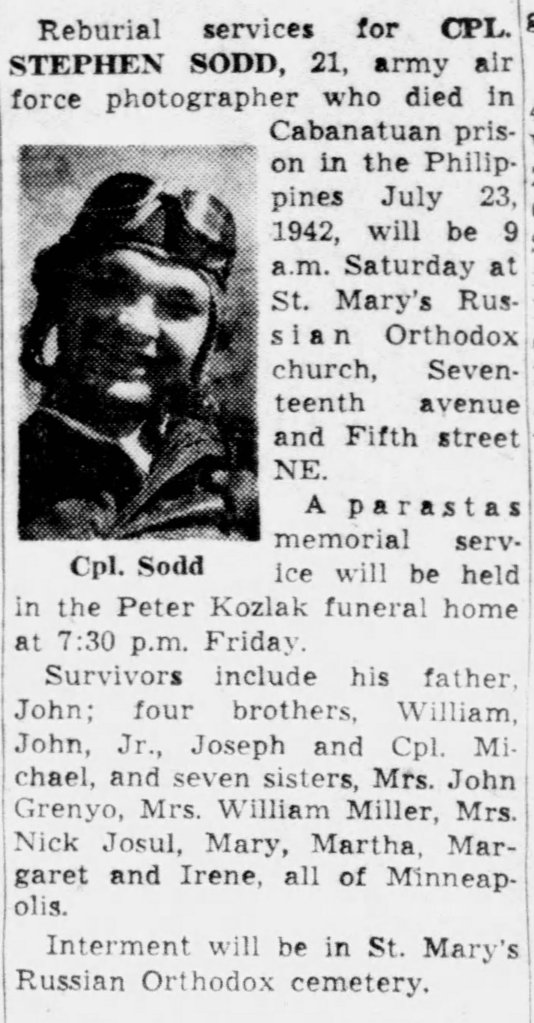
Steve is buried at St. Mary’s Orthodox Cathedral Cemetery in St. Anthony, Minnesota.
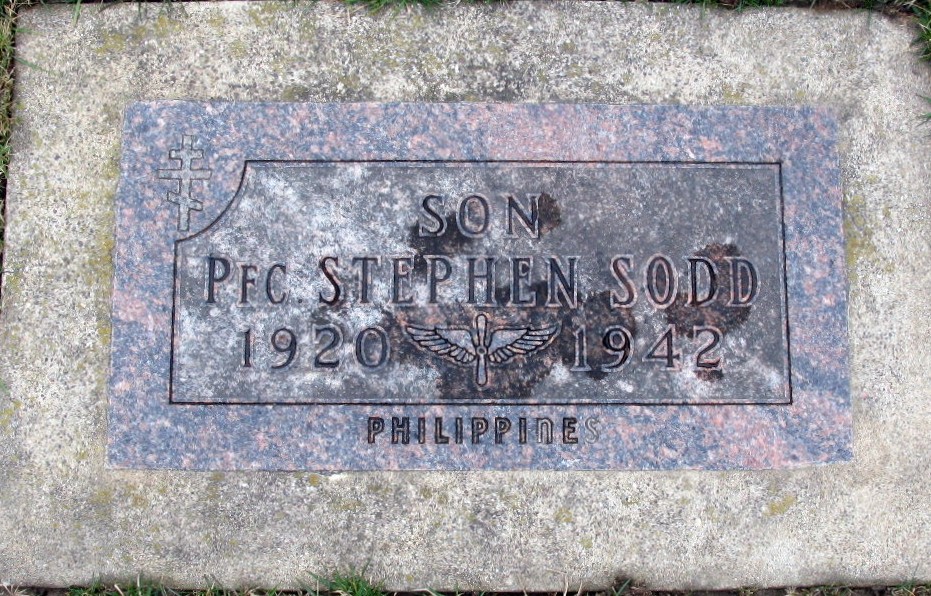
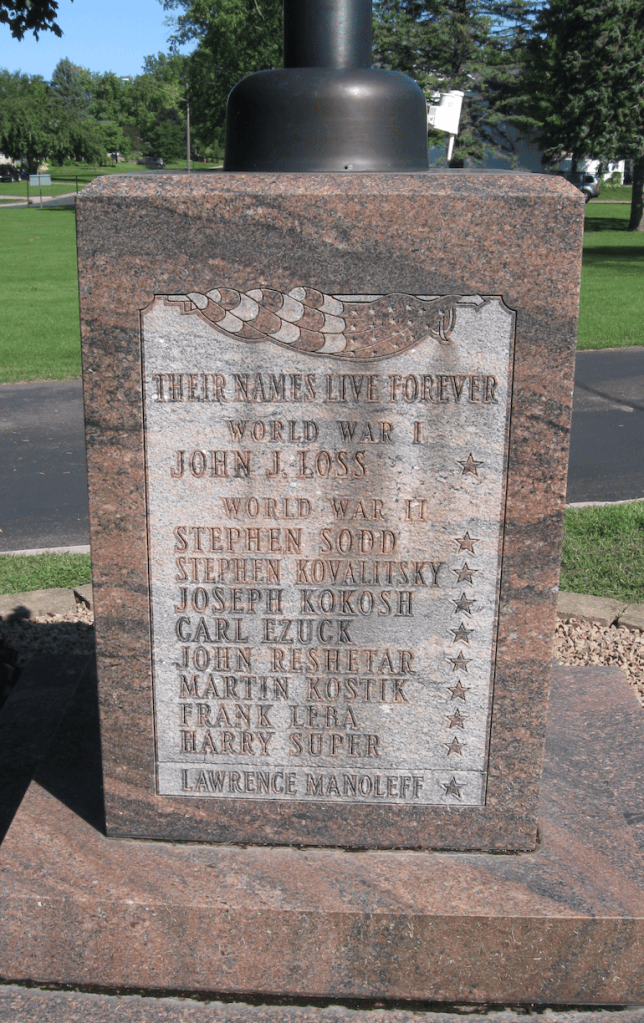
His name is also engraved on a memorial at the cemetery.