
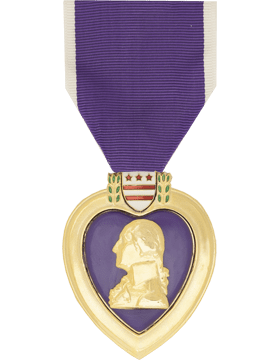
History of the Purple Heart
The Purple Heart is also known as the nation’s oldest military award. Although it has changed in title and use over the years, its roots can be traced back to the Badge of Military Merit ordered by then-Gen. George Washington on Aug. 7, 1782. That’s why the gold medal on a purple ribbon bears the profile of Washington.
The original badge was directed by Washington to be “the figure of a heart in purple cloth, or silk, edged with narrow lace or binding.” But that award fell out of use after the Revolutionary War through just after World War I. In 1932, Douglas MacArthur, then the Army chief of staff, reestablished the award, renaming it the Purple Heart and directing it into the design we know today.
Exactly who is eligible to receive a Purple Heart has been expanded or reduced over time. For example, from 1942 to 1997, some non-service members serving with the military such as Red Cross workers or civilian government employees were eligible to receive the Purple Heart.
Why Does a Service Member Receive a Purple Heart?
A Purple Heart is typically given to any service member who has been wounded or killed in the line of duty. Situations where a service member might be awarded a Purple Heart can include injuries during:
Any action against an enemy of the United States.
As a result of an act of any hostile foreign force.
While being taken captive or while held as a prisoner of war.
By friendly fire while directly engaged in an armed conflict.
Multiple Purple Heart Awards
Only 1 Purple Heart is awarded. Additional awards of the Purple Heart are denoted by oak leaf clusters in the Army, and 5/16″ starts in the Navy, Marine Corps, or Coast Guard.
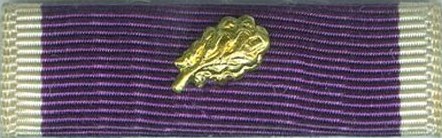
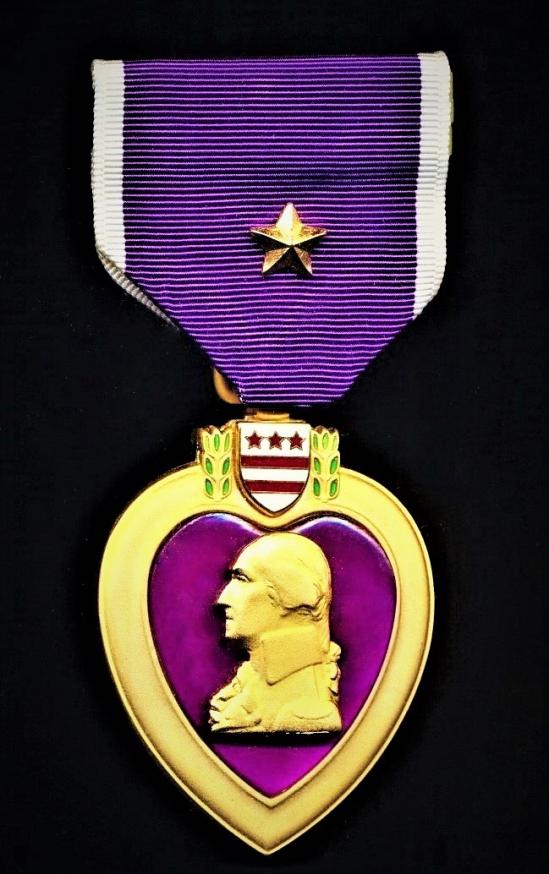
Edison Hero Henry Nadeau earned an oak leaf cluster for his Purple Heart.
1,076,245 Purple Hearts were awarded during World War 2.
 Edison Heroes