
21Dec1914- 08Jun1944
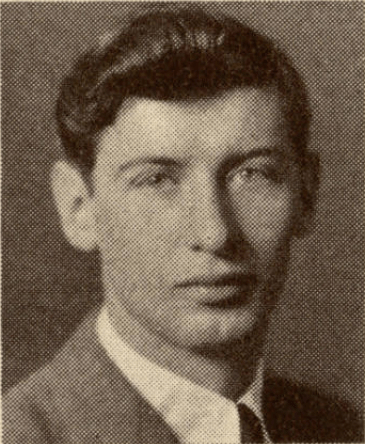
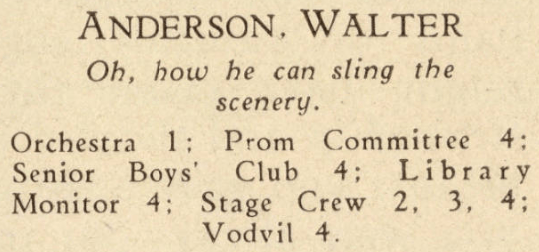
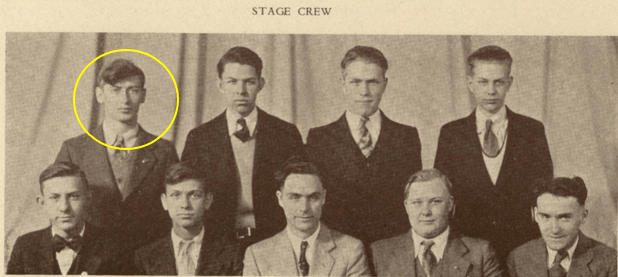
Edison Days
Walter graduated with the June Class of 1933.
Military Service
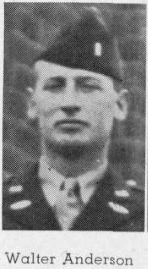

Rank: 1st Lieutenant
Branch: US Army
Unit: Company D – 70th Tank Battalion
Walter was drafted into the Army in February 1941.
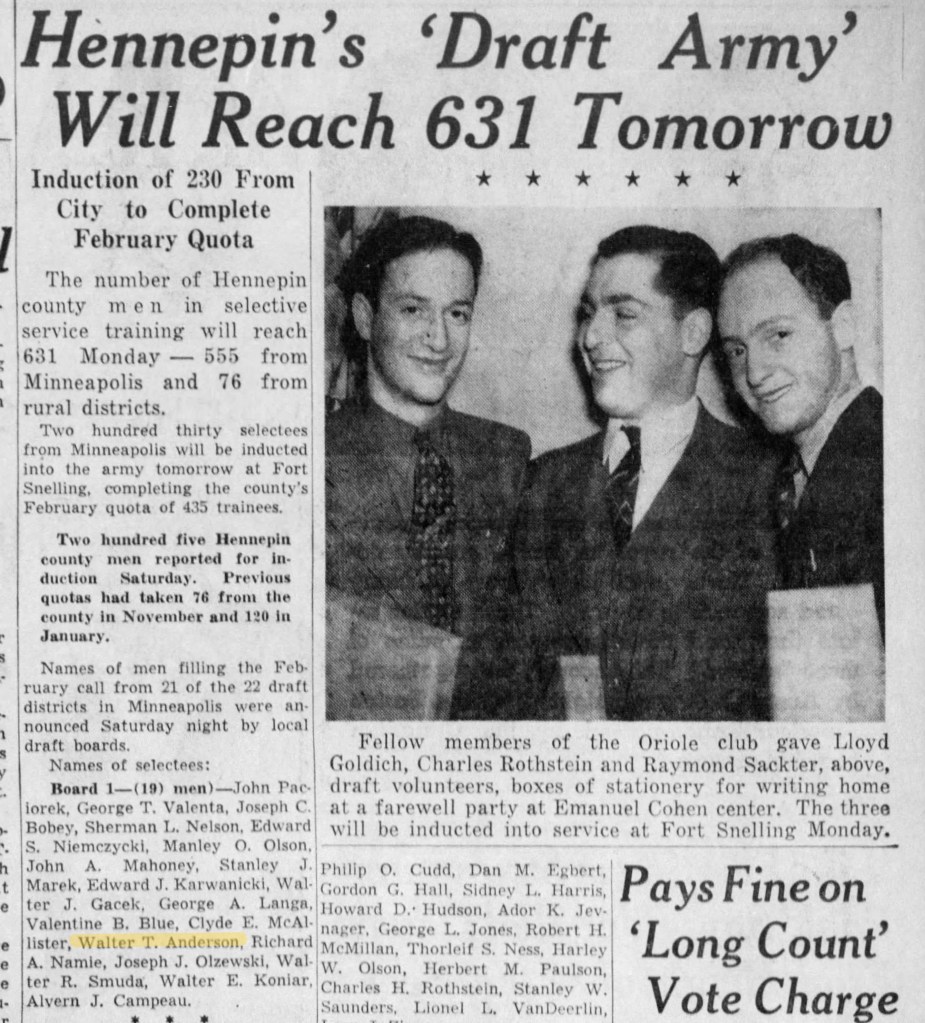
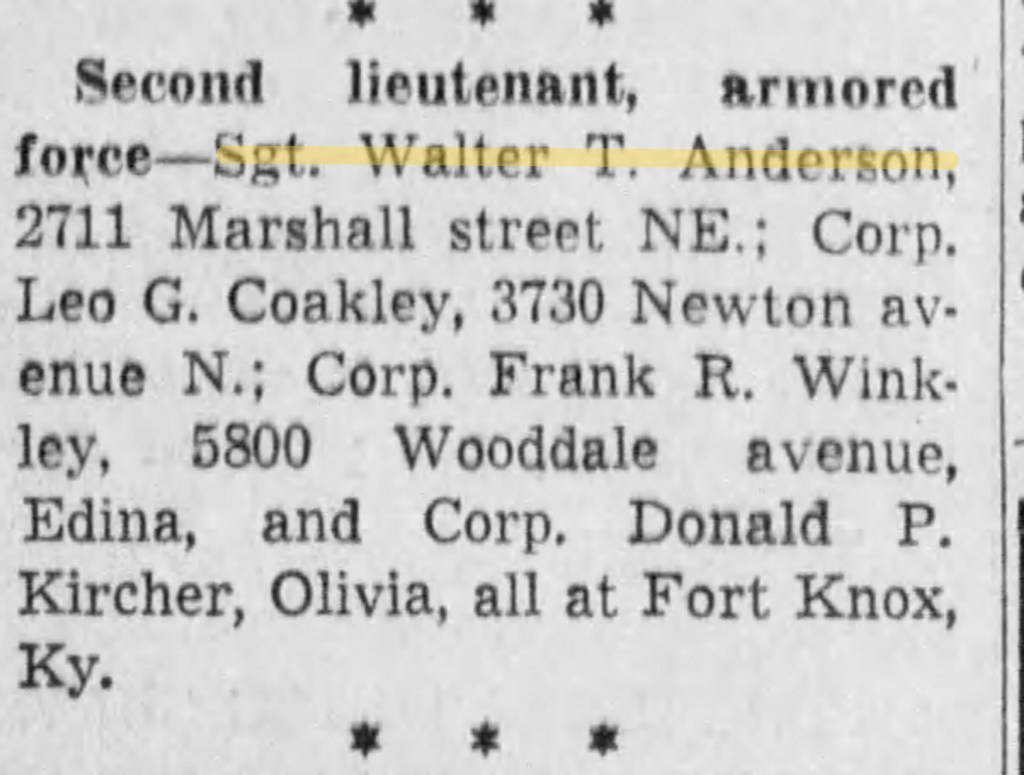
It is unknown where Walter attended basic training, or how he was assigned to the 70th Tank Battalion. Within 18 months of service, Walter had been promoted from Private to Sergeant. In August of 1942, he was promoted from Sergeant to 2nd Lieutenant while training with the 70th Battalion at Fort Knox, Kentucky.
In January 1943, Walter and elements of the 70th Battalion were sent to North Africa to help train the Free French forces. Records indicated that Walter was detached from his unit at this time and assigned to temporary duty with the 1st Infantry Division. The exact nature of that duty is unknown. The fighting in North Africa ended in May 1943.
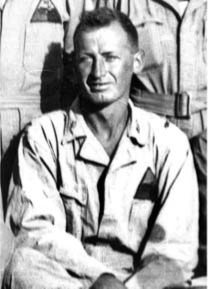
Walter and the 70th then prepared to participate in the invasion of Sicily. The initial invasion occurred on 10Jul1943. The 70th landed 3 days later on July 13. The battalion participated in heavy fighting, and they were an important part of securing Sicily. The fighting on Sicily ended on 17August1943.
On 21Sep1943 he was promoted to 1st Lieutenant.
By the end of the year, Walter and the rest of the battalion were in England undergoing intensive training for the invasion of France planned for May/June 1944.
On 6Jun1944, the Companies A and B of the 70th Tank Battalion participated in the initial landings at Utah Beach. Company C followed a short time later. Walter and Company D landed several hours after the initial landings at approximately 10:50am local time. Once on the beach, their mission was to proceed inland to an assembly area near Ste.-Marie-du-Mont and link up with elements of the 101st Airborne Division to provide tank support for securing the causeways and inland objectives.
Over the next 2 days Walter’s D Company supported elements of the 506th Parachute Infantry Regiment near Saint-Côme-du-Mont while supporting the push toward Carentan. German resistance was intense.
On 8Jun1944 Walter was killed when a German mortar shell landed in the turret of the tank he was commanding.
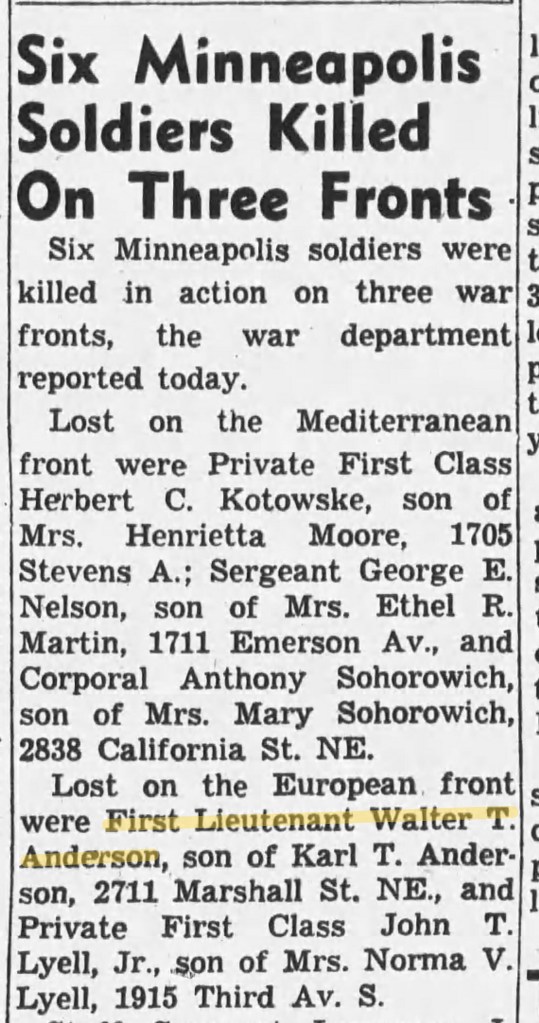
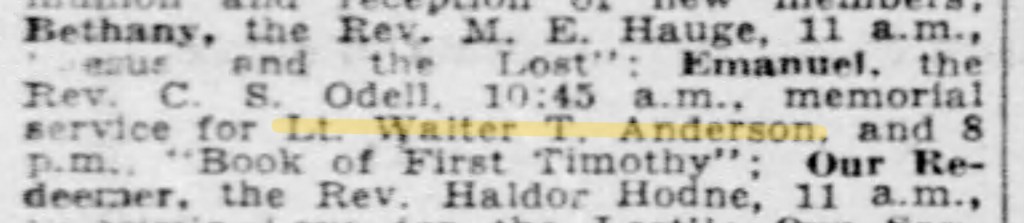
A memorial service was held for Walter on 25Jun1944.
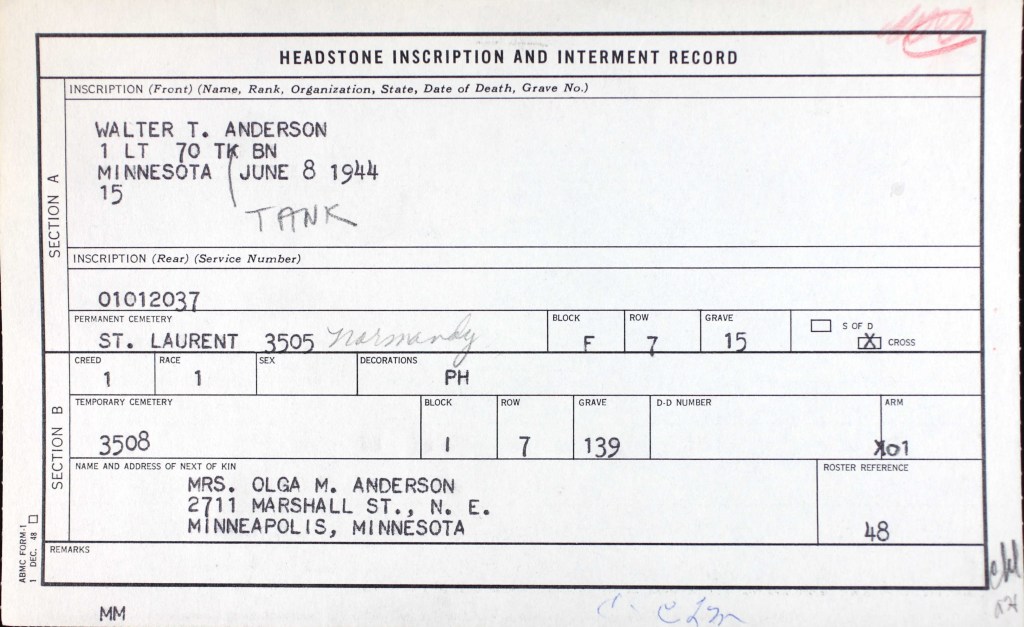
Walter was initially buried in a temporary military cemetery near Blosville, France. After the war ended, his family chose to leave his remains in France.
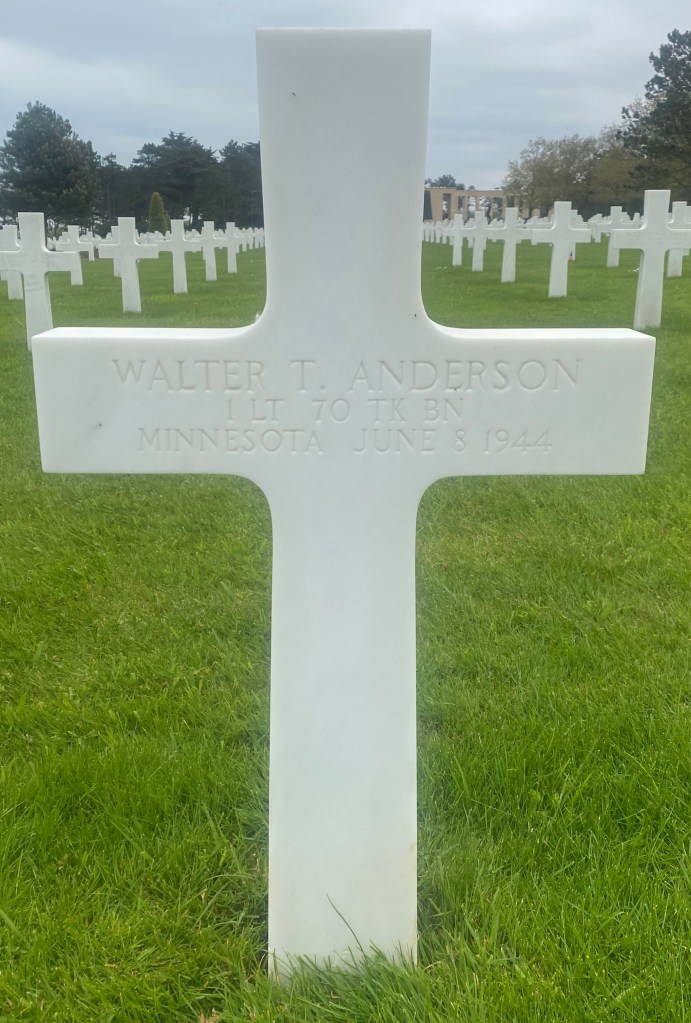
Walter is 1 of 9,389 American service members buried at the Normandy American Cemetery and Memorial in France is located in Colleville-sur-Mer, France.
Postscript
For over 70 years, Walter was thought to be the dead American soldier who remained in the turret of his tank for several days at what would be called “Dead Man’s Corner”. This incident was highlighted in several books, and today there is even a museum at the site. In recent years, historians have revisited the incident in an effort to definitively identify the soldier.
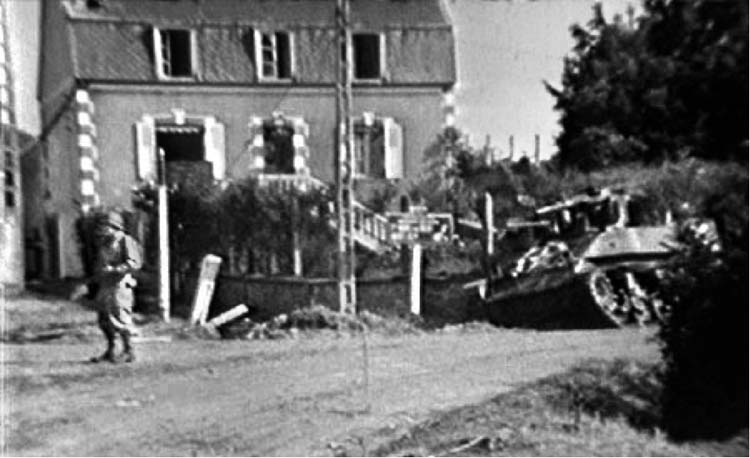
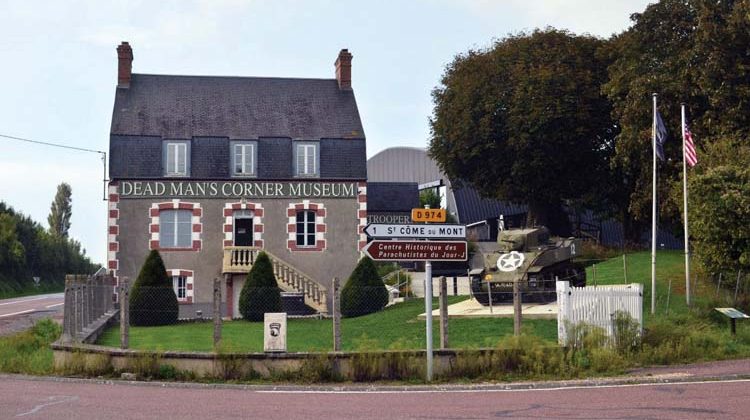
While there is little doubt that it was not Walter, a 2020 article summarizing the findings does mention Walter prominently. A link to the article can be found here.
Solving the D-Day Mystery at “Dead Man’s Corner” – Warfare History Network
The following excerpts mention Walter.
The story of Lieutenant Anderson begins with an entry in the Company D diary from December 1, 1943. Company commander Captain Brodie listed the names and ranks of the officers in his company. 1st Lt. Anderson was the maintenance officer and two 2nd lieutenants were listed as platoon commanders. Lieutenant Anderson was the second-ranking officer in the company, and this was still the case on D-Day. Thus, he should never have been in the tank at Dead Man’s Corner.
The company used a common numbering system for its tanks: Tanks 1-5 in 1st Platoon, 6-10 in 2nd platoon, and 11-15 in 3rd Platoon. Captain Brodie commanded Tank 16 and the second tank of the HQ section; Tank 17 was reserved for Lieutenant Anderson.
Officially, the TO/E prescribes that Tank 17 should be commanded by a sergeant. However, in most battalions, the company second-in-command would assume command of that tank in combat. This is even more apparent for the 70th Tank battalion, where the maintenance officer was the standard commander of Tank 17. Even after Lieutenant Anderson’s death, this practice continued in Company D.
Since Tank 17 was his tank, Lieutenant Anderson can be assumed to have been killed in that tank, as well. This is supported by the diary, which states: “We found Tank 17 today […] and learned Lt. Anderson had been killed.” Additional evidence is provided by Sergeant Francis Ross, who confirmed that Tank 17 was used by Lieutenant Anderson. He knew this for a fact because he was personally asked by the lieutenant to become his driver but declined.
The first time after D-Day that Tank 17 was mentioned in the company diary was on June 9. It had not yet shown up. Unfortunately, the records do not say when it went missing. The battalion’s official history states that Lieutenant Anderson was killed by a mortar round while in the turret, and the casualty list gives the location of his death as “one mile north of Saint-Côme-du-Mont.”
Support for this is provided by Private Eldon R. Abrahamsen (I/502nd PIR). On June 8, he was part of a patrol in that area that became pinned down by German fire. A light tank was brought up for assistance, but it did not end well: “The tank commander’s hatch on the tank was open and a German mortar shell dropped right in the hatch, which killed the crew.”

