
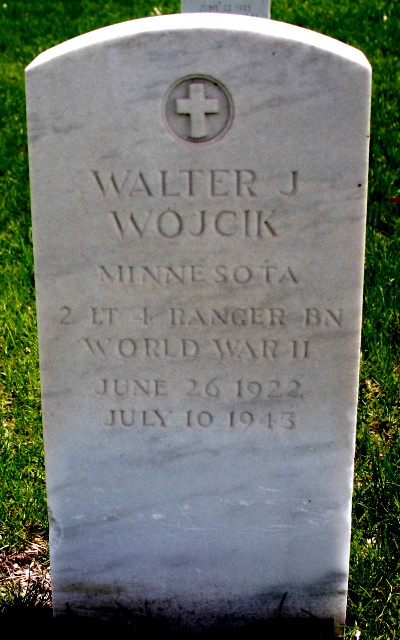
26Jun1922 – 10Jul1943
Edison Days
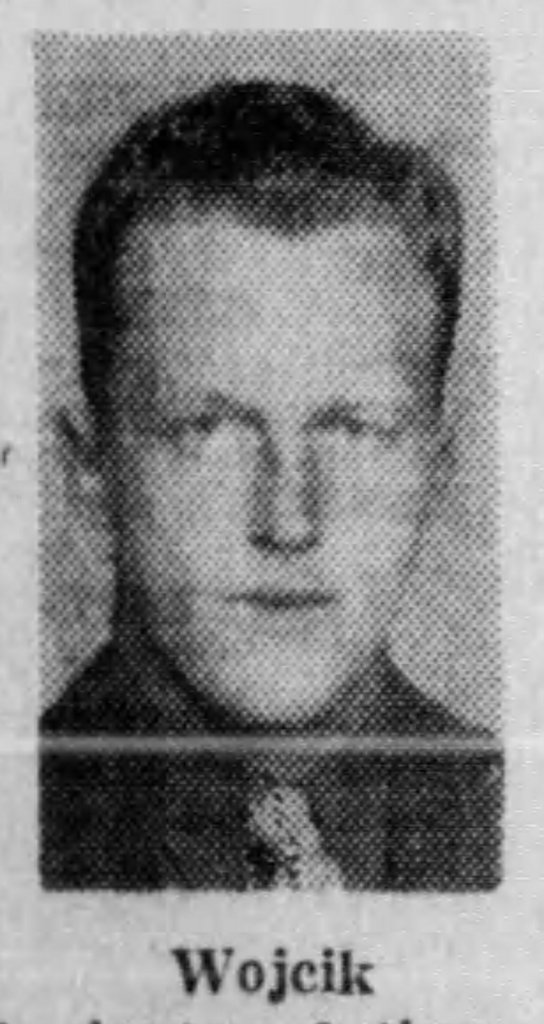
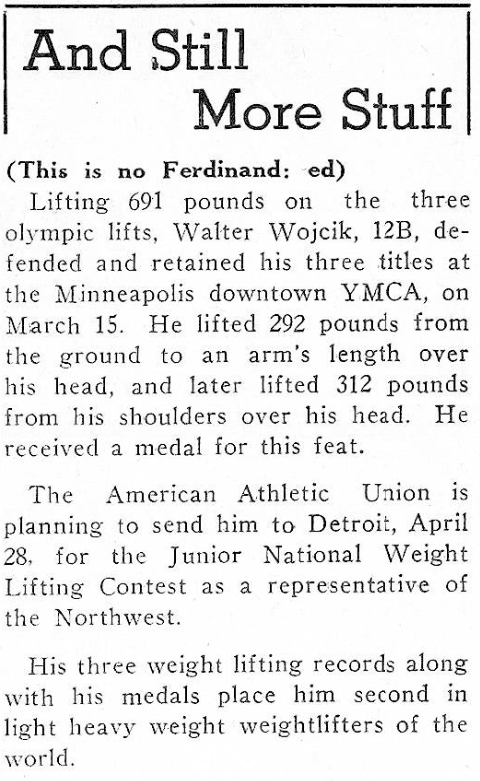
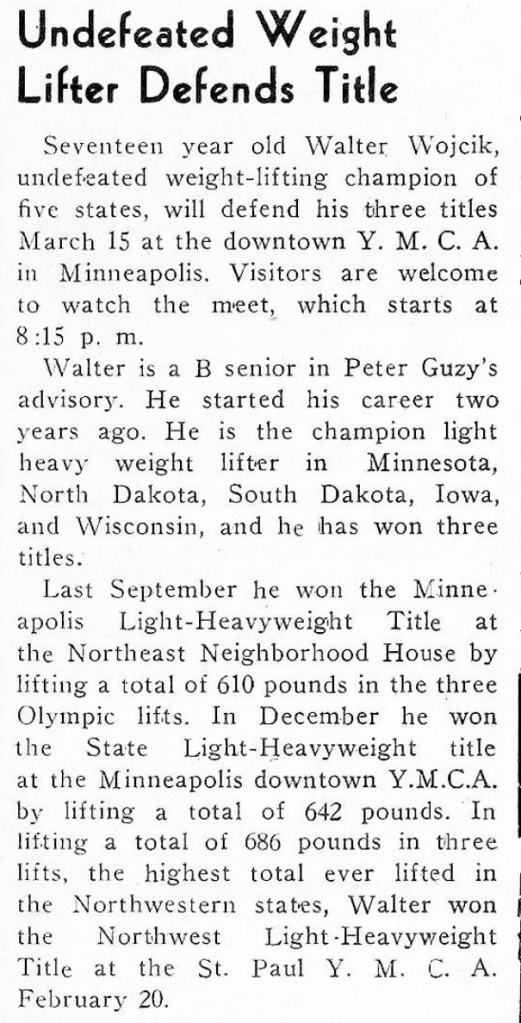
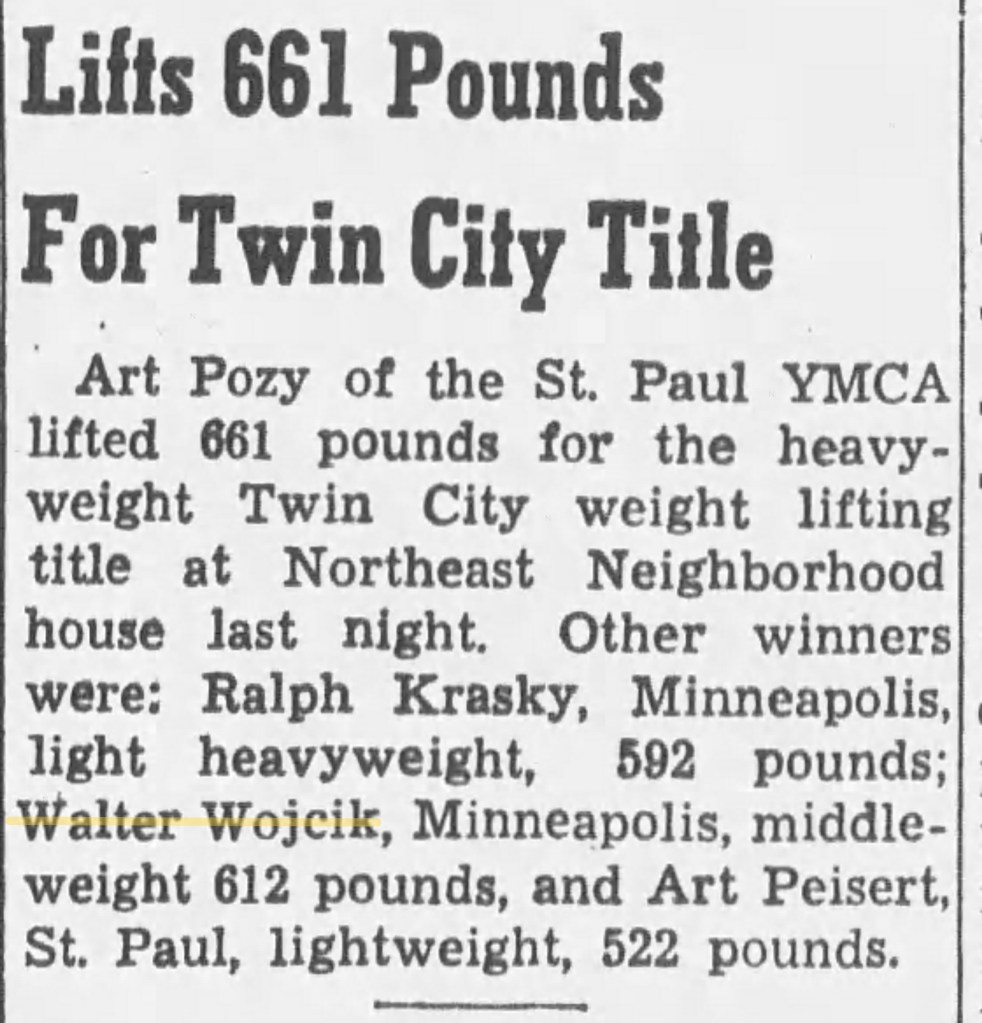
Walter attended Edison but withdrew before graduating. No pictures from his time at Edison have been found. Walter was a competitive weightlifter in high school and was one of the strongest men in the upper midwest.
Military Service
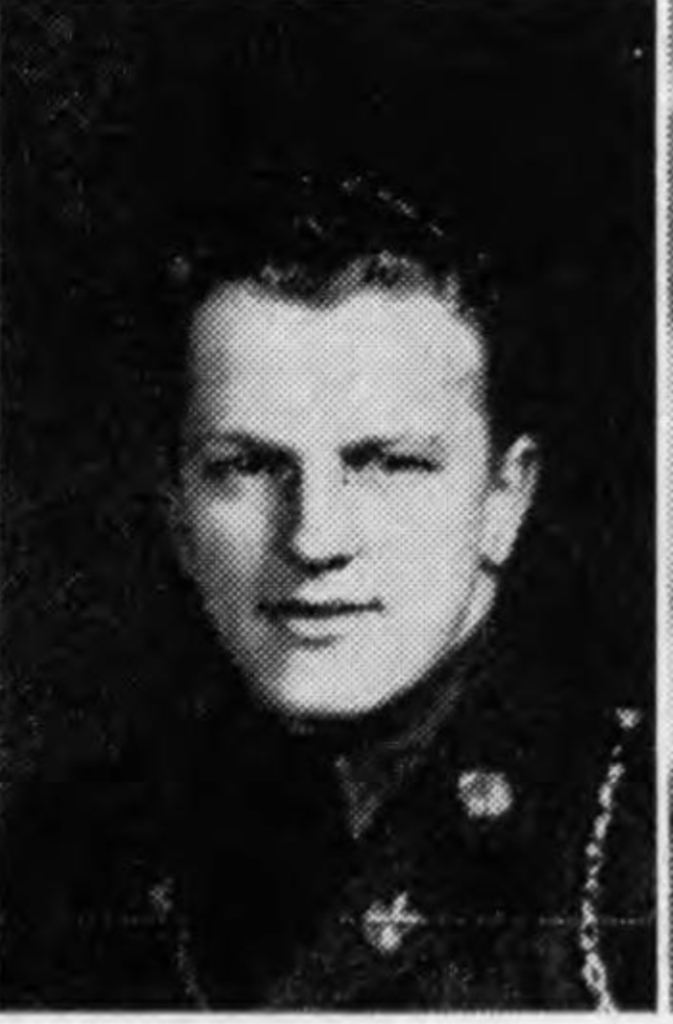

Rank: 2nd Lieutenant
Branch: United States Army
Unit: Company D – 4th Ranger Battalion
It appears that Walter enlisted in the Minnesota National Guard prior to the start of World War 2. He was most likely a member of the 34th Infantry Division that was federalized into the regular Army on 10Feb1941. The 34th was the first US division deployed to Europe after the attack on Pearl Harbor having been sent to Ireland in January 1942.
In June 1942 Walter was one of 600 men selected from 1,500 volunteers for the newly formed 1st Ranger Battalion. Selected for their physical fitness, stamina, and initiative, the men underwent grueling training at Achnacarry Castle, Scotland, under British Commando instructors. Walter was 1 of around 500 men who completed the course
The 1st Ranger Battalion entered combat during Operation Torch, the Allied Invasion of North Africa, in November 1942. They spearheaded landings at Arzew, Algeria, silencing coastal batteries in a daring night assault, allowing the capture of Oran with minimal casualties.
Walter was a key participant in the Sened Station Raid in Tunisia on 11Feb1943, Tunisia. This was the first major night raid of the war.
The following excerpt is from the book Rangers in World War II by Robert W. Black.
With twelve miles of rough terrain to cover, the Rangers carried no packs, traveling light with a canteen of water, a C ration and a shelter half each. They were trucked in to about twelve miles of their final destination. From here they set out on foot to within four miles of their mission objective, Sened Station.
In keeping with the Ranger element of surprise, soon after nightfall, the Rangers rose from hiding and approached to within one mile of the Station objective. From here they were close enough to observe the enemy, undetected. Here they waited here until full darkness fell. With blackened faces, tags taped down (to eliminate any noise and the resulting alert of their approach to the enemy), and woolen skullcaps, they quietly approached.
Company A approached from the left, E the center, and F on the right. With the use of hooded lights shown only to the troops behind (a tactic employed yet today when in situations of radio silence where they employ a series of colored lights seen only to the rear of the approaching Rangers), Darby and Dammer were able to signal and move the three companies into position, using only their colored, hooded lights, for the attack.
The Italians became suspicious and fired nervously and aimlessly into the night. Having no idea the Rangers were actually among them, the fire was aimed too high and served only to alert the approaching Rangers as to the gunner’s positions.
As the three companies approached and attacked, the Headquarters Company was firmly positioned in the rear, making it impossible for the Italians to escape the Ranger attack.
In less than an hour, the Rangers secured Sened Station. Ranger Garrison was killed and twenty some other Rangers were wounded. The Rangers withdrew and headed back to Gafsa on foot, the prisoners, the wounded, and the now battle seasoned Rangers.
It was a quick pace and difficult with prisoners and wounded. Several Rangers were decorated with Silver Stars, while Bing Evans and Walter Wojcik were awarded battlefield commissions.
The raid resulted in at least fifty Italian dead and eleven prisoners from the famed 10th Bersaglieri Regiment. The fighting for Sened was very close and personal, as one Ranger recalls, “There was some pretty intense in-fighting there, but a man doesn’t talk about what he does with a bayonet.”.
Due to the success of the 1st Ranger Battalion, the 3rd Ranger Battalion, and 4th Ranger Battalions were created in May 1943 using many of the men from the 1st Battalion. William joined the 4th Battalion and on 3Jun1943 he was assigned as the commander of Company D.
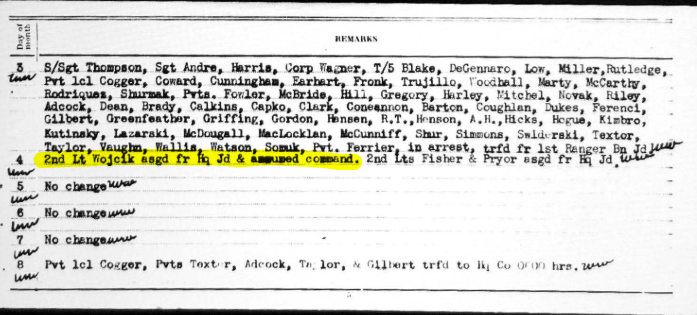
For the remainder of June, Walter and the Rangers trained for the upcoming landings in Sicily.
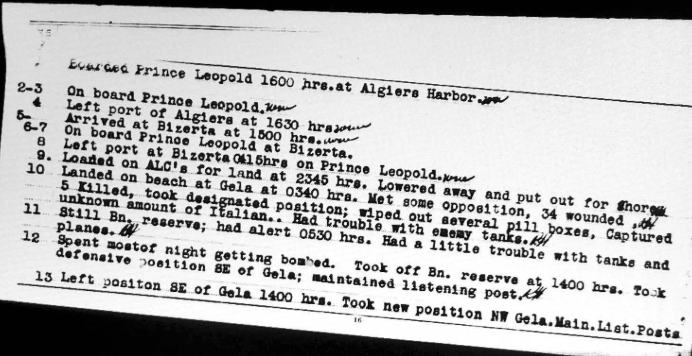
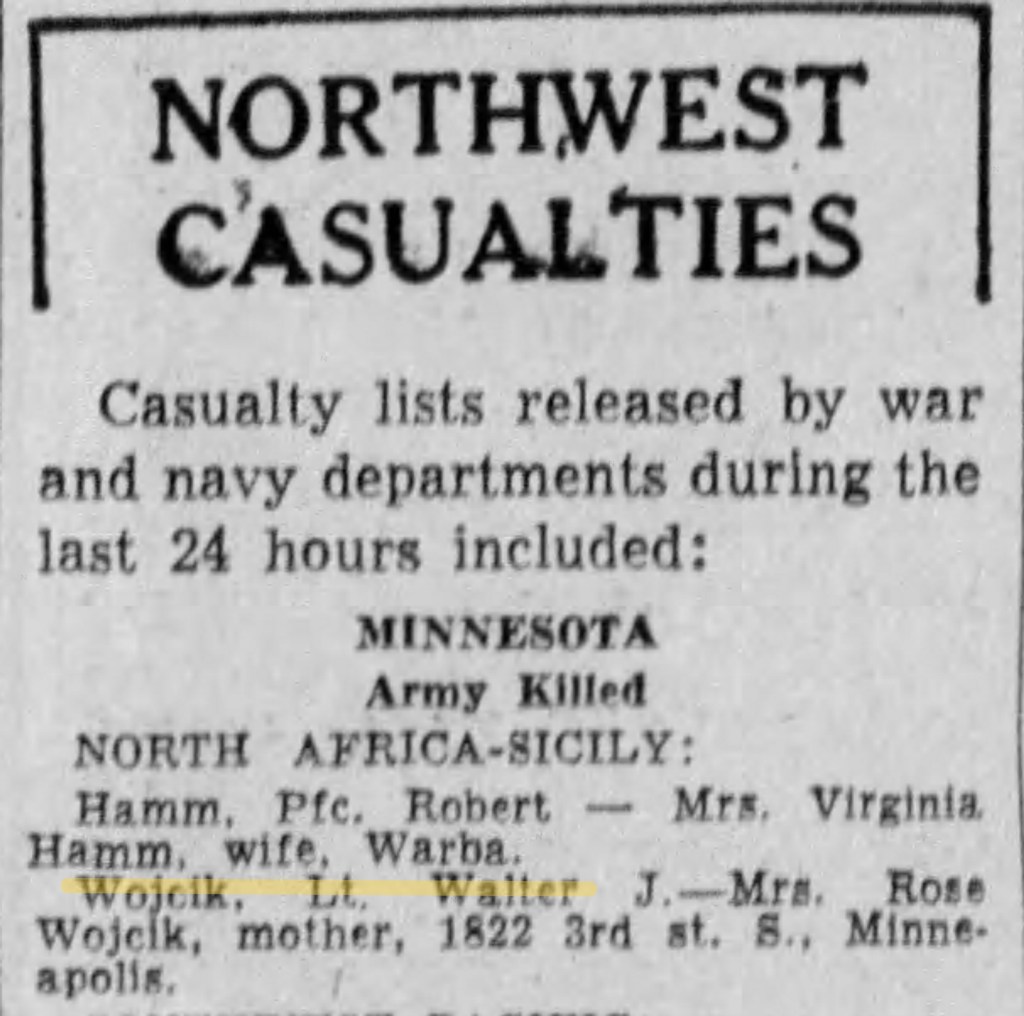
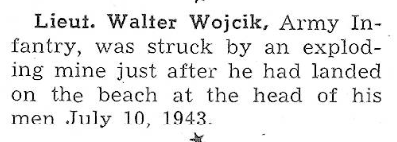
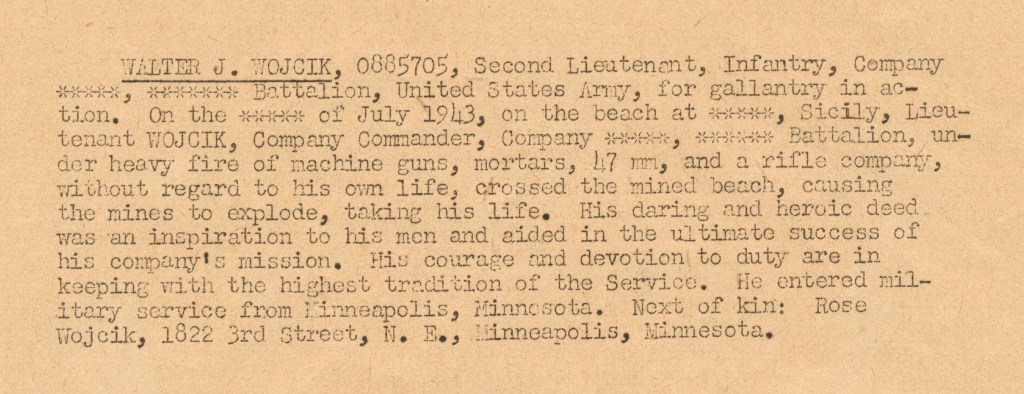
On 9July1943 at 2345 hours, Walter and Company D boarded landing craft bound for Gela, Sicily. Landing at 0345 hours, under heavy enemy fire, Walter led his men across the heavily mined beach. Walter triggered one of the mines to explode causing fatal injuries.
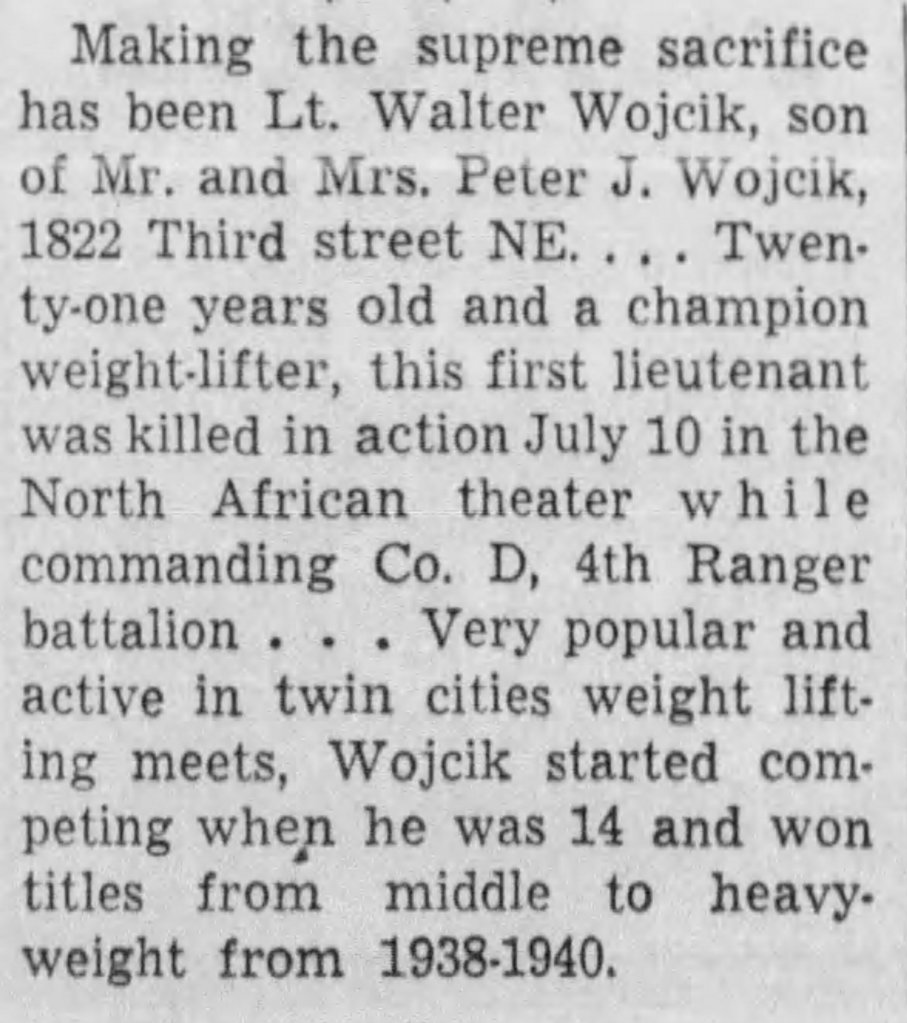
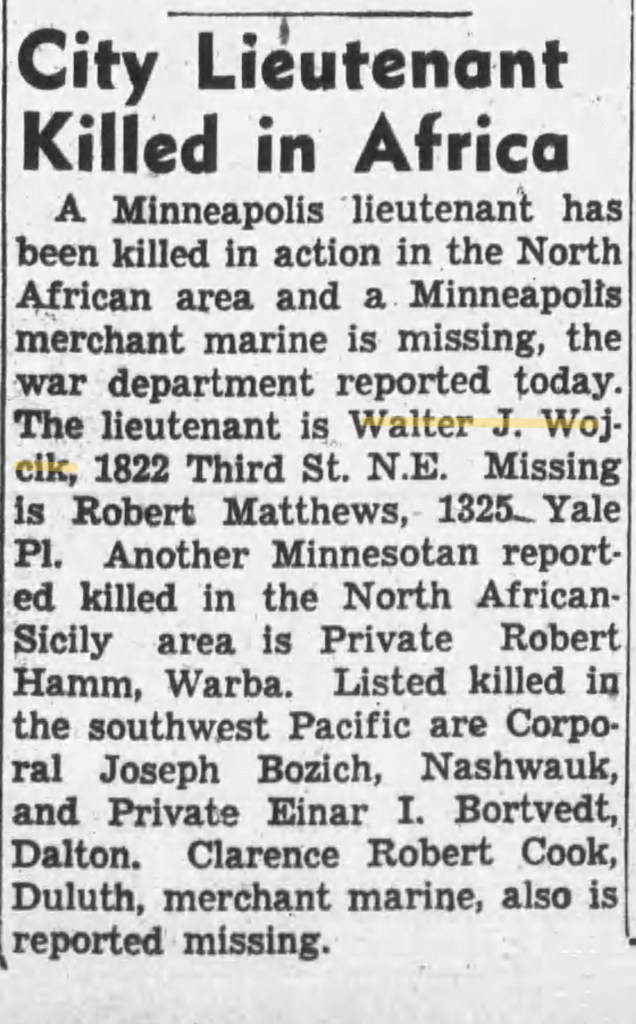
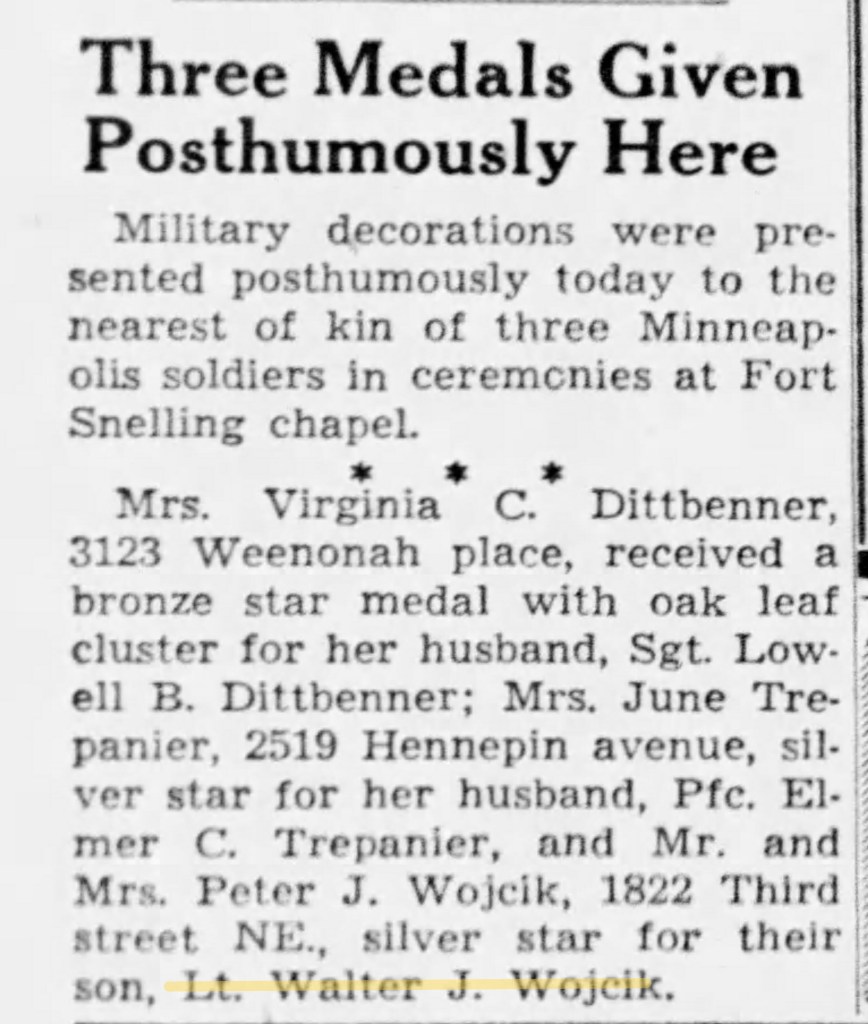
For his actions, Walter was posthumously awarded the Silver Star Medal (the 3rd highest award for Valor).

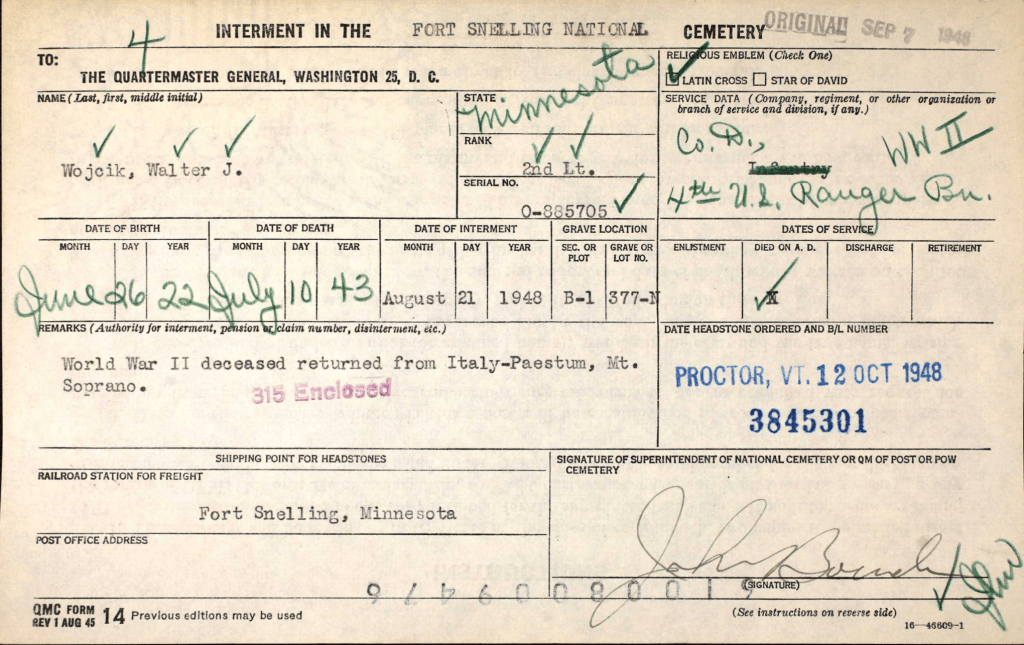
Walter was buried originally buried at a temporary cemetery in Italy. In 1948 his remains were returned to Minnesota for reburial.
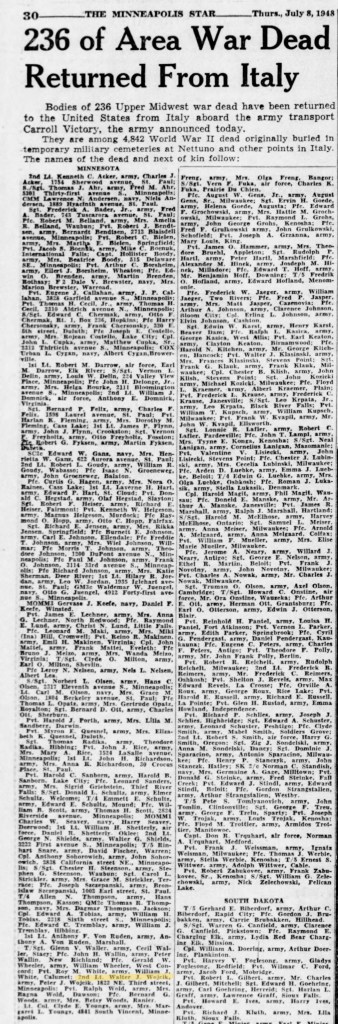
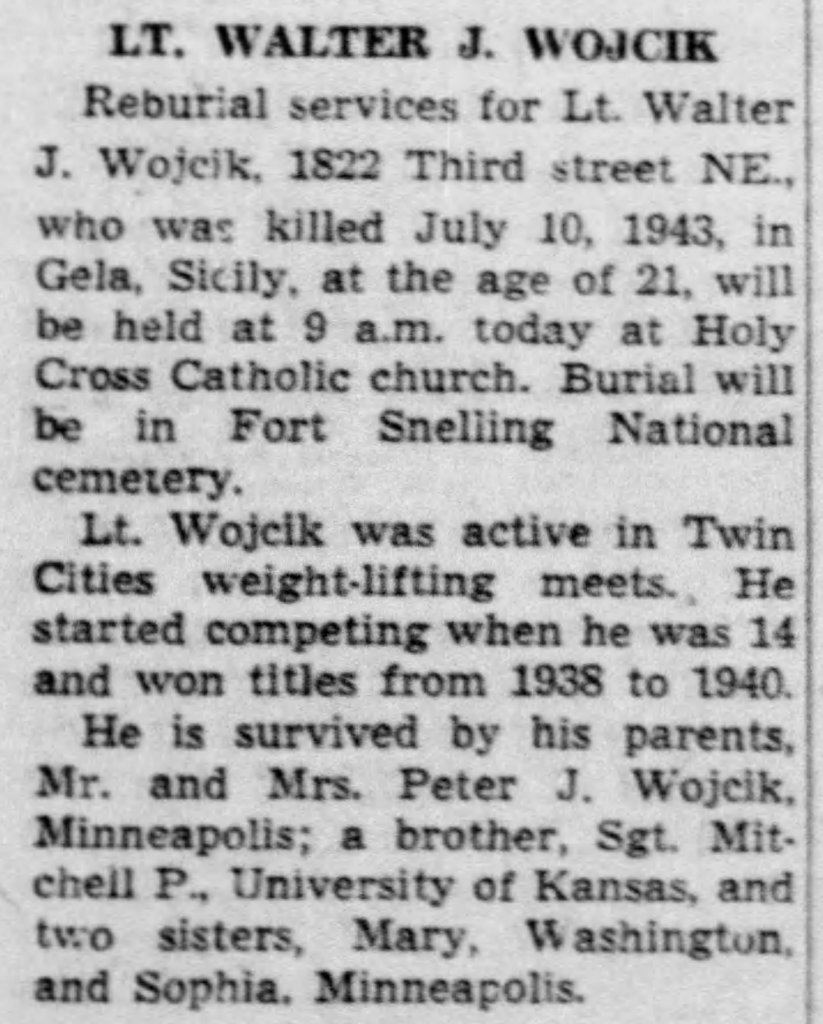
Walter is buried at Fort Snelling National Cemetery in Minneapolis, MN.
 Edison Heroes