
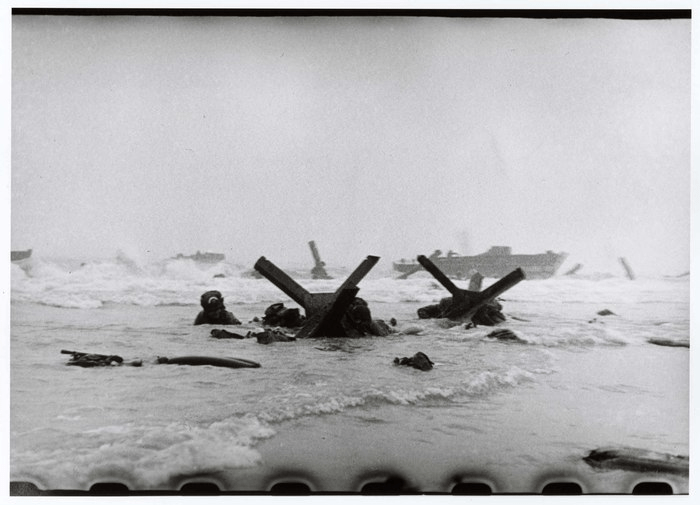
Today is the 82nd anniversary of D-Day, the Allied invasion of France.
On the morning of June 6, 1944, Allied forces launched the largest amphibious invasion in history—Operation Overlord—to liberate Nazi-occupied Western Europe.
More than 156,000 American, British, Canadian, and other Allied troops, supported by nearly 7,000 ships and landing craft and over 13,000 aircraft, assaulted a 50-mile stretch of heavily fortified coastline in Normandy, France.
The operation began shortly after midnight with airborne divisions dropping behind enemy lines to secure bridges, roads, and key objectives. At dawn, soldiers stormed five beaches code-named Utah, Omaha, Gold, Juno, and Sword. American forces faced particularly fierce resistance at Omaha Beach, where thousands of troops fought their way inland against entrenched German defenses. By the end of the day, despite heavy casualties—over 10,000 Allied killed, wounded, or missing—the Allies had established a critical foothold on the European continent.
Several Edison Heroes participated in D-day.
Casimir Karbowniczek, Paul Raupach, and Milton F. Nelson all parachuted into Normandy in the early morning hours of June 6.
Joseph Barres is believed to have landed on Omaha Beach with the 743rd Tank Battalion.
Walter T. Anderson landed on Utah Beach with the 70th Tank Battalion. His page will be posted on June 8th, the 82nd anniversary of his death.
William Mueller, and Roger Nielsen were both P-47 fighter-bomber pilots who flew numerous missions that day in support of the invasion.
Over the next 11 months, 38 Edison Heroes died in Western Europe in the fight against Nazi Germany. Learn about some of them here.
 Edison Heroes